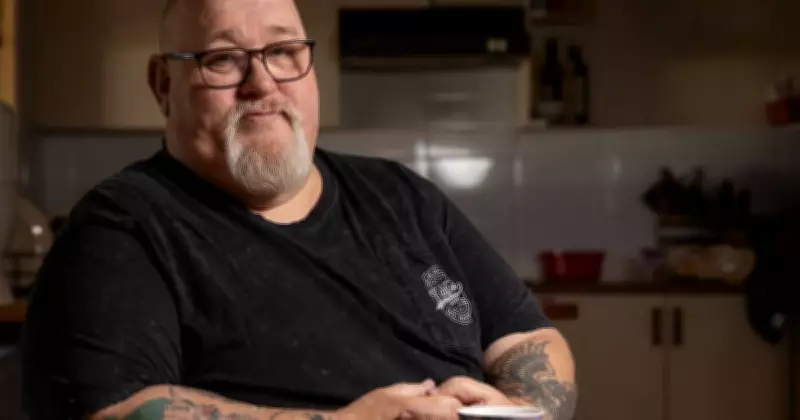
When Andrew Ward's cancer returned, his life was hanging in the balance. The 62-year-old from Raymond Terrace said he would not have been able to afford the immunotherapy treatment he needed.
"They said you can go on the treatment, but it will cost you $500 each time. I was on a disability pension, so that was out of my price range," he said.
"Luckily, two weeks later, it came on the PBS. I definitely have a guardian angel looking after me, that's for sure."

Mr Ward shared his story to highlight that the Australian Skin Cancer Foundation will hold a mobile clinic in Newcastle on Thursday. The clinic will provide free, full-body skin checks before the Women's State of Origin game at McDonald Jones Stadium.
Australian Skin Cancer Foundation chief executive Jay Allen said Newcastle and the Hunter Region were "higher-risk areas for melanoma". Mr Allen said this was "driven by outdoor lifestyles and long-term sun exposure".
"That's why it's so important we bring screening directly into the community," he said.
Mr Ward was diagnosed with stage-four melanoma in 2012, after the cancer had spread to his lungs, chest, lymph nodes, groin and bowel. At the time, he was given only three months to live.
He was initially put on targeted therapy, which involved taking tablets twice a day.
"I was on them for almost 38 months. But, actually, after a month on them, I was cancer-free and stayed that way over that time," he said.
"Then the cancer came back in both lungs in mid-2015. So they stopped the targeted therapy and offered me immunotherapy.
"That's when I had the stroke of luck with the PBS."
He was on the immunotherapy drug, pembrolizumab, for almost two years.
"Two years was the most you could be on the drugs for. Infusions were every three weeks," Mr Ward said.
Known as a monoclonal antibody, the drug helps the immune system attack melanoma cells.
"Just before the two years ended, I started to get one of the side effects - inflammation of the bowel. But they said you're doing so well, we'll stop the treatment."
In any case, within three months of having the drug, Mr Ward was classed as having a complete response.
"That meant I was cancer-free. There was no evidence of the disease," he said.
"I've been that way ever since. Now I have scans every six months to make sure it hasn't come back."
Mr Ward said the drug "turns your immune system into a super cancer-fighter". The drug can produce an immunological memory in T-cells, which means it can help the immune system continue to attack melanoma cells after treatment.
"It's certainly a wonder drug," Mr Ward said.
Sun protection wasn't a common practice when Mr Ward grew up.
"I spent a lot of time at the beach and fishing around the lakes," he said.
"I was always out in the sun. Back then, you had to be the bronzed Aussie.
"Hopefully my message can get out to people to get early and regular skin checks, and take advantage of the mobile skin trucks. It can save your life."
He said melanoma "doesn't just affect you, it affects your loved ones, everyone around you and your income".
"It's such a preventable disease," he said.
The foundation's mobile skin-check clinic will be at McDonald Jones Stadium from 1.30pm to 7.30pm on Thursday. No booking is required, but limited spots are available.