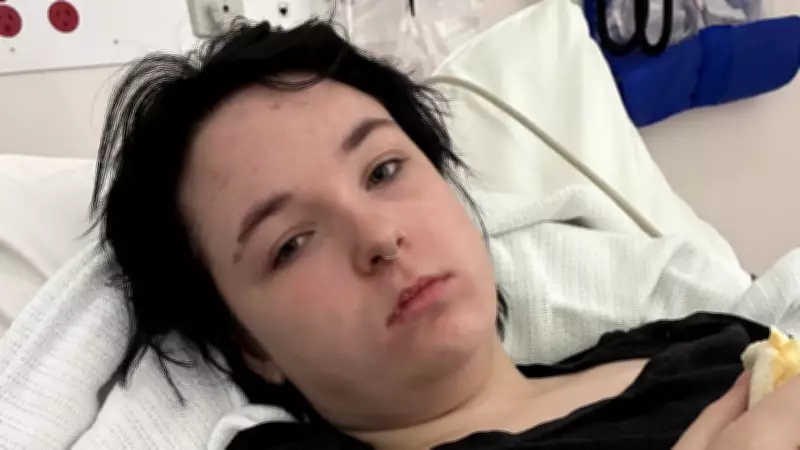
A Geelong family has expressed their desperation as they continue to fight for their teenage son who is suffering from a severe neurological condition. The family, who wish to remain anonymous, have been struggling to find adequate treatment and support for the 15-year-old boy, whose condition has left him unable to walk, talk, or eat without assistance.
Family's Plea for Help
The mother of the teenager told the Geelong Advertiser that the family is at their wits' end, having exhausted all local medical options. 'We have been to every specialist in Geelong and Melbourne, but no one seems to be able to help us,' she said. 'Our son's condition is deteriorating, and we are running out of time.' The family has now launched a fundraising campaign to seek treatment overseas, where they believe there may be more advanced therapies available.
The Teenager's Condition
The teenager, who was a healthy and active child just two years ago, began showing symptoms of the neurological disorder after a routine vaccination. His condition has since progressed rapidly, leading to severe motor and cognitive impairments. Doctors have diagnosed him with a rare autoimmune encephalitis, which causes inflammation in the brain. Despite multiple treatments, including steroids and immunotherapy, his condition has not improved.

Community Support
The Geelong community has rallied behind the family, with friends and neighbors organizing fundraisers and spreading awareness about the teenager's plight. A GoFundMe page has been set up, which has already raised over $50,000. 'We are overwhelmed by the support we have received,' the mother said. 'It gives us hope that we can get our son the help he needs.' The family is now exploring treatment options in the United States and Germany, where cutting-edge therapies for autoimmune encephalitis are being developed.
Medical Experts Weigh In
Dr. Sarah Mitchell, a neurologist at the Royal Melbourne Hospital, said that autoimmune encephalitis is a complex condition that requires specialized care. 'While there is no cure, early and aggressive treatment can improve outcomes,' she said. 'It is important for families to seek help from centers that have experience with this condition.' Dr. Mitchell added that clinical trials for new therapies are underway, but access can be limited.
Call for Better Support
The family's ordeal has highlighted the gaps in Australia's healthcare system for rare neurological conditions. The mother is calling for better support for families in similar situations, including more funding for research and easier access to specialist care. 'No family should have to go through this alone,' she said. 'We need a system that supports us, not one that leaves us to fight for our children's lives.'
As the family continues their fight, they remain hopeful that they can find a treatment that will give their son a chance at a normal life. 'We will not give up,' the mother said. 'Our son is a fighter, and so are we.'