The federal government has identified Newcastle and the Hunter region as a priority area for a potential healthcare intervention, aiming to establish new publicly-funded bulk-billing clinics. This move is part of a broader strategy to increase free GP consultations under Medicare in areas deemed "bulk-billing deserts."
Government Targets Newcastle in Bulk-Billing Blitz
Federal Health Minister Mark Butler has explicitly named the Newcastle and Hunter region, alongside Canberra, as areas of significant concern due to low rates of bulk-billing. The government is considering a direct market intervention, similar to a $24 million plan launched in September 2025 to establish three new bulk-billed GP clinics in the capital.
A government spokesperson confirmed that initiatives to boost bulk-billing would be targeted to meet community needs, stating the policy is "about fairness and making sure every family has access to affordable healthcare." When questioned by the Newcastle Herald, the minister's office did not deny that similar plans could be rolled out locally.

The Stark Reality of Gap Fees and Market Pressures
The push comes as patients in Newcastle face substantial out-of-pocket costs. A standard GP consultation can now cost up to $112, with the Medicare rebate covering only $44. This leaves residents with gap fees as high as $68 per visit.
Minister Butler has publicly questioned why bulk-billing rates are high in expensive Western Sydney but "plummet" in Newcastle or the Hunter Valley. He argued the government would fund new general practices on the condition they operate as fully bulk-billing entities, aiming to "shake the show up a bit."
Medical Professionals Question Sustainability of Model
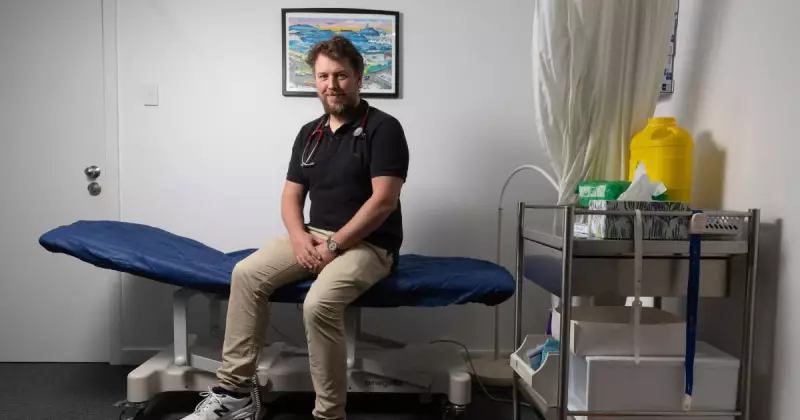
Dr Max Mollenkopf, the Hunter representative for the Royal Australian College of General Practitioners, said the region has been "repeatedly called out" by the Minister. Dr Mollenkopf sees Newcastle as an area the government views as a "bulk-billing failure" where it might intervene to fix the market.
However, he pointed out a contradiction in the government's approach. "They're saying the market is sufficient for businesses to thrive... But at the same time, they're saying they have to inject millions of dollars... to make them sustainable. You can't have it both ways," Dr Mollenkopf said.
He also highlighted the clinical pressure of the bulk-billing model, where practices must see high volumes of patients to remain viable—a scenario known as "six-minute medicine." Many GPs, he noted, prefer not to practice this "high-churn medicine" as it can compromise patient care.
Incentive Payments Fall Short for Metro Practices
In November 2025, the government introduced new bulk-billing incentives for clinics. Practices that bulk-bill all patients receive an additional quarterly 12.5% incentive payment on Medicare rebates, shared between the GP and the practice. This incentive was also extended to all Medicare-eligible patients, not just concession holders.
Yet, for metropolitan areas like Newcastle, Lake Macquarie, and parts of Maitland, this incentive amounts to only $21.35 for a standard consultation. In more remote parts of the Hunter, it ranges from $32.50 to $36.65. Many clinics argue these payments do not cover the true cost of running a practice.
Despite this, the government claims its policies are having an impact. A spokesperson said over 2600 practices nationwide are expected to become full bulk-billing operations, including over 1000 mixed-billing clinics that have indicated they will switch.
The looming question for Newcastle is whether a federal injection of funds and new clinic models will genuinely improve access to affordable healthcare, or if underlying systemic issues about Medicare funding and practice viability remain unresolved.