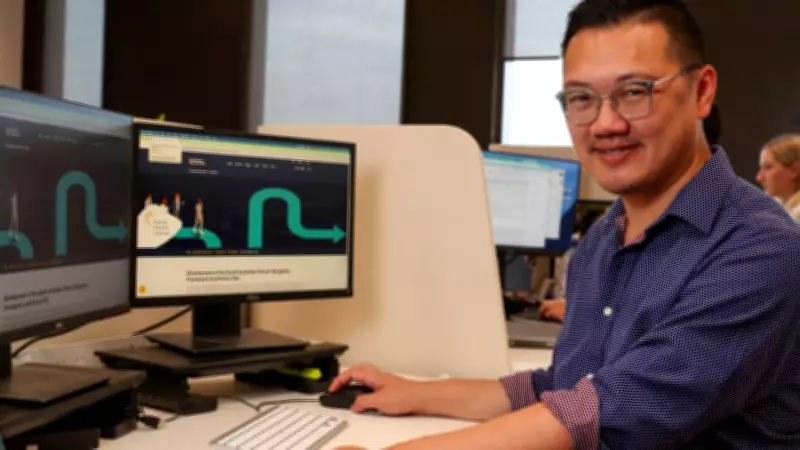
Cancer survivors often face a hidden battle long after their treatment ends, with many needing to see up to 13 specialists for ongoing health problems caused by their cancer therapy. This challenge has prompted a leading Australian university to research better post-cure care.
Professor Raymond Chan's Mission
Professor Raymond Chan, Deputy Vice-Chancellor (Research) at Flinders University, has dedicated his career to improving the lives of cancer survivors. With a clinical background in cancer nursing, survivorship, and palliative care, his research focuses on health systems and how to better support patients after treatment.
Like many Australians, Professor Chan has been personally affected by cancer—his mother passed away from the disease. His journey into cancer care began over 22 years ago as a nurse in Brisbane.

"I started off caring for people with cancer on the ward as a nurse in Brisbane," he explains. "I noticed a lot of problems facing our cancer patients, or even people who had been treated for cancer. Whether they had achieved a full cure or not, they continued to experience multiple health problems."
The Hidden Side Effects
With survival rates now exceeding 70% for many cancers, aggressive treatments can leave lasting damage. "We now see people being cured of cancer but dying of heart disease that we gave them through the cancer treatment," Professor Chan says. "People's hearts are failing because of the treatment; people have all sorts of sexual problems, dysfunctions, memory loss; people are experiencing neuropathy."
These issues extend beyond physical symptoms. "These are physical problems like pain and fatigue, but we're also talking about mental health issues. We know that people with cancer can experience far more emotional difficulties, depression, and even social and financial problems," he adds.
A Holistic Approach to Survivorship
Professor Chan highlights the case of a young woman who was seeing 13 different specialists after her cancer treatment. His goal is to manage such challenges holistically. "For this, we need to educate GPs on how to deal with all of those issues. We need to empower people. We need to come up with drug options and social system solutions to try to help all these people have the best quality of life... ultimately, we can save lives."
His team at Flinders University, comprising up to 40 researchers from various disciplines, works on developing policies and guidelines to improve cancer care worldwide. "There is no health problem that is going to require just one discipline in the future—that's yesterday's medicine," he says. "I rely on my multidisciplinary team to make this all work. Together we are delivering changes for cancer survivors in Australia and we are having a global impact."