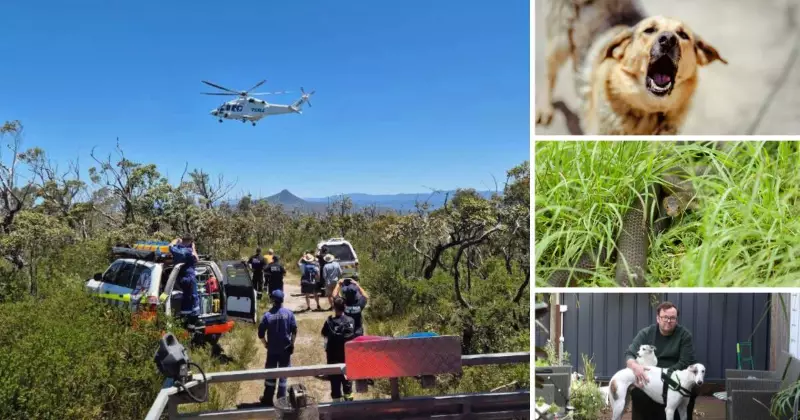
Medical professionals across Australia are issuing a stark summer safety warning following a serious snake bite incident in New South Wales, urging the public to treat all wildlife bites and stings as potential emergencies.
Brown Snake Bite Triggers Emergency Response
The alert comes after Helen Worrell was bitten twice by a brown snake at Pointer Dam, near Ulladulla, just two days after Christmas. Quick-thinking fellow bushwalkers administered vital first aid at the scene, which medical authorities credit with saving her life. The situation was so severe that she required an emergency airlift to Wollongong Hospital for treatment.
Dr Sarah Chalmers, President of the Rural Doctors Association of Australia (RDAA), emphasised that encounters with venomous creatures peak during the warmer months. "Any suspected snake bite should be treated as a medical emergency," Dr Chalmers stated. "And if symptoms don't feel right - even after what seems like a minor bite or sting - it's always safer to get checked early."

Beyond Snakes: Bats and Marine Dangers
The warning extends beyond terrestrial snakes. Dr Chalmers also highlighted the risks associated with flying foxes, especially after recent heatwaves. Hundreds of bats died in the Illawarra region alone earlier this month, with many more found in distressed states.
"Fruit bats can carry Australian Bat Lyssavirus (ABLV), which is closely related to rabies," she explained. This virus can be transmitted through bites, scratches, or contact with saliva and is considered a medical emergency requiring urgent treatment. The public is strongly advised not to handle any bat, alive or dead.
Marine environments hold their own perils, with creatures like the blue-ringed octopus capable of delivering a potent, potentially fatal neurotoxin.
According to the most recent data from the Australian Institute of Health and Welfare (AIHW), wildlife and venomous animals caused nearly 5000 injury hospitalisations across the country in the 2021-22 period.
Domestic Pets Pose a Greater Statistical Threat
Despite the dramatic nature of wildlife encounters, national statistics reveal a more common source of animal-related harm: the family pet. While wildlife accounted for one in five animal injury hospitalisations, injuries from cats and dogs were responsible for more than half of all such cases.
Local data from the Illawarra region underscores this trend. In the 2024-25 period, 254 dog attacks were recorded, resulting in 51 people requiring medical treatment or hospitalisation. Another 119 people sustained less serious injuries, and 161 animals were also attacked, according to the Office of Local Government.
These incidents are not just statistics. Bulli resident Ben Stewart experienced the trauma firsthand six months ago when an out-of-control American pit bull-cross-mastiff attacked his two dogs. The aggressive animal first grabbed his elderly Jack Russell terrier, Milly, before turning on his greyhound, Patch, as Mr Stewart tried to intervene.
The Wollongong local government area was the hotspot for these attacks, with 220 incidents reported and 39 people seriously injured in the last recorded year.
Posties on the Frontline of Dog Attacks
Some professions face a consistent threat. Australia Post delivery staff are among those regularly at risk. Dean Hopkinson, a delivery manager in Wollongong, reported a postie being bitten just last November.
"It's a real challenge," Mr Hopkinson said, appealing to pet owners. "I'd love to take the opportunity to be at the forefront of people's minds that when our posties are delivering to their front door, to make sure that if they do have a household pet, it is restrained."
The combined message from health experts and data is clear: while summer demands heightened awareness of snakes and wildlife, responsible pet ownership remains a critical, year-round component of community safety.