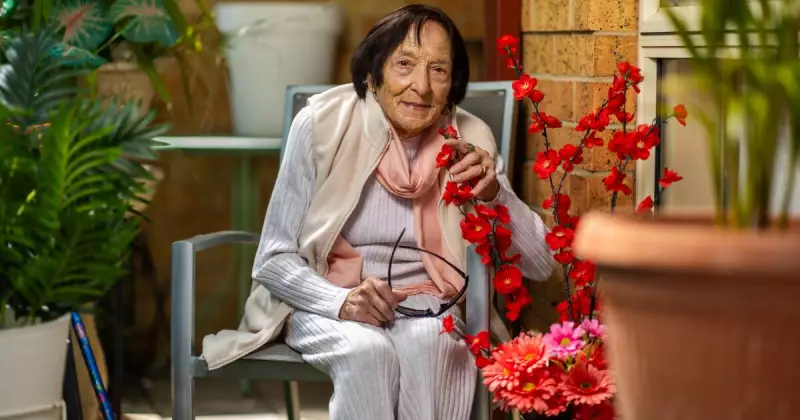
At 102 years young, Marina O'Rourke is a picture of spirited independence. The Higgins resident still catches her favourite Route 44 bus to Belconnen Mall for a morning cuppa and her daily newspaper, a routine she manages entirely on her own. Her story is remarkable, but it also raises a critical question for the Australian Capital Territory: is Canberra equipped to support a growing wave of centenarians living such full lives?
A Capital of Longevity
Australian Bureau of Statistics (ABS) data confirms the ACT has the highest life expectancy in the nation. Figures from November 2025 show men in the territory live to an average of 82.0 years, while women reach 85.8 years. This longevity is reflected in the numbers: the ABS recorded 7973 people aged 85 and older in the ACT in 2024, with 97 residents surpassing the 100-year mark.
Nationally, the centenarian population is set for a dramatic surge. From an estimated 6364 Australians over 100 in 2025, projections indicate this number will swell to more than 50,000 by 2050. This impending demographic shift presents a significant challenge for health, social, and community service providers across the country, and Canberra is at the forefront.

The Lived Experience: Independence and Isolation
Marina O'Rourke's journey to Canberra began in 1951 when she arrived from Naples, Italy, after World War II. She started as a kitchen maid at the former Canberra Community Hospital on Acton Peninsula, later becoming an Italian language teacher. Now, surrounded by 12 grandchildren and 16 great-grandchildren, she values her autonomy.
Her daughter, Pat O'Rourke, who lives nearby, often finds her mother has independently taken off to the mall. While this independence is a source of pride, it highlights a common reality for the very old. "It would be nice to have a group. A lot more attention is needed for older people," Mrs O'Rourke acknowledges, pointing to the loneliness that can accompany outliving one's peers.
Jenny Mobbs, Chief Executive of the Council on the Ageing (COTA) ACT, confirms that social opportunities for centenarians are scarce. "Seniors need respect, access to really good health services, and importantly, good company and family around them," she states, underscoring the need for connection beyond just clinical care.
Government Initiatives for an Ageing Canberra
The ACT government says it is actively working on its vision for older residents to be valued community members who lead active lives. A spokesperson outlined several key initiatives progressed over the past year:
- Upgrades through the Age-Friendly Suburbs Program, improving footpaths, lighting, and seating to enhance safety and connectivity.
- Partnering in Australia's first dementia-friendly cinema program, 'A Day at the Movies', to create inclusive cultural experiences.
- Planning for Australia's first large-scale creative ageing arts festival, led by and for older people, scheduled for March 2026.
Future commitments include exploring a Northside Seniors' Hub, ensuring all public libraries are dementia-friendly, and developing a Centre of Excellence in the Care of Older Canberrans through a partnership between North Canberra Hospital and the University of Canberra.
As Canberra continues to lead the nation in longevity, the story of Marina O'Rourke is both an inspiration and a call to action. Preparing for the coming wave of centenarians will require sustained investment in inclusive infrastructure, innovative social programs, and a community-wide commitment to ensuring that a long life is also a fulfilling one.