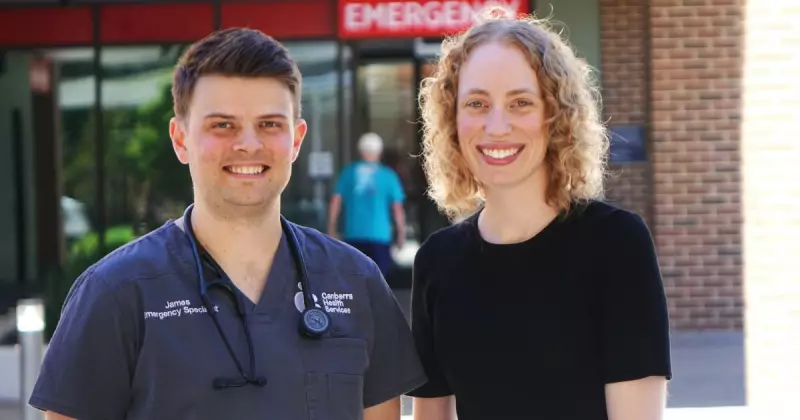
In Canberra, medical professionals like Dr James Wayte and Dr Alisse Da Paoli work tirelessly through demanding shifts, often lasting twelve hours or more, including overnight duties. They confront pain and tragedy daily, witnessing patients who recover and those who do not, as well as encountering both cooperative and challenging behaviours. Despite these pressures, both 31-year-old doctors radiate unwavering enthusiasm and positivity, bringing light to their critical roles in the healthcare system.
The Frontline of Emergency Care
Dr James Wayte operates in the emergency department at Canberra Hospital, where he was the first to assess a reporter's severe knee injury, showcasing his frontline role. Born at the former Woden Valley Hospital, now part of Canberra Hospital, he has deep local roots and treats thirty to forty patients each day. His work spans a wide range of cases, from infants and children to the elderly, including trauma from car accidents, pregnancy issues, and orthopedic injuries.
He notes that particularly difficult cases involve very sick babies, which resonate personally after his own experience with fatherhood, and major trauma incidents, such as accidents where drivers fall asleep at the wheel. To cope mentally, Dr Wayte emphasises focusing on providing the best care for each patient and relying on colleagues for debriefing and support. He also addresses the rise in occupational violence in emergency departments across Australia, including Canberra, where patient expectations have increased, sometimes unrealistically demanding complete solutions in a single visit.

Specialised Orthopaedic Insights
Further along the treatment pathway, Dr Alisse Da Paoli specialises in orthopaedics, dealing with the complexities of over two hundred bones in the human body. She finds variety in her work fascinating and is particularly moved by older patients who face life-altering injuries, often without family support. These individuals may realise they cannot return to their homes, making their situations emotionally challenging to witness.
Dr Da Paoli works night shifts in three-month blocks, with common shifts of ten to twelve hours, extended on weekends due to higher accident rates from sports and outdoor activities in Canberra. She describes orthopaedic surgery as a brutal science, using tools like saws routinely, but remains unfazed due to her family background in building. Her approach focuses on the injury itself and the satisfaction of helping patients recover, despite the confronting nature of severe cases.
A Patient's Perspective on Healthcare Diversity
From the viewpoint of one patient among approximately 160,000 annual emergency department visits in Canberra, the workforce stands out for its diversity, with staff from around the world exhibiting various backgrounds and appearances. The consistent calmness and friendliness of healthcare workers, from cafe staff to surgeons, leave a positive impression, reinforcing trust in the community's medical professionals.
This experience underscores the dedication of doctors like Dr Wayte and Dr Da Paoli, who navigate long hours, emotional highs and lows, and evolving patient demands with resilience. Their stories highlight the essential role of Canberra Hospital in providing care and the human element that makes healthcare in the capital both challenging and rewarding.