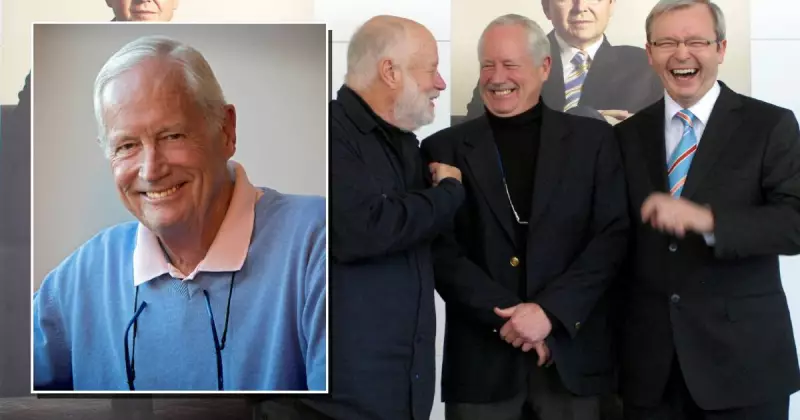
Sunlight filled the bedroom of Robert Macklin in his Weston home. Propped against pillows, the 84-year-old author and journalist wore a look of profound contentment. It was a scene of domestic warmth, with the sounds of family, laughter, and tea being poured drifting in from the kitchen. Yet this peaceful afternoon of Thursday, January 15, 2026, held a poignant significance. In just 18 hours, at a time of his own choosing, Robert Macklin would die.
A Decision for Dignity
Diagnosed eight years prior with chronic obstructive pulmonary disease (COPD), specifically emphysema from decades of smoking during his newspaper career, Macklin had reached a point where his declining quality of life was clear. "You get breathless, and that is horror-land," he explained. "You panic... Finally, you'll find that there is no way back to normality. That's what is happening to me, and I'm just chopping it off just before the event."
Facing the imminent loss of the ability to dress, use the bathroom, or sit in his study surrounded by his published works, Macklin chose to utilise the voluntary assisted dying (VAD) laws enacted in Canberra in November. For him, it was an evolutionary step in society. "I am so relieved. So relieved," he said, emphasising that a rigorous assessment process ensured he was of sound mind and his condition met the strict legal criteria.

An Extraordinary Life, Lived Fully
Macklin reflected on a rich life that made his choice feel complete. A long-time journalist for The Canberra Times and later a columnist, he was the author of more than 30 books. His portfolio included a novel adapted into a film, historical works, and a definitive biography of former Prime Minister Kevin Rudd.
"This is partly one of the things that allowed me to say, yes, I will opt to go out now, because I have had an extraordinary life," Macklin stated. "I've done all of the things that I wanted to do. So I'm not horrified at the thought of going." His one expressed regret was a sorrow that his generation had, in his view, failed to secure a better future for the next.
A Family's Support and a Peaceful Process
His wife of 60 years, Wendy, and his sons, Rob and Ben, provided unwavering support. The atmosphere in the family home was described as calm, purposeful, and even punctuated by laughter. Wendy highlighted the stark contrast to the drawn-out, painful deaths they had witnessed in the past. "The prospect is so horrible, it makes the decision easy, really," she said.
Son Ben detailed how the process was entirely driven by his father's wishes, with opportunities to pause or stop at every stage. "It's completely up to Dad," he affirmed. On his final evening, the family planned to play their traditional three-handed bridge. The following morning, January 16, they would be with him as he peacefully went to sleep.
For Robert Macklin, the ability to author his own final chapter brought immense peace. Surrounded by his life's work and his loving family, he stepped away from his "horror-land" of breathlessness, embracing a dignified end made possible by a law he believed marked progress for all Australians.