A significant number of Australians report they neither trust nor fully comprehend the Health Star Rating system displayed on food packaging. This comes as the federal government contemplates making the labels compulsory, following a decade of poor voluntary uptake.
Confusion and Distrust Among Consumers
Introduced back in 2014, the voluntary front-of-pack Health Star Rating (HSR) was designed to help shoppers quickly identify healthier options. Products receive a score between half a star and five stars, calculated by balancing negative ingredients like sugar, salt, and saturated fat against positive ones such as fibre, protein, and vegetable content.
However, research indicates the system has failed to gain widespread acceptance or understanding. A survey conducted by Food Standards in 2025 revealed that while most Australians recognise the HSR, little more than half say they actually trust it. Consumers involved in studies expressed deep scepticism, questioning the validity of high scores on products they perceive as unhealthy.

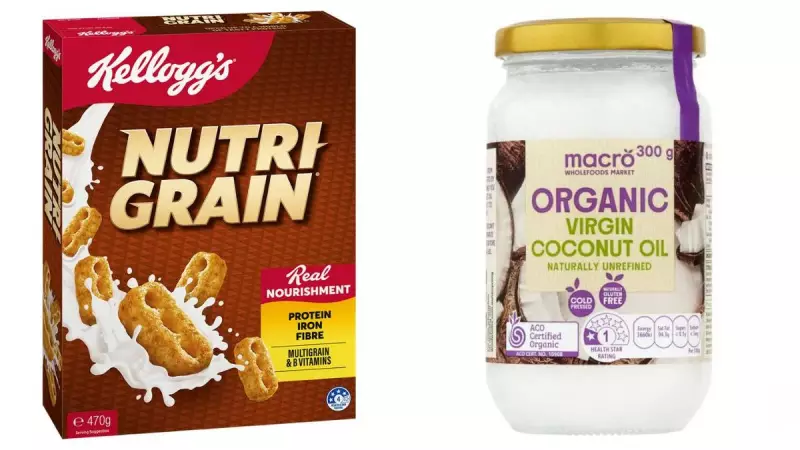
"Is it telling the truth? Can you really trust a product if it has a four-star or five-star rating?" one shopper asked researchers. Another pointed out the perplexing nature of ratings on familiar items: "Some breakfast cereals, like Coco Pops or Nutri-Grain, have three and a half stars — what does that even mean?"
System Flaws and Industry Reluctance
The problems with the HSR are multifaceted. A critical flaw is that the rating only works for comparisons within the same food group, not across the entire supermarket. Research commissioned by the system itself found that 74% of shoppers are unaware of this limitation.
Furthermore, the rating does not account for the level of food processing or the presence of additives like artificial sweeteners, colourings, or preservatives. This has led to situations where ultra-processed foods can outscore fresh, wholefood alternatives, creating a misleading picture of their healthiness.
Dr. Alexandra Jones from the George Institute for Global Health highlighted another major issue: selective application by the food industry. Only about 35% of eligible products carry the rating, more than ten years after its launch. "We still see stars mainly on products that score well, while less healthy items often omit them," Dr. Jones said. "That makes it harder for consumers to use the system with confidence."
The Push for Mandatory Labelling and Reform
The voluntary scheme's target was to achieve a 70% uptake rate by November 2025. With monitoring data showing only about one-third of products displaying the stars, the federal government has stated it will consider making the HSR mandatory.
Public health advocates, including the Cancer Council, support mandatory labelling but warn it must be paired with significant improvements. They argue that without clearer criteria for calculating stars and better public education, a compulsory policy could increase consumer confusion rather than alleviate it.
Sarah Dickie, a researcher from Deakin University's Institute for Physical Activity and Nutrition (IPAN), emphasised the risk of misleading ratings. "Ratings as high as 3 stars or 4 stars on junk foods can easily mislead consumers about the healthiness of packaged foods," she noted.
For now, experts advise shoppers to use the Health Star Rating as just one tool among many. They recommend always checking the full nutrition information panel and the ingredient list to make the most informed choice for their health.