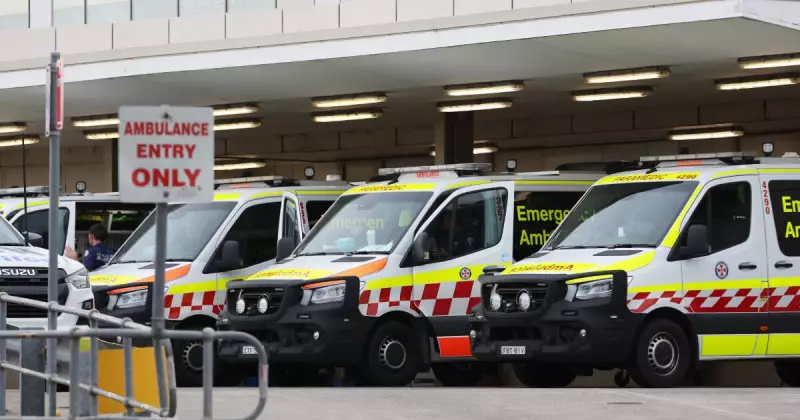
The announcement of a new ambulance station for the growing community of North Rothbury has been met with a stark reality check from Novocastrians, who argue that without fixing crippling hospital 'bed block', more infrastructure will not solve emergency response failures.
‘Soon’ Means Two Hours: Personal Stories of Ambulance Delays
In a letter to the Newcastle Herald, Speers Point resident Tony Shedden shared two alarming recent incidents. A friend living in a Warners Bay high-rise suffered a medical episode in a lift. After calling an ambulance and describing symptoms suggestive of a stroke, he was told help was coming "soon"—a wait that ultimately stretched to two hours. The stroke was later confirmed at hospital, where he remained for a fortnight.
In a separate case just last Friday, an elderly man in his 80s with a pacemaker collapsed at the Belmont Lakeside Holiday Park. After a three-hour wait for an ambulance, fellow caravan club members finally drove him to Belmont Hospital themselves, where he was diagnosed with a dangerously weak heart rate.

Bed Block: The Root Cause Paralyzing the System
Mr Shedden argues the core issue is not a lack of ambulances or stations, but a systemic logjam known as 'bed block' or 'ramping', where paramedics are stuck for hours waiting to offload patients at overwhelmed emergency departments like the John Hunter Hospital.
"It is all well and good to build new ambulance stations and increase the staff but while ever we have ambulances lined up at emergency wards because there is no room for patients to be treated there, the problem of available ambulances will remain," he wrote. He posed a dire question to the state government: "How many deaths will it take before the state government realises the need for more staffing in the hospital system statewide?"
Broader Reader Frustrations: Medicare, Costs and Priorities
The ambulance crisis sparked a wider debate in the letters page about healthcare affordability and government priorities. Edgeworth's Michael Bromley questioned the value of the Medicare card, recounting a $110 GP fee for pensioners, with only around $60 rebated.
From Warners Bay, Michael Stevenson highlighted exorbitant out-of-pocket costs for medical scans, revealing his wife faced a $500 fee after Medicare for a 15-minute pre-operative scan conducted by a nurse, a cost not covered by private health insurance.
Muswellbrook's Robert Stewart, 83, criticised federal spending priorities, suggesting "$600 million for a football team in PNG and $30 million for an organisation could have instead been allocated for hospital beds."
Other letters touched on local issues, including frustration over the protracted outage of the Stockton ferry service, which Colin Rowlatt argued would never be tolerated in Sydney, and ongoing community division over the protest actions of the Rising Tide environmental group.
The collective voice from the Hunter region paints a picture of a community deeply concerned with eroding public services, rising living costs, and a perceived disconnect between government announcements and on-the-ground realities in health and infrastructure.