A revolutionary piece of medical technology has provided a Colac mother with a potentially life-saving early warning, detecting her third melanoma during a routine scan.
High-Tech Detection Saves Lives
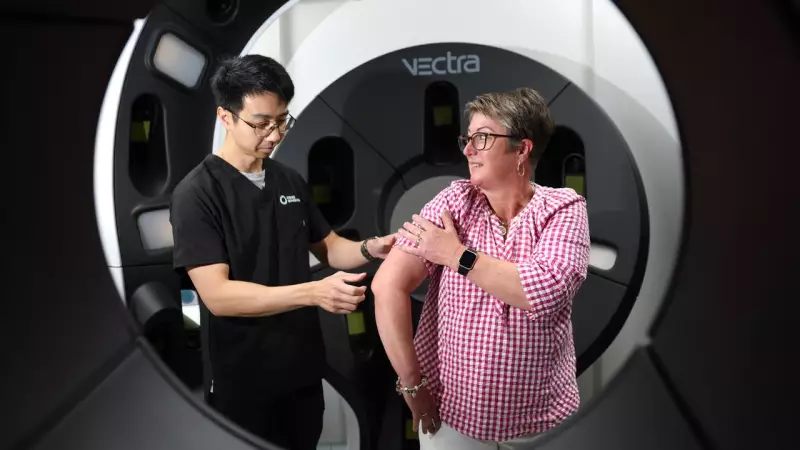
Deb Monaco, a mother from Colac in regional Victoria, is crediting a new 3D body mapping system for catching her latest melanoma. The advanced technology, known as the Vectra WB360, performed a full-body scan at her dermatology clinic in Geelong.
The system works by creating a highly detailed, three-dimensional image of a patient's entire body surface. This digital "map" is then stored and used as a baseline for comparison during future checks. This allows specialists to pinpoint even the subtlest changes in moles or skin lesions that might be invisible to the naked eye or forgotten by the patient.

A Personal Battle with Skin Cancer
For Ms. Monaco, this was not her first encounter with the disease. She had previously been diagnosed with and treated for two melanomas. Like many Australians, she remains vigilant with regular skin checks, understanding the critical importance of early detection.
During her latest appointment at the clinic, the Vectra WB360 scan flagged an area of concern. Subsequent analysis and a biopsy confirmed it was indeed another melanoma. Because it was found so early, the treatment was swift and effective, involving a surgical procedure to remove the cancerous tissue.
The early detection facilitated by the 3D mapping likely prevented the cancer from advancing to a more dangerous stage.
The Future of Skin Cancer Surveillance
The introduction of technology like the Vectra WB360 represents a significant leap forward in dermatological care and preventive medicine. For patients with a history of skin cancer or those at high risk, it offers an unprecedented level of surveillance.
The key advantages of this system include:
- Comprehensive Mapping: It captures 92% of the body's surface in high resolution, including areas difficult to self-examine.
- Objective Comparison: By comparing new images to old ones, it removes guesswork and highlights minute changes.
- Early Intervention: Identifying changes at their earliest possible stage dramatically improves treatment outcomes and survival rates.
Medical professionals emphasise that while this technology is a powerful tool, it complements rather than replaces regular professional skin checks and sun-safe behaviours. Australia has one of the highest rates of skin cancer in the world, making such advancements in detection technology vital for public health.
Deb Monaco's story serves as a powerful testament to the impact of medical innovation. Her experience highlights how cutting-edge tools, combined with personal vigilance, are creating new frontiers in the fight against melanoma and offering hope and better outcomes for countless Australians.