Plants produce their own food; their leaves act as green-coloured solar panels, harnessing energy from the sun and storing that energy in the root system and other organs. This allows many of our plants to endure periods of drought or other extreme climatic events.
Tough Plants for Western Australian Summers
Various native grasses, along with scaevola and chrysocephalum, are among the toughest plants that withstand the severe summers we experience in Western Australia. When facing water stress, these plants rely on their root systems to extract the moisture essential for survival.
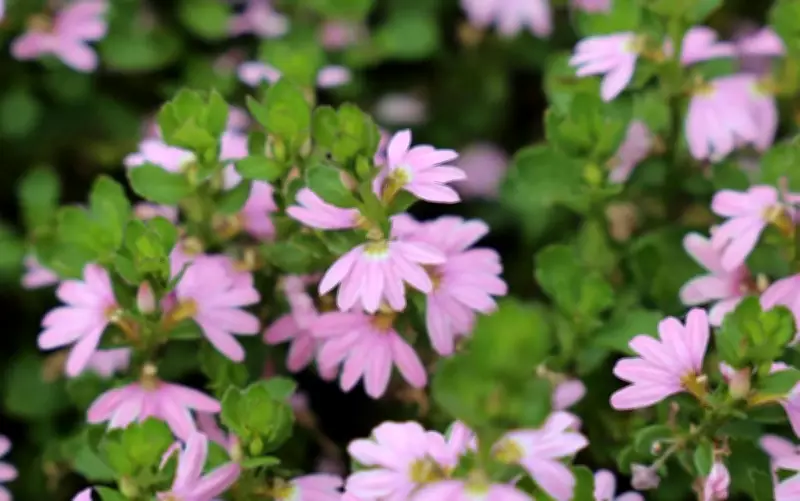
Scaevola Pink Fusion
Scaevola humilis ‘PFS200’ PBR Pink Fusion is one of the longest-living scaevolas, flowering all year round. It develops underground rhizomes that help it through drought periods. The compact green foliage is covered in beautiful pink fan flowers, growing to 30 cm high and 1 m wide.

Dianella Baby Breeze
Dianella caerulea ‘DCNC3’ PBR Baby Breeze is a native grass bred to grow extra rhizomes, allowing it to spread underground and form clumps as it wanders through garden beds. With dark green foliage, it is used extensively for erosion control and weed suppression in public gardens. This grass can be whipper-snipped to ground level and produces blue flowers followed by bright blue berries. It grows 30 cm high and 60 cm to 1 m wide.
Lomandra Lady Tanika
Lomandra longifolia ‘LM360’ PBR Lady Tanika is a compact, clumping grass with elegant, fine green leaves, bred to be highly disease-resistant. This female form has non-viable seeds and self-cleaning flowers that don’t attract ants, maintaining a neat appearance longer. Lady Tanika grows to 40 cm high and 60-75 cm wide, ideal for mass planting and drainage swales.
Chrysocephalum Desert Flame
Chrysocephalum apiculatum PBR Desert Flame is a versatile groundcover, one of the toughest and longest-flowering on verges. Golden flowers against silver-grey foliage are stunning. It grows in most soil types and can be pruned anytime, reshooting from the central crown. Reaching only 15 cm high, it spreads to 50 cm wide.
Tip of the Week
Although Dianella berries are considered edible, some species are toxic. It is best to err on the side of caution and leave the berries for the birds.

Three Jobs to Do Now
- Save the seeds of basil plants. They should be brown and will mature from the bottom upwards. Store in a glass jar.
- Bare-rooted ornamental and fruit trees will be hitting the nurseries now, so getting in early is the best advice.
- Even though many deciduous fruit trees will still be in leaf, autumn pruning will help control their size.