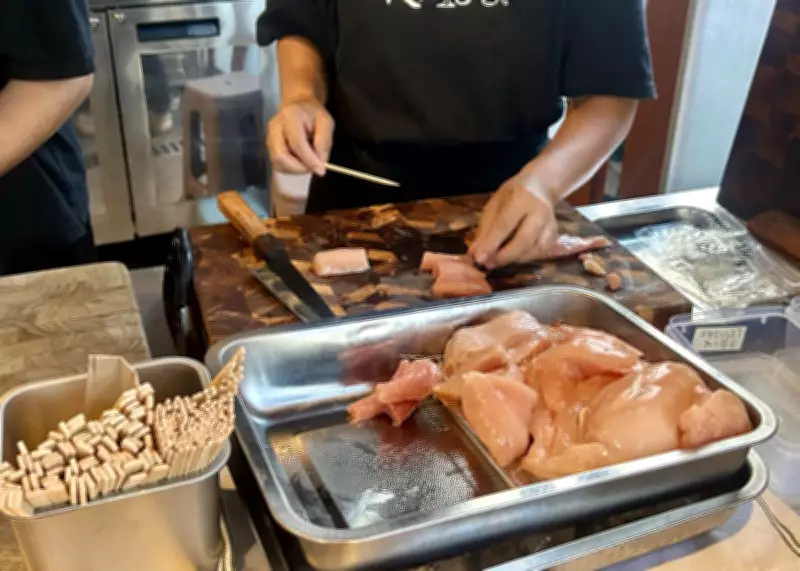
Kaiju means 'strange beast' in Japanese, a throwback to the post-war film genre in which giant creatures like Godzilla stomped across the screen. It is also the name of a new restaurant in Bali. A cross between an Izakaya Japanese restaurant and a neighbourhood chicken shop, Kaiju has a unique philosophy: the kitchen uses every cut from the bird, from familiar chicken breasts to lesser-known parts like the ribs. This approach allows diners to experience the flavour and texture of 22 different pieces, offering a minimalist, almost surgical exploration of the world's most consumed meat.
The chickens are free-range, sourced from a farm in Bedugul in Bali's central highlands. Each piece is cooked over binchotan charcoal, which has a low burning temperature and emits little smoke, and is grilled on a wooden skewer. With only 22 seats, every customer at Kaiju is celebrated. If you sit at the bar, as I did, you are entertained by Leo, one of the co-owners. The decor is Japanese and minimalist, a clean space with clean lines, and it takes only minutes to get your food: essentially Asian street food with a premium price tag.
Starting with the Familiar
I began with the 'familiar' section of the menu, ordering chicken tenders served on an oblong-shaped clay plate, accompanied by a bowl of rice and cubes of sweet potato. The flavour was particularly sharp, glazed with a continuously ageing house 'tare'. Tare is a Japanese marinade made from a reduction of soy sauce, mirin, sake, and sugar, giving a sweet-and-sour flavour.

Venturing into Rare Finds
I skipped the section of the menu that uses parts of the bird most restaurants throw away: the heart, gizzard, intestines, and oysters. Instead, I turned to the 'rare finds' section and ordered a chicken wing skin skewer. The flavour was intense, but the portion was tiny, maybe a teaspoon of protein, despite the fact that six wings went into making it, along with a commensurate amount of time in the kitchen.
Kaiju offers a traditional yet innovative dining experience, celebrating every part of the chicken in a setting that blends Japanese aesthetics with Balinese charm.