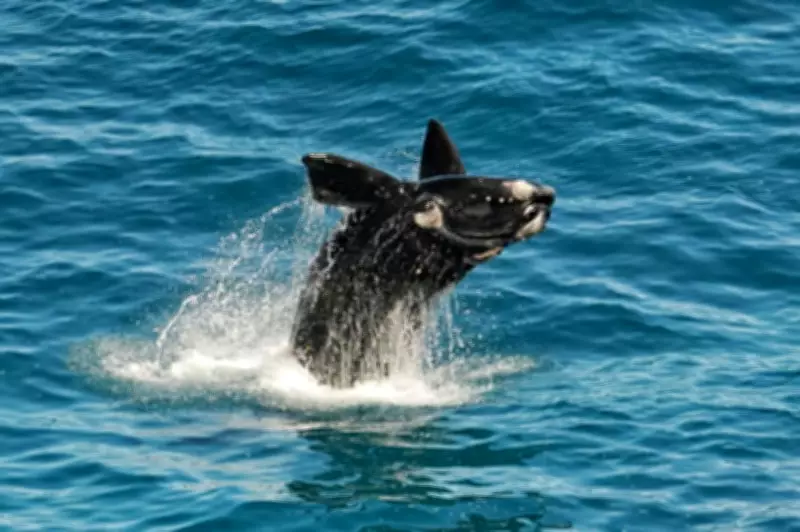
Once celebrated as a global conservation triumph, the southern right whale is now emerging as a critical warning signal for how climate change is devastating threatened marine species, according to groundbreaking new research.
Alarming Shift in Whale Populations
A comprehensive joint study led by scientists from Flinders University and Curtin University has revealed a disturbing trend reversal for these majestic creatures. The research, focusing on populations at Head of Bight in South Australia, documents how environmental changes are undermining previous recovery efforts.
From Success Story to Climate Indicator
The southern right whale was once considered one of the world's most successful marine conservation stories, with populations showing steady recovery after decades of protection from commercial whaling. However, the new findings present a starkly different picture, with researchers identifying multiple climate-related pressures now threatening the species' survival.

Scientists involved in the study emphasize that the whales' changing fortunes serve as a powerful indicator of broader oceanic ecosystem distress. "What we're witnessing with southern right whales represents a canary in the coal mine scenario for marine environments worldwide," explained one lead researcher from Flinders University.
Research Methodology and Key Findings
The study employed multiple approaches to assess whale health and population dynamics:
- Long-term photographic identification of individual whales
- Systematic monitoring of calving rates and calf survival
- Analysis of feeding patterns and migration changes
- Assessment of body condition and health indicators
Researchers discovered that warming ocean temperatures, shifting prey availability, and altered migration patterns are creating unprecedented challenges for southern right whale populations. The Head of Bight region, a crucial calving and nursery area, has shown particularly concerning changes in recent years.
Implications for Marine Conservation Policy
The study's authors argue that their findings necessitate urgent revisions to current conservation strategies. Traditional protection measures that helped whale populations recover from whaling are no longer sufficient to address the complex, interconnected threats posed by climate change.
Marine scientists warn that without immediate, coordinated action to address the root causes of climate change and implement adaptive management strategies, the hard-won gains in southern right whale conservation could be rapidly reversed. The research team calls for enhanced monitoring programs and international cooperation to protect these vulnerable marine giants and the ecosystems they inhabit.