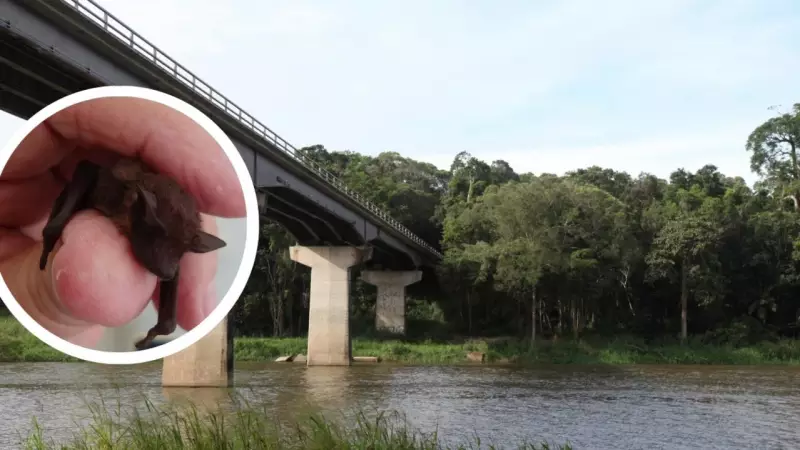
A significant step forward has been made in a long-running campaign to protect a colony of tiny bats that call Cairns' Barron River Bridge home. The push for a 'micro-bat-friendly' design for the bridge's replacement has gained crucial momentum, offering hope for the local wildlife.
Community Campaign Secures Design Progress
The campaign, spearheaded by local wildlife advocates, has focused on ensuring the planned new bridge includes specific features to accommodate the resident micro-bat population. These small, insect-eating bats currently roost in the expansion joints and crevices of the existing structure.
Recently, this advocacy has yielded a tangible result. Transport and Main Roads (TMR) has confirmed it will include "integrated bat roosting boxes" in the reference design for the new Barron River Bridge. This decision is a direct response to the sustained efforts of the community and represents a major win for conservationists.

Local campaigner and photographer, Tim Hackwood, has been instrumental in raising awareness. He has meticulously documented the bats' use of the bridge for years, providing vital evidence of their reliance on the structure. His work, alongside that of other concerned residents, has kept the issue in the public eye and on the agenda of decision-makers.
Why the Bridge is Critical for Local Bats
The existing Barron River Bridge serves as a crucial daytime roost for several species of micro-bats. These include the vulnerable large-footed myotis, which fishes over the river, and other species like the eastern horseshoe bat.
Losing their established home without a planned alternative could be devastating for the colony. Bats play a vital ecological role, acting as a natural pest control by consuming vast quantities of insects, including mosquitoes. Their protection is a key part of maintaining the local environmental balance.
The new design approach aims to provide a dedicated, safe habitat within the new infrastructure from the outset. This proactive method is far preferable to trying to retrofit solutions after construction or simply displacing the animals.
The Road Ahead for the Project
While the commitment to include bat boxes in the reference design is a positive development, campaigners acknowledge the work is not over. The focus now shifts to ensuring the design is optimised and effectively implemented during the construction phase.
Key details, such as the exact placement, size, and number of roosting boxes, as well as the materials used, will need careful consideration to meet the bats' specific needs. Ongoing community consultation and expert ecological input will be essential.
The replacement of the Barron River Bridge is a major infrastructure project for the Cairns region. This progress demonstrates that large-scale development and environmental stewardship can, and should, go hand in hand. It sets a valuable precedent for considering urban wildlife in future projects across Australia.
The community's victory shows that persistent, evidence-based advocacy can influence planning outcomes. The hope is that the final structure will not only serve motorists for decades to come but will also remain a secure home for Cairns' tiny, beneficial bat residents.