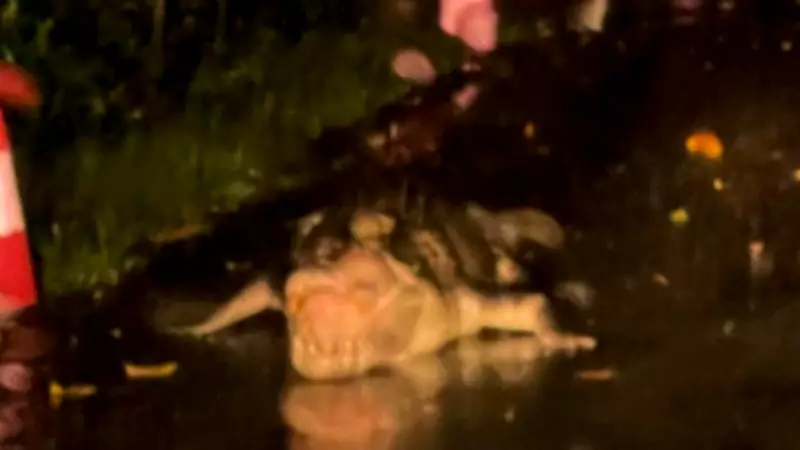
A crocodile has been spotted lurking near the docking bay of a closed ferry service in Far North Queensland, sparking safety concerns among local residents and wildlife authorities. The sighting occurred in a remote area where the ferry, which has been out of operation for some time, typically docks, highlighting the ongoing challenges of human-wildlife interactions in this region.
Details of the Crocodile Sighting
The crocodile was observed waiting patiently in the waters adjacent to the docking bay, a location that is usually bustling with ferry activity but has been quiet due to the service's closure. Eyewitnesses reported the reptile appearing to be a large saltwater crocodile, a species known for its aggressive behavior and significant size, which can exceed five meters in length. This incident underscores the natural habitat encroachment issues faced in coastal areas of Queensland.
Safety Concerns and Local Response
Local authorities have been alerted to the presence of the crocodile, and warnings have been issued to the public to avoid the area until the situation is assessed. Wildlife experts emphasize that crocodiles are opportunistic predators and may be attracted to such locations due to reduced human activity, which can provide easier access to prey. The closure of the ferry service has inadvertently created a more secluded environment, potentially increasing the risk of encounters.

Impact on Community and Environment
The sighting has raised broader questions about wildlife management and infrastructure in Far North Queensland. Residents express worry over the safety of nearby communities, especially if the crocodile remains in the area or if similar incidents occur in the future. Environmentalists point out that this event highlights the need for balanced conservation efforts, as human developments often intersect with natural habitats, leading to conflicts.
Historical Context and Wildlife Management
Far North Queensland is no stranger to crocodile sightings, with numerous reports each year in both urban and rural settings. The region's extensive waterways and tropical climate provide ideal conditions for saltwater crocodiles, which are protected under Australian law. Management strategies typically involve monitoring, relocation, or, in rare cases, removal of crocodiles deemed a threat to human safety.
In this case, authorities are likely to conduct a risk assessment to determine the best course of action, considering factors such as the crocodile's size, behavior, and proximity to human settlements. The incident serves as a reminder for locals and visitors to remain vigilant and adhere to safety guidelines when near water bodies in crocodile-prone areas.
Future Precautions and Recommendations
To mitigate future risks, experts recommend increased signage and public awareness campaigns about crocodile safety. Additionally, regular patrols and monitoring of docking bays and other infrastructure in remote locations could help prevent similar occurrences. As climate change and urban expansion continue to affect wildlife patterns, proactive measures are essential to ensure coexistence.
Overall, the crocodile sighting near the closed ferry docking bay in Far North Queensland underscores the delicate balance between human activity and wildlife conservation. It calls for ongoing vigilance and adaptive management strategies to protect both community safety and the region's rich biodiversity.