Corrimal Anglers Reel in Large Bull Shark at Wollongong Beach
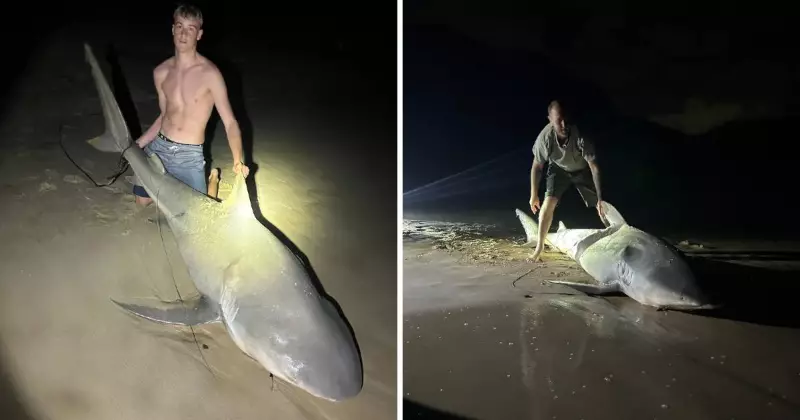
Fishermen have successfully caught a three-metre bull shark from a popular Wollongong beach, an event that follows a concerning cluster of shark attacks across New South Wales. While such incidents remain statistically rare, experts emphasise that beachgoers can take practical precautions to minimise risks when entering the ocean.
Father and Son Duo Make Unusual Catch
Corrimal residents Ben and Jed Edwards, a father and son pair, hooked the bull shark late on Tuesday night, reeling it in after approximately two hours. The shark was caught about 100 metres offshore from the beach. Both are experienced anglers, but this marked their first deliberate attempt to target a bull shark, which is not a protected species in NSW, unlike tiger sharks and great white sharks.
Ben Edwards, who swims daily, admitted that sharks are always in the back of his mind when entering the water. "Just makes you aware there's definitely stuff out there ... you're obviously not the only one swimming out there," Jed added. Ben noted that current conditions, including murky water and time of day, significantly alter the risk compared to clear, sunny days.

Recent Attacks Heighten Concerns
This catch occurred within a tense 48-hour period that saw four separate shark incidents in NSW waters. Approximately 29 hours prior, Andre de Ruyter sustained life-threatening injuries in a suspected bull shark attack at Manly on Monday evening. This was preceded by an attack on Sunday afternoon, where a large bull shark is believed to have bitten a 12-year-old boy at Vaucluse, leaving him fighting for his life.
Additional incidents included a shark biting a child's surfboard at Dee Why on Monday and a surfer receiving minor injuries at Point Plomer on the Mid North Coast on Tuesday. Dr Teaniel Mifsud, a researcher from the University of Wollongong who studies human-shark interactions, described this cluster as unusual.
Environmental Factors Drawing Sharks Inshore
The recent heavy rainfall across the region has created turbid, murky water conditions, which are known to attract bull sharks closer to shore as they hunt for food. Dr Mifsud explained that bull sharks are also more prevalent in NSW waters during this time of year. "People are using the water more, that is something we can't ignore," she added, highlighting the increased human activity coinciding with shark presence.
In response to the heightened activity, Bulli and Woonona beaches were temporarily closed around 12.40pm on Wednesday after a lifeguard spotted an unspecified shark species from shore. The beaches were reopened later that afternoon.
Shark Attacks Remain Rare Events
Despite the recent cluster, shark attacks are exceptionally rare. In the Illawarra region, the last injury from a shark occurred in January 2020, when a surfer was bitten on the foot at Windang. The most recent fatal attack in the broader Illawarra Shoalhaven area dates back to 1966, when a great white shark killed a crewman off Jervis Bay.
Globally, the International Shark Attack File, maintained by the University of Florida, records fewer than 100 unprovoked shark bites annually. The organisation states that the chances of being bitten by a shark are "incredibly low."
Expert Advice for Minimising Risk
Dr Mifsud, who has collected numerous accounts of human-shark encounters, found that most interactions are benign, often described as exciting or awe-inspiring by frequent ocean users. Negative experiences are typically linked to specific shark behaviour, species, or unexpected encounters in unfamiliar locations.
To reduce risks, Dr Mifsud and authorities recommend the following precautions:

- Avoid swimming at dawn, dusk, or in murky water
- Steer clear of river mouths, especially after storms
- Swim, surf, and dive with other people
- Choose patrolled beaches and stay close to shore
- Do not enter the water near people fishing or where schooling fish are gathered
- Utilise shark alert apps that notify users of tagged shark movements
Surf Life Saving NSW and Wollongong City Council have both issued advisories urging extra caution due to increased shark activity along the coastline. The Taronga Conservation Society Australia, which manages the Australian Shark Incident Database, echoes these safety guidelines.
Community Events Proceed with Safety Measures
Organisers of the upcoming Wollongong Aquathon have reassured participants that comprehensive safety protocols are in place to protect athletes during the event. This reflects a balanced approach, acknowledging shark presence while enabling community activities to continue with appropriate precautions.