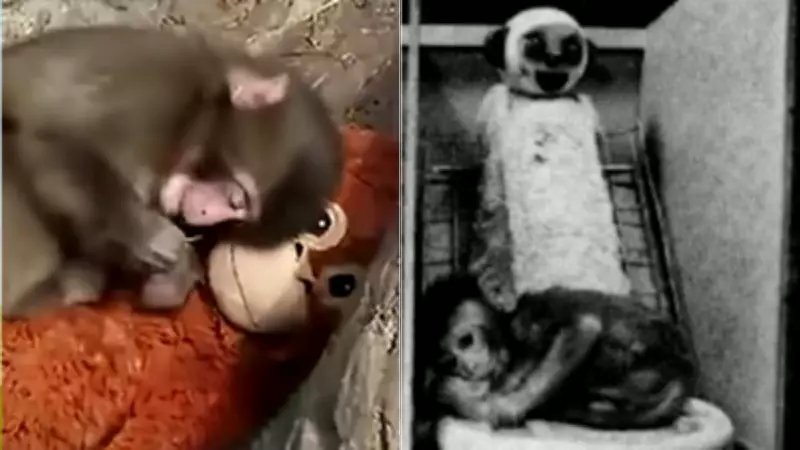
Baby Monkey's Plush Toy Attachment Echoes Famous Harlow Experiment
Punch, a baby macaque, has captured hearts worldwide by clinging to a plush toy after his mother rejected him, a poignant reflection of a famous and controversial experiment on early attachment. Born in July 2025, the infant was abandoned by his mother and taken in by Ichikawa City Zoo in Japan. Struggling to integrate with his troop due to his lower status in the hierarchy, he was often pushed to the ground by older monkeys.
To ease his anxiety and loneliness, zookeepers provided him with a soft IKEA orangutan toy, which quickly became his constant companion. Baby macaques typically cling to their mothers for much of their first year of life, making this surrogate a vital source of comfort. Videos show Punch carrying his plush "mum," hugging it, and seeking solace after conflicts with his group, leading to viral fame.
Zoo Visitors Flock as Toy Sells Out Globally
Long queues have formed at his enclosure as visitors flock to see Punch, while the plush toy has sold out in stores worldwide. IKEA has even sent additional orangutan toys for him to enjoy. In Australia, the toy is low in stock, with some resellers on eBay charging inflated prices. This surge in interest highlights the global fascination with Punch's story.

Parallel to Harlow's Cruel 1950s Experiment
Professor Mark Nielsen from the University of Queensland noted that Punch's attachment mirrors a famous 1950s experiment by US psychologist Harry Harlow. Harlow removed rhesus monkeys from their mothers and offered two surrogate "mothers": one made of wire that provided food and one covered in soft terry towelling for comfort. Contrary to behaviorist theories that predicted attachment based on reward, the baby monkeys spent most of their time with the soft surrogate, showing that emotional care is more critical than mere physical sustenance.
Nielsen remarked, "Today, we would see Harlow's experiments as cruel and unkind. You wouldn't do this to a human baby, so we shouldn't do it to primates." While the zoo wasn't conducting an experiment, Punch's situation naturally parallels Harlow's study, offering a real-world example of these principles.
Implications for Modern Attachment Theory
The experiment helped shape modern attachment theory, which emphasizes that healthy development depends on secure emotional bonds with attentive caregivers. Without warmth and support, even well-fed children may fail to form secure attachments. Punch's plushie, though it provides no food, offers him a safe and comforting presence, aiding his emotional well-being.
Since bonding with the toy, Punch has begun making friends with other macaques, slowly climbing the social ladder while keeping his beloved companion close. His story serves as a powerful reminder of the importance of emotional nourishment in all beings.