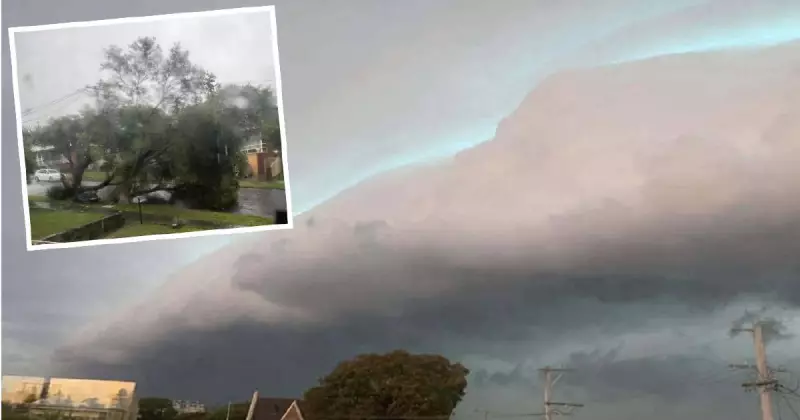
A fierce summer storm has wreaked havoc across Newcastle, plunging thousands of homes into darkness and causing significant disruption across the Hunter region on Sunday afternoon.
Storm Front Brings Chaos and Damage
The intense weather system, which moved through the area on January 4, 2026, brought with it damaging winds, heavy rainfall, and large hailstones. The Bureau of Meteorology issued a severe weather warning for the Newcastle city and Stockton areas, highlighting the risks of flash flooding and destructive winds.
Intense rainfall was recorded, with Mangrove Mountain receiving 20mm of rain in just over an hour. The deluge led to flash flooding in several suburbs, while powerful winds brought down trees and power lines. One notable incident involved wires down on Turton Road in Waratah.

Widespread Power Outages and Transport Disruption
The storm's impact on the electricity network was severe. A large-scale power outage affected thousands of Ausgrid customers across a swathe of Newcastle suburbs, including Lambton, Waratah, Broadmeadow, Georgetown, Hamilton North, and Mayfield. The energy distributor has confirmed it is aware of the issue and crews are investigating the major outage.
Transport was also heavily disrupted. The Newcastle Inner City Bypass southbound at University Drive was affected by water over the road, prompting authorities to advise motorists to avoid the area. The storm's ferocity was further demonstrated by reports of two-centimetre hailstones at Berowra just before 4pm.
Clean-Up Begins as Heatwave Looms
The clean-up operation is now underway across affected communities. Residents are urged to exercise caution around fallen power lines and damaged trees. For emergency assistance in floods and storms, the public should contact the NSW State Emergency Service (SES) on 132 500.
This wild weather event arrives just ahead of a predicted heatwave for New South Wales. Forecasts indicate Newcastle is set to experience tops of 33, 34, and 35 degrees Celsius from Thursday onwards, compounding the challenges for those still without essential services.
The storm cell is reported to be moving in an easterly direction, away from the Newcastle area.