Tropical Cyclone Maila Continues to Weaken in Solomon Sea
Tropical Cyclone Maila is continuing to weaken in the Solomon Sea, with meteorological experts increasingly confident it will not reach Queensland as a cyclone. The system was officially downgraded to a category one cyclone at 4am AEST on Saturday, according to the latest updates from the Bureau of Meteorology.
Current Conditions and Forecast Track
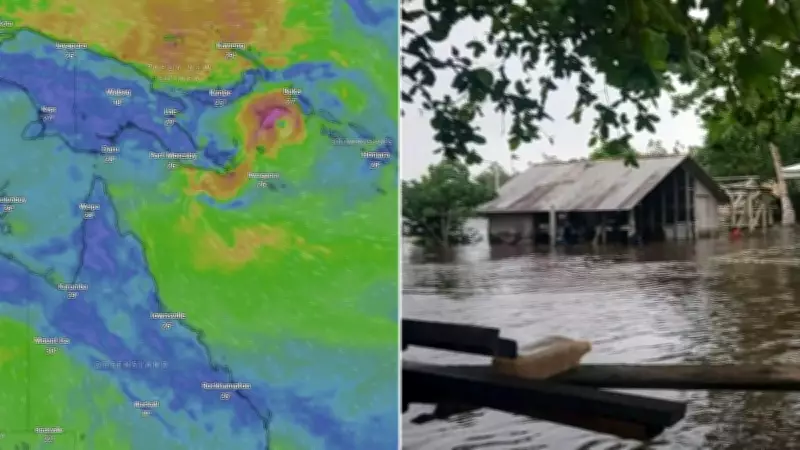
The Bureau of Meteorology reports that Cyclone Maila currently has sustained winds near the centre of approximately 75 kilometres per hour, with gusts reaching up to 100 kilometres per hour. The system is slow moving, positioned about 630 kilometres west-northwest of Honiara and 810 kilometres east of Port Moresby. Importantly, there are no current warning or watch zones in place for the immediate area.
Senior meteorologist Dean Naramore from the Bureau of Meteorology provided detailed analysis of the system's expected behavior. "We're likely to see it continue to weaken as we move through today and tonight," Naramore stated. The forecast track shows Cyclone Maila weakening as it moves in a west-southwest direction toward Papua New Guinea.

Factors Contributing to Weakening
Several environmental factors are contributing to the cyclone's diminishing strength. Increasing wind shear is disrupting the cyclone's structural integrity, while cooler ocean temperatures—now below 27 degrees Celsius—are reducing the energy the system can draw from the ocean waters. These combined factors are expected to cause further weakening throughout the weekend.
The system is forecast to move across or near southeastern Papua New Guinea before potentially emerging into the Coral Sea early next week. However, by that stage, meteorologists expect it to have dropped below tropical cyclone strength entirely.
Potential Impact on Queensland
While the system may reach Far North Queensland, it is expected to arrive only as a weak low-pressure system or trough rather than as a cyclone. "That's going to lead to an increase in rain and thunderstorm activity, but at this stage we're not expecting it to be a cyclone as it approaches the Queensland coast," Naramore explained. This means Queensland is likely to avoid the most severe impacts typically associated with tropical cyclones.
Impact on Solomon Islands
While Queensland may avoid the worst of the system, communities in the Solomon Islands have already experienced significant impacts from the storm. Authorities have evacuated people from remote areas amid concerns that many communities are cut off from essential supplies. The slow-moving storm—described as the strongest recorded this far north in the Solomon Sea—has been battering islands for days, though the most destructive winds have remained offshore.
Tory Clawson, Save the Children country director, highlighted the ongoing challenges. "These are very far flung places," Clawson said. "There have been no boats or flights in and out for four days, so there's a significant concern about food and water supplies." Remote communities continue to face difficulties as the storm lingers in the region.
Uncertainty and Regional Context
Forecasters acknowledge there remains some uncertainty around Maila's precise path, with the system potentially weakening further before reaching the Coral Sea or dissipating completely over Papua New Guinea. Meanwhile, as Cyclone Maila weakens in the northern region, meteorological attention is turning toward New Zealand, where Cyclone Vaianu is expected to bring damaging winds, heavy rain, and dangerous coastal conditions in what authorities describe as a potentially life-threatening, multi-hazard event.
The situation continues to be monitored closely by meteorological agencies across the region, with updates expected as conditions evolve. Residents in affected areas are advised to stay informed through official weather channels and follow any guidance from local authorities regarding weather preparedness and safety measures.