A specialised jack-up barge that spent nearly 50 days berthed near Stockton Bridge has finally reached its destination, marking a pivotal moment for a critical infrastructure project in the Hunter region.
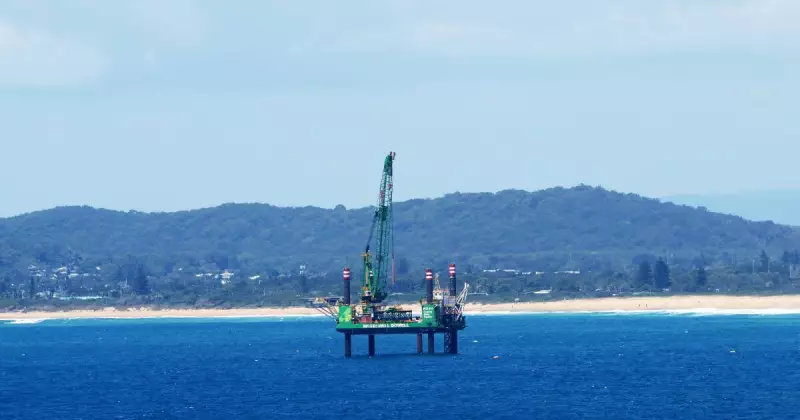
The vessel, which journeyed from Indonesia, is now stationed approximately 800 metres offshore from Nine Mile Beach, adjacent to the site of the future Belmont Desalination Plant.
Offshore Construction Phase Begins
This arrival signals the commencement of the project's most intricate offshore construction phase. The barge will serve as a stable work platform for installing a direct ocean intake structure and tunnelling a pipeline beneath the seabed.

This pipeline will carry seawater to the onshore treatment facility. Hunter Water's acting chief executive officer, Jennifer Hayes, emphasised the significance of this step.
"Now that the jack-up barge is in place, we're progressing into the most complex and technical phase of the marine and tunnelling works," Ms Hayes stated.
She confirmed the work is crucial for delivering a reliable, rainfall-independent drinking water source for the community.
Securing the Region's Water Future
Once fully operational, the Belmont Desalination Plant is designed to supply up to 30 million litres of drinking water daily. This volume equates to roughly 15 per cent of the Lower Hunter's average daily demand.
The project is a strategic response to climate variability and drought, aiming to diversify the region's water sources and reduce dependence on traditional dam storage and rainfall.
Ms Hayes explained that the Belmont location was selected due to its optimal integration with the existing water network and its proximity to the ocean. The site is already owned by Hunter Water, which minimises community and environmental impacts.
Engineering and Environmental Safeguards
The offshore construction involves specialist contractors establishing the pile-anchored platform. A key component is the installation of the ocean intake structure using precast caissons—large, watertight concrete structures set into the seabed.
Environmental protection measures are integral to the design. The intake structure features a low-velocity design to prevent marine life from being drawn into the system.
Furthermore, the concentrated brine by-product from the desalination process will be returned to the ocean via the existing outfall at the nearby wastewater treatment works.
"We're committed to completing this work safely, with minimal disruption to beach users and marine life," Ms Hayes affirmed, noting ongoing engagement with boating, recreation, and coastal user groups.
A 500-square-metre maritime exclusion zone is now in place around the offshore site to ensure safe navigation for all watercraft. Residents and visitors to Nine Mile Beach may notice the work platform, support vessels, and crane operations from the shore.