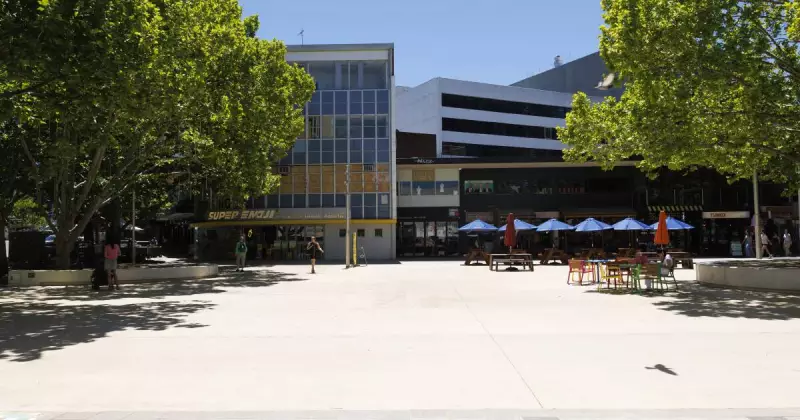
Canberra's central civic plaza, Garema Place, has finally shed its construction hoardings, revealing a transformed space that is already polarising opinion. Unveiled in mid-December 2025, the long-awaited redevelopment replaces the area's former maze of broken cobbles and sunken pits with a vast, open expanse of sand-coloured concrete.
A Space Transformed: From Maze to Open Plaza
On a scorching 35-degree afternoon this week, the new-look Garema Place was wide open and glaring. The extensive new paving, which took considerable time to complete, reflected the harsh sun, sending pedestrians scurrying for shade under the mature plane trees. This is a stark departure from the Garema Place of old, which featured a retro mix of dulled pink cobblestones, an unused sunken chess pit, scattered artworks, and storage boxes.
The immediate public reaction has been mixed. Ash Prasad, a city worker, expressed relief at being able to walk through the plaza again. "It's pretty new - I think it's good," she said, though she admitted it didn't catch her attention much and she had expected more given the duration of the works. "There's not much to it - City Walk is much nicer," she noted.

Retired public servant Peter Waters was far more critical. "I'm no architect, but it looks pretty average to me," he stated bluntly. "What's the theme? It looks shit." He questioned the plaza's weekday utility, suggesting it didn't look finished.
Practicality vs Aesthetics: The Business Perspective
For some long-term stakeholders, the redesign is a clear practical win. Blake Busak, owner of Landspeed Records, which has been in Garema Place for three decades, pointed out the functional flaws of the old space. "Before, tree roots pushed everything up, and there were huge puddles everywhere because it wasn't draining properly. All the drains were blocked," he explained. "From a purely practical point of view, it's a lot better."
However, Busak raised concerns about the light colour scheme, comparing it to a cream couch or white carpet that shows dirt easily, particularly around the cafe and restaurant precincts. "Hopefully they keep it clean," was his cautious hope.
The Design Philosophy Behind the Change
Lucy Wilson, who leads urbanisation and renewal at the City Renewal Authority, understands the community's confusion. "I think that means that people can care, and that's really important," she said. She explained the deliberate design choices, noting that the selected earth-toned concrete was a middle ground between heat-trapping dark grey and overly glaring light colours. This tone, she said, will naturally darken and develop a patina over time, much like the benches and other elements in the public realm.
Wilson emphasised Garema Place's unique role as Canberra's de facto town square. "Therefore you need to change it up a little bit, make yourself a little bit unique, make it different," she argued. "Because otherwise, everything looks the same, which is fine sometimes, but we don't want everything to just be grey."
The wide-open design was a direct response to community consultation, where a top priority was having a large, flexible area for events. The plaza is not yet complete, with more paving to come, a design to be blasted into the concrete, and further works planned for City Walk. The impending opening of a major hotel on Bunda Street in 2027 will also alter the space's dynamic.
By Friday, under overcast skies, the plaza felt less hostile. Wilson observed people interacting with the space, hearing the sounds of the city—conversation and even construction drilling. "We're in a city. It sounds like a city centre," she remarked, seeing the buzz of activity as a sign of success. The transformation of Garema Place remains a work in progress, its final impact on Canberra's civic life yet to be fully realised.