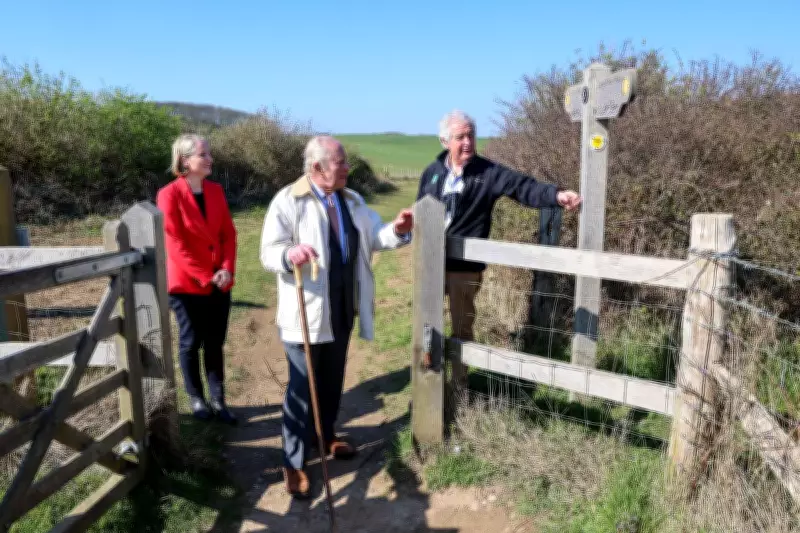
King Charles Launches World's Longest Managed Coastal Path in England
On March 19, 2026, King Charles III officially inaugurated the King Charles III England Coast Path, a monumental footpath that stretches around the entire coast of England. At an impressive 4,328 kilometers, this route is now recognized as the longest managed coastal walking path in the world, marking a significant achievement in environmental and recreational infrastructure.
A Decades-Long Project with Forward-Thinking Design
The development of this coastal path has been 18 years in the making, spearheaded by Natural England, the government body responsible for its management. To create this extensive network, approximately 1,600 kilometers of new paths were constructed, opening up access to previously unreachable cliffs, dunes, and beaches. A key innovative feature of the path is its "rolled back" design, which allows it to be automatically moved inland in areas affected by climate change and erosion. This forward-thinking approach was specifically crafted to accommodate heavier rainfall and shifting shorelines, ensuring long-term sustainability.
The creation of the route required new legislation, notably the Marine and Coastal Access Act, which was passed in 2009. For the inauguration, King Charles, a long-time advocate for environmental causes, walked a section of the path at Seven Sisters Country Park in East Sussex. This area has been transformed into a new National Nature Reserve, the 13th such reserve declared as part of the King's Series of National Nature Reserves, celebrating His Majesty's Coronation.

Highlights and Connectivity of the Coastal Path
While some sections of the path are still under construction, with completion expected by the end of 2026, the route already showcases a diverse array of coastal landscapes. Highlights include both well-known destinations and lesser-visited areas that were largely inaccessible until now.
- Seven Sisters and South East: Features the iconic chalk cliffs at Seven Sisters and Beachy Head in East Sussex, along with the new Seven Sisters National Nature Reserve.
- Jurassic Coast, Dorset: Stretches from Swanage to Lyme Regis, including scenic spots like Lulworth Cove.
- Cornwall’s Coastal Villages: Offers picturesque stops such as Mousehole and Port Isaac.
- North East and North York Moors: Presents stunning coastal scenery, the charming fishing village of Staithes, and historic Whitby Abbey.
- Northumberland Beaches: Boasts expansive sandy beaches and historic castles like Dunstanburgh.
- Suffolk: Includes the bird sanctuary at Minsmere and the artsy town of Southwold.
The new English coast path also connects with the Wales Coast Path, a 1,400-kilometer route around the Welsh coastline completed in 2012. In Scotland, while there is no single official coastal trail, much of the shoreline remains accessible due to Scotland's "Right to Roam" legislation, passed over two decades ago. The mainland coast of Scotland is estimated to be around 8,850 kilometers, varying based on measurement methods.
Together, a continuous coastal walk around the entire mainland of Britain would span approximately 14,480 kilometers. At an average pace of 25 kilometers per day, this journey would take about 580 days of walking over two years, including rest days, offering an unparalleled adventure for hiking enthusiasts.