West Australians Pioneering Off-Grid Living on Sustainable House Day
West Australians are at the forefront of one of the world's fastest national energy transitions, with a growing number of suburban homes embracing off-grid solutions. From DIY solar power setups to homes constructed from straw bales or soil bags, homeowners across the state are implementing creative methods to disconnect from traditional energy grids.
Financial and Environmental Benefits of Green Homes
Research by Domain highlights that energy-efficient homes not only save money and protect the environment but also yield an additional six-figure profit at resale. In Perth, green homes sell for an average of $118,000 more than non-efficient counterparts, with features like north-facing orientation, solar panels, and double-glazed windows driving higher prices.
Dr Nicola Powell, Domain's chief of research and economics, emphasized that green homes are a smart financial choice amid rising energy costs and living pressures. However, property agent Vanessa Naso noted that while buyers inquire about solar panels, their absence is not a deal-breaker, as many are willing to add such features post-purchase.

Personal Journey: Martin Chape's Off-Grid Success
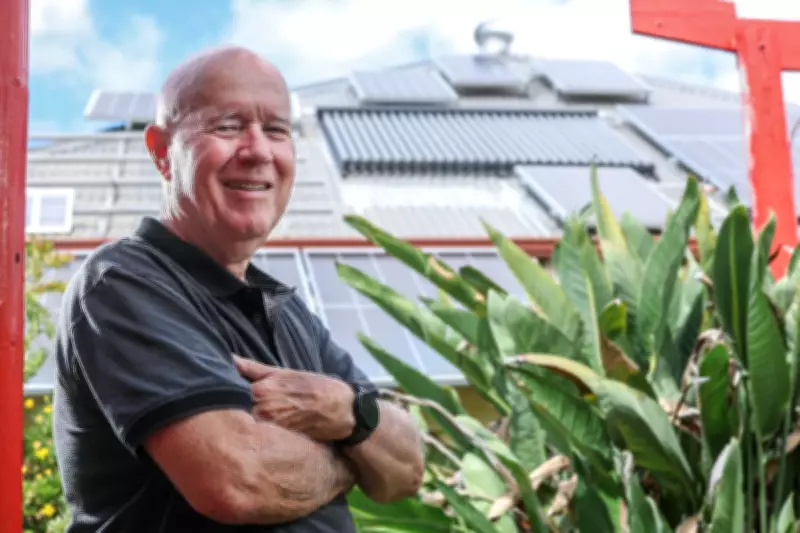
Retiree Martin Chape, who will showcase his home on Sustainable House Day, exemplifies this trend. His off-grid system in Bellevue allows him to run five air conditioners simultaneously at no cost, a luxury he couldn't afford on the South West Interconnected System. Chape's motivation extends beyond finances; as a former telecommunications engineer, he sought to expand his skills and reduce fossil fuel reliance.
"Some people don't care what kind of world they leave their grandchildren, but I do," Chape stated. "You've got to care. You've got to take an interest in these things."
Starting with a DIY solar system in 2011, Chape upgraded over the years, culminating in a $22,000 setup with an 8.2 kW solar array and 20 kWh batteries. He acknowledges that not everyone can replicate this cost, but simpler systems can be built for as little as $5,000. Chape advises suburban residents to consider hybrid systems for backup instead of full off-grid setups.
Innovative Building Materials and Energy Savings
Helen Oakey, CEO of Renew, noted that Australian homeowners are global leaders in adopting energy-efficient technology, driven by cost savings and climate concerns. Sustainable House Day promotes changes by demonstrating ways to reduce power use, such as:
- Sealing leakages to save 15-25% on heating or cooling costs.
- Switching from gas to electric hot water systems.
- Using curtains to block heat on hot days.
Building materials like straw, hemp, or mud bricks are making a significant impact, with off-grid straw-bale homes emerging in locations like Katanning and Witchcliffe. These methods, rooted in ancestral principles, leverage natural insulation for temperature control.
Community Impact and Future Trends
While Western Power lacks official data, anecdotal evidence suggests increasing numbers of metropolitan homes are operating off-grid. In Greater Perth, seven properties for sale claim off-grid capacity, often in granny flats. Dirt-bag homes, such as one in Katanning maintaining a steady 20 degrees year-round, challenge Perth's preference for double-brick construction.
Oakey emphasized that Sustainable House Day inspires both major and minor changes, fostering a shift towards sustainable living across Australia. As West Australians continue to innovate, their efforts not only enhance personal savings but also contribute to a broader environmental movement, setting a precedent for energy independence nationwide.