Red Metal Limited believes it is on the cusp of developing an ultra-low-cost processing pathway for its giant Sybella rare earths project near Mount Isa in Queensland. The stars also appear to be aligning, with Australian Prime Minister Anthony Albanese and Japanese Prime Minister Sanae Takaichi recently elevating critical minerals cooperation between the two nations.
Project Overview
The Sybella project covers two exploration permits enclosing a 12 kilometre by 3 kilometre granite body enriched in rare earth fluorocarbonate minerals, including bastnäsite and synchysite. The company is pursuing a mining and processing pathway that matches the geology, employing coarse crushing, mild leach conditions, and a simplified downstream clean-up.
A current estimate puts the broader Sybella system at 4.8 billion tonnes, endowing the deposit with a scale that could support a long-life, low-cost development concept if the metallurgy continues to perform. This is why Red Metal has prioritised Sybella, with drilling focused on higher-grade areas and metallurgical work aimed at developing a low-capital cost pathway.

Processing Innovation
The company is targeting mine studies and pre-feasibility work in 2026, just as governments and manufacturers scramble to diversify rare earths supply chains away from China. Red Metal is striving to demonstrate that Sybella can be mined and processed simply, using heap leaching at scale rather than an expensive plant with heavy upfront grinding.
Earlier ion exchange resin trials have already given the market something to consider, concentrating rare earths from pregnant leach liquor while stripping out iron and aluminium. Red Metal reported that the approach delivered a nine-fold enrichment of total rare earth oxides and lifted recovery of mixed rare earth carbonate from 93 per cent to 99 per cent.
If that performance holds, the prize is a cleaner, cheaper process. Red Metal believes ion exchange could replace a more complex, two-stage impurity removal circuit, reduce alkali consumption, and cut break-even costs by 10 to 15 per cent. In a sector known for capital blowouts, that potential is significant.
Recent Results
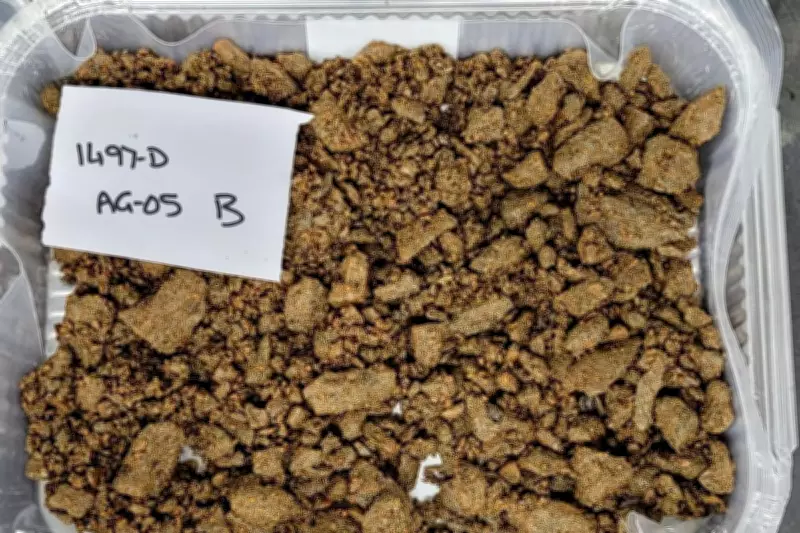
In March 2026, the company reported a mixed rare earth carbonate product grading 48.7 per cent total rare earth oxides, with a high proportion of magnet and heavy rare earth oxides—the ingredients most watched by the electric vehicle and high-tech supply chain. Next on the checklist is to continue building a long-life, low-impurity rare earths source, with results feeding into the study pipeline.
Currently, large weak sulphuric acid column leach tests are running on coarsely crushed Sybella granite ore, designed to better simulate a real-world heap leach setting. The work follows earlier bottle-roll optimisation, which pointed to selective extraction of rare earths under mild leach conditions. Red Metal expects the column leach program to deliver results in the first quarter of 2026.
Geopolitical Context
This progress comes at a time when Australia and Japan are elevating critical minerals as a pillar of economic security cooperation. The renewed urgency is clear: China dominates large chunks of the rare earths processing market, and tighter controls and export restrictions have been rippling down the value chain. Against that backdrop, Australia’s emerging rare earths cohort, including established names such as Lynas, Iluka, and Arafura, is gaining attention.
Red Metal aims to join that conversation with a different angle: a granite-hosted system where rare earth fluorocarbonates dissolve readily in low acid-consuming rock, supporting a potentially lower capital pathway. With the ion exchange work showing strong impurity rejection and the nine-times rare earth enrichment effect, the company’s pitch is straightforward: simplify the circuit, squeeze the costs, and keep the plant footprint lean.

Future Plans
Grinding and crushing studies are also underway to help shape an efficient front-end, while infill drilling is planned to boost confidence in the resource. Red Metal says the combined metallurgy and drilling programs are expected to provide key inputs for mine studies as it advances towards pre-feasibility in 2026. If Sybella continues to meet metallurgy benchmarks, it could emerge as a lower capital alternative to some of the more processing-intensive rare earths development plays on the Australian market.
Looking ahead, the bigger picture is sharpening rapidly. As Japan and Australia put critical minerals front and centre, developers that can demonstrate scalable metallurgy and a clear pathway to product are likely to sit higher on the watchlists of investors, offtakers, and governments alike. For Red Metal, the near-term focus is simple: keep the Sybella columns running, bank the next metallurgy readout, and turn those inputs into mine study momentum through 2026. If the low-acid, fluorocarbonate story continues to translate into a simpler flowsheet, Sybella could move from an emerging name to a genuine contender in Australia’s next wave of rare earths projects.