Canberra's National Arboretum has been celebrated as the city's 'crowning glory' in a wave of reader letters, even as Senate estimates turn a critical eye on a 'debacle' surrounding a major prize at the Australian War Memorial.
Arboretum Triumph Over Early Opposition
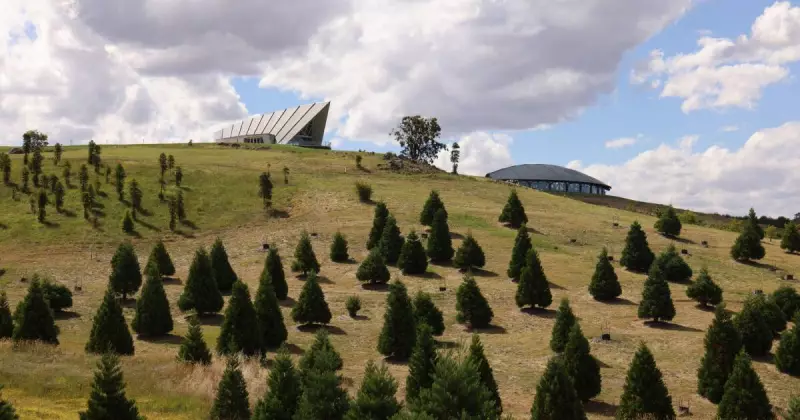
One correspondent, Warren Nicholls from Tweed Heads, NSW, wrote to express admiration after a recent three-week visit, declaring Canberrans live in 'one of the best cities on the planet'. He singled out the National Arboretum for the highest praise, noting it was hard to believe the project faced 'large and vocal opposition' in its infancy.
'Congratulations and a big thank you to Jon Stanhope, as chief minister at the time, for pushing ahead against persistent criticism and ridicule,' Nicholls wrote. 'He withstood all the doomsayers and Canberra now has a magnificent arboretum that is much loved by locals and tourists alike.'

War Memorial Prize Process Under Fire
In stark contrast, the Australian War Memorial's administration of the Carlyon Prize has come under renewed and harsh scrutiny during Senate estimates. Professor Peter Stanley from Dickson reported that the process was rightly described by Senator David Shoebridge as a 'debacle'.
The controversy stems from the memorial's decision to deny the prize to Chris Masters's book 'Flawed Hero' and subsequently cancel the 2025 award. Stanley argued that this action disadvantaged a shortlisted book by a novice author that, by the institution's own explanations, actually met the criteria and deserved the prize.
'Senator Shoebridge's questions exposed the institution's failing but... proved unable to secure redress for an author whose work has been slighted,' Stanley wrote. 'Will the AWM do the right thing, or will we see more official stonewalling and dissembling?'
Broader Concerns: Trust, Climate and Conflict
The day's correspondence covered a wide range of national issues. Annalisa Koeman from Deakin penned a detailed critique on the erosion of public trust in government, citing slow progress on whistleblower protections, proposed restrictive FOI reforms, and a 'Jekyll and Hyde' approach to climate change and fossil fuels.
'Low levels of trust lead to resentment, conspiracy theories... the rise of the far right and the increased popularity of extremist views,' Koeman warned, linking these trends to deteriorating social cohesion and national security.
On climate policy, Bill Crawshaw of Fadden challenged what he called misleading statistics on Australia's role. While acknowledging Australia as the second-largest exporter of coal and gas, he argued for perspective, noting Australia ranks as the equal fourth-largest coal producer (5% of global output) and seventh for gas (4%).
International affairs also drew sharp comment. Alex Mattea from Kingston questioned the logic of sending another $95 million to support Ukraine 'for pointlessly extending its war' while domestic sectors like scientific research at the CSIRO face funding cuts. Mattea criticised the framing of the European conflict as an existential threat to Australia.
Meanwhile, Ian Morison from Forrest issued a stark warning about the cost of the renewable energy transition, labelling it 'Australia's greatest economic folly ever'. He cited unknown costs for the rollout, household subsidies, and environmental impact, arguing the massive borrowing required would divert funds from essential services like schools and hospitals.
The collection of letters presents a snapshot of national discourse, from local pride in a world-class arboretum to profound concerns about institutional integrity, fiscal responsibility, and Australia's place on the global stage.