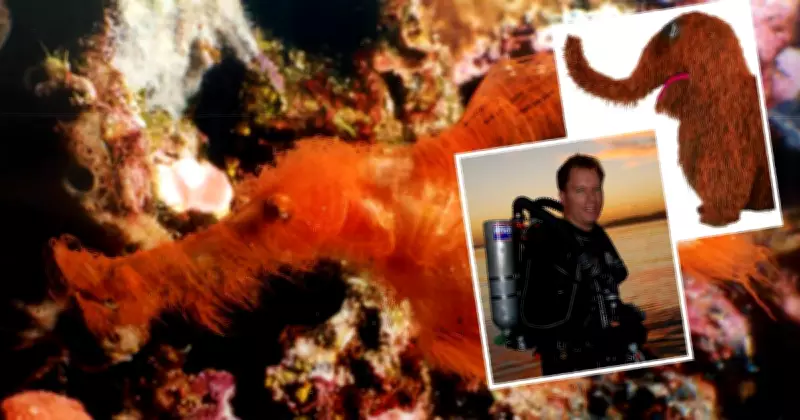
Marine biologist David Harasti has finally located the elusive Snuffleupagus fish, a species not seen in 25 years, off the coast of Newcastle. The discovery has thrilled the scientific community and sparked renewed interest in marine conservation efforts.
The Search for the Snuffleupagus Fish
The Snuffleupagus fish, known for its distinctive trunk-like snout, was first described in the late 1990s but had not been observed since. Dr. Harasti, a senior marine biologist with the NSW Department of Primary Industries, has been searching for the species for over two decades. His persistence paid off during a routine dive at a depth of 30 metres near the Swansea Channel.
“I couldn’t believe my eyes when I saw it,” Dr. Harasti said. “It’s a fish that many thought might be extinct, so to find it alive and well is a dream come true.”

Characteristics of the Snuffleupagus Fish
The Snuffleupagus fish (scientific name: Rhinoichthys snuffleupagus) is a small, bottom-dwelling species that grows up to 15 centimetres in length. Its most notable feature is its elongated, fleshy snout, which it uses to probe crevices for small crustaceans and worms. The fish is well-camouflaged, with a mottled brown and green pattern that blends seamlessly with the rocky reef habitat.
Dr. Harasti explained that the fish’s rarity is likely due to its specific habitat requirements. “They seem to prefer very particular conditions, such as areas with moderate water flow and plenty of sponge growth. This makes them vulnerable to habitat disturbance,” he said.
Implications for Marine Conservation
The rediscovery of the Snuffleupagus fish underscores the importance of protecting marine ecosystems. The area where the fish was found is part of a proposed marine park, and conservationists hope the find will bolster efforts to establish protected zones.
“This discovery highlights how much we still have to learn about our oceans,” Dr. Harasti added. “It’s a reminder that we need to conserve these environments before we lose species we don’t even know exist.”
Future Research Plans
Dr. Harasti and his team plan to conduct further surveys to determine the population size and distribution of the Snuffleupagus fish. They will also study its behaviour and reproductive habits to better understand its life cycle.
- Population assessment through visual surveys and environmental DNA sampling.
- Behavioural studies using underwater cameras.
- Genetic analysis to confirm species identity and relatedness to other fish.
The team hopes to collaborate with international experts to ensure the long-term survival of the species.
Community Reaction
Local divers and fishing communities have expressed excitement about the discovery. Many have volunteered to help monitor the fish and report sightings. “It’s amazing to think that such a unique creature lives right on our doorstep,” said local dive instructor Sarah Thompson. “We’re proud to be part of its conservation.”
The rediscovery has also garnered attention worldwide, with marine biologists from Japan and the United States expressing interest in studying the species further.