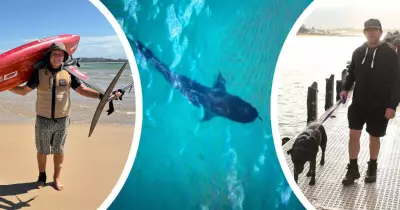
Perfect Storm Conditions Blamed for NSW Shark Attack Cluster
Marine experts have identified a "perfect storm" of environmental factors behind four separate shark attacks that occurred within a 48-hour period across New South Wales beaches. This unprecedented cluster of incidents left two victims fighting for their lives while highlighting the complex interplay between weather patterns, ocean conditions, and shark behavior.
Unprecedented Rainfall Sets the Stage
The Sydney catchment area experienced its wettest single January day in 38 years, recording 127mm of rainfall within just 24 hours. This extraordinary precipitation event proved to be the critical catalyst for the dangerous conditions that followed.
As torrential rain overwhelmed Sydney's stormwater systems and flowed into estuary waterways and coastal beaches, it carried nutrient-rich runoff that quickly attracted schools of fish to these areas. According to NSW Department of Primary Industries bull shark expert Amy Smoothey, this created a predictable chain reaction.

"The nutrients are getting flushed out of the river systems and the fish are getting pushed out," Smoothey explained. "The sharks are following the food source and hunting in these locations."
Four Attacks Across Sydney and Regional Beaches
The recent attacks involved what Smoothey described as cases of "mistaken identity" by sharks hunting in compromised visibility conditions. The incidents included:
- A 12-year-old boy attacked near Shark Beach in Vaucluse on Sunday
- A young man attacked at North Steyne Beach in Manly on Monday
- A young boy attacked at Dee Why Beach
- A 39-year-old surfer attacked at Point Plomer, south of Crescent Head
While the first two victims suffered life-threatening injuries, the latter two escaped with less serious wounds. Early evidence strongly suggests bull sharks were responsible for all four incidents.
Why Bull Sharks Thrive in These Conditions
Bull sharks possess unique physiological adaptations that make them particularly dangerous in the current conditions. These aggressive predators can survive in brackish waters that mix saltwater and freshwater, giving them access to areas where other shark species cannot venture.
"Bull sharks are one of the few species that are physiologically capable of living in freshwater environments and also in the saltwater that's found along our coastal beaches and in our estuary mouths," Smoothey noted.
Adelaide University environmental sciences director Dr Brianna Le Busque emphasized the rarity of such clustered attacks, stating: "The cluster of attacks in such close succession is a really rare incident." She firmly rejected any suggestion that one attack triggered another, confirming there is no scientific evidence supporting such behavioral patterns.
Murky Waters Create Ambush Conditions
The nutrient-rich runoff represents just one component of the dangerous convergence. The heavy rainfall also created extremely murky, turbid conditions with large swells that provide ideal hunting grounds for ambush predators like bull sharks.
"These are perfect and ideal conditions for bull sharks. They thrive in these murky waters," Smoothey explained. "When water visibility is limited, it can make conditions ideal for ambush predators like bull sharks to hunt in."
Under normal circumstances, sharks show little interest in humans as prey. However, the compromised visibility makes it difficult for them to distinguish between their usual food sources and human swimmers or surfers.
"Sharks don't have hands like humans, so they investigate the object they're interested in with their mouth, which obviously leads to catastrophic injuries," Smoothey added.
Migration Patterns and Climate Change Impacts
The bull sharks currently inhabiting Sydney waters are not permanent residents but migratory animals attracted to specific temperature ranges. Their preferred water temperature is approximately 22°C, which brings them south along Australia's east coast during late spring and early summer.

"Bull sharks travel south along the east coast of Australia into NSW waters in late spring and early summer, where they reside until the water temperature drops below 19°C," Smoothey detailed. "Then bull sharks leave the Greater Sydney region and travel back north to Queensland for the winter and spring months."
Climate change is extending the time bull sharks spend around Sydney, according to Department of Primary Industries tagging and tracking data. As southern waters remain warmer for longer periods, these predators are extending their seasonal stays.
Australian Marine Conservation Society shark scientist Dr Leo Guida noted that increasing human populations near coastal areas also contribute to higher interaction rates. "As we see warmer and drier summers and more milder winters, people are going to want to cool off in the ocean more often and for longer periods of time," he observed. "This elevates that chance of interacting with a shark."
Safety Recommendations for Beachgoers
Understanding the converging conditions behind these attacks provides crucial knowledge for preventing future incidents. Experts have issued several key safety recommendations:
- Avoid entering the water following periods of heavy rainfall when waters are turbid and brackish
- When swimming in harbor areas, use netted enclosure zones where available
- Consider swimming in ocean pools rather than open water during murky conditions
- Download and regularly check the NSW Shark Smart app for real-time safety information
- Watch for signs of baitfish activity, including diving birds or surface splashing
"We're really suggesting water users avoid the water during these times," Smoothey advised. "At present, on our coastal beaches, we are asking people to stay out of the water or swim at an ocean pool just for the next several days until conditions of murky water change."
Sharks as Indicators of Ocean Health
The cluster of attacks has prompted calls for shark culling from some quarters, including former prime minister Tony Abbott. However, marine scientists strongly advocate for evidence-based approaches rather than reactionary measures.
"I empathise and I fully understand how emotionally charged this is," Guida acknowledged. But he cautioned that short-term actions without scientific backing "might make you feel good today, next week, maybe in a month's time, ultimately it's not going to achieve what every single person wants and that is to be safer at the beach."
Guida emphasized that sharks play a critical role in maintaining ocean ecosystems. "Having healthy amounts of sharks in our oceans is critically important for ocean health, and coastal communities and Australians rely on a healthy ocean for our work, for our play, and for cultural practices as well," he explained.
As apex predators, sharks help maintain balance within marine food webs. Their removal can cause instability that ultimately affects seafood availability and broader ecosystem health.
Recent research in NSW has shown no significant difference in bite rates between netted and unnetted beaches, suggesting that traditional control methods may be less effective than previously assumed. Instead, experts advocate for increased investment in modern solutions like tagging programs and public education initiatives.
"Forewarned is forearmed — that knowledge is power, and that's power to keep people safer at the beach," Guida concluded, highlighting the importance of understanding environmental conditions before entering the water.