A recent University of New South Wales report recommending speed limit reductions in parts of Canberra has been dismissed as superficial and lacking in critical evidence by a local resident. The critique, published in The Canberra Times letters section on December 8, 2025, argues the study fails to address the core issue of whether lower limits actually prevent accidents.
Call for Hard Data on Road Safety
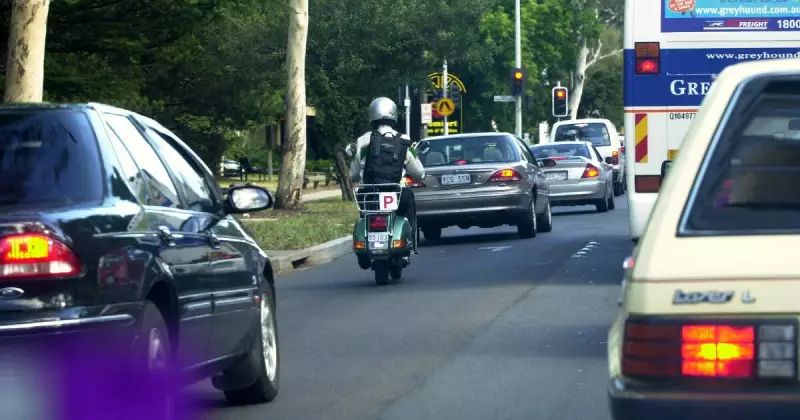
Ross McLeod of Aranda expressed astonishment at what he termed the "superficiality" of the UNSW research, which proposed lowering limits to 30km/h in some areas. He contends the report focused merely on whether drivers would slow down, rather than providing objective analysis on accident and injury prevention.
"The researchers wasted their time looking at irrelevant data," McLeod wrote, pointing out the study relied on subjective guesses instead of radar speed measurements. He labelled the work "research lite" and called for an examination of hard statistics from Canberra's existing 40km/h zones, which replaced 50km/h and 60km/h limits two decades ago.

McLeod challenged the university team to answer a fundamental question: "Has lowering speed limits to 40km/h actually resulted in fewer accidents and injuries?" He suggested that without a statistically significant reduction, forcing drivers to travel at a "snail's pace" would be unjustified.
Broader Community Concerns Raised
The speed limit debate was one of several issues raised by readers in the latest batch of letters. Ric Hingee from Duffy issued a forceful plea for Prime Minister Anthony Albanese to ban gambling advertising, citing alarming statistics. Hingee noted Australians lost $31.5 billion in 2022-23, with nearly half of 18-year-olds engaging in gambling.
"I for one will not vote Labor while this persists," Hingee stated, urging parents to pressure the government to act on the recommendations of a bipartisan parliamentary committee.
Scrutiny on Defence and Procurement
Another correspondent, M. Flint of Greenway, supported a Canberra Times editorial criticising a proposed overhaul of the Defence Department's procurement system. Flint, a former director of capital system acquisitions, described the plan as "rearranging the deck-chairs on the Titanic."
The writer identified a twofold problem: procurement being managed by non-technical staff, and a lack of independent expert assessment of major tenders. Flint also questioned the political motives behind creating a new organisation under Defence Minister Richard Marles, suggesting it was a manoeuvre in leadership politics.
Fact-Checking and Other Observations
W A Reid of Crace challenged a historical claim in a recent article about Aboriginal boxer Francis 'Frank' Roberts. Reid corrected the assertion that Roberts was not an Australian citizen when selected for the 1964 Tokyo Olympics, noting Aboriginal and Torres Strait Islander peoples were granted citizenship in 1948.
Other letters covered diverse topics, including the downsides of double-glazing, praise for cartoonist David Pope, frustrations with online subscription traps, and scepticism about the ACT Liberal Party's direction under a new president linked to former senator Zed Seselja.
Short and Sharp 'To The Point'
The column also featured brief commentary on national and international affairs. Alastair Bridges of Wanniassa quipped about former US President Donald Trump's stance on Ukraine, while Mokhles Sidden of South Strathfield criticised the federal government's inaction on a national ID card and conscription. Several writers commented on local ACT politics, including the election of Jeremy Hanson as Legislative Assembly Speaker.
The collective correspondence paints a picture of a community actively engaged in scrutinising research, policy, and public statements, demanding evidence-based action from institutions and leaders.