Australia's High Court has delivered its first-ever ruling on climate change, establishing a significant legal precedent that experts say could transform the nation's approach to environmental law and policy. The landmark decision, handed down on Thursday, marks a pivotal moment in Australian jurisprudence, as the highest court in the land weighs in on the intersection of climate science and legal responsibility.
Case Background
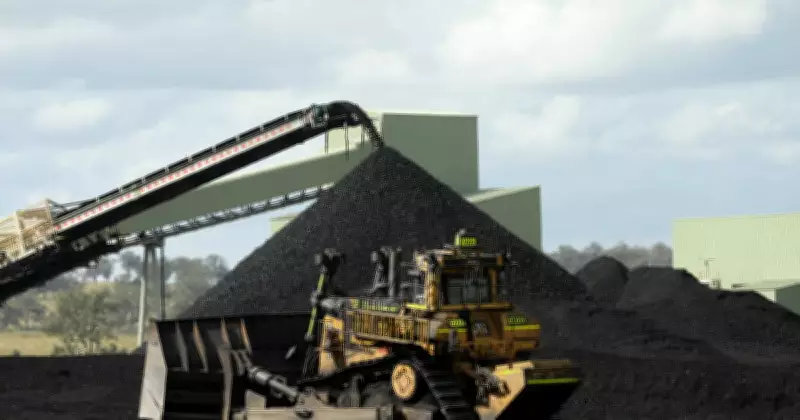
The case, brought by environmental group the Australian Conservation Foundation (ACF) against the federal government, challenged the approval of a coal mining project in New South Wales on the grounds that it failed to consider the full climate impacts. The ACF argued that the government's environmental assessment did not adequately account for the project's contribution to climate change, including emissions from the burning of the coal overseas.
The High Court's ruling, which upheld a lower court decision, found that the government must consider the 'scope 3' emissions—those released when the coal is burned by end-users—when assessing the environmental impact of fossil fuel projects. This is a crucial expansion of the legal definition of environmental harm, as previous assessments typically only considered direct emissions from the mining process itself.

Implications for Future Projects
Legal analysts say the decision will have far-reaching consequences for future fossil fuel developments in Australia. 'This ruling effectively puts all new coal and gas projects on notice,' said Professor Emily Crawford, an environmental law expert at the University of Sydney. 'The High Court has made it clear that the full lifecycle emissions must be taken into account, which could make it much harder for such projects to gain approval.'
The decision is expected to embolden environmental groups and communities to challenge other fossil fuel projects across the country. It may also influence government policy, with the federal government now potentially facing increased pressure to strengthen its climate policies and emissions reduction targets.
Government Response
The federal government has expressed disappointment with the ruling but has indicated it will comply. A spokesperson for the Department of Climate Change, Energy, the Environment and Water said the government is reviewing the judgment and its implications. 'We remain committed to meeting our Paris Agreement targets and transitioning to a net-zero economy,' the spokesperson said.
However, critics argue that the government's current policies are inconsistent with the High Court's findings. 'The government cannot continue to approve new coal and gas projects while claiming to be serious about climate action,' said ACF CEO Kelly O'Shanassy. 'This ruling demands a fundamental rethink of how we assess and approve fossil fuel developments.'
International Context
Australia's High Court joins a growing number of courts worldwide that have delivered landmark climate rulings. Similar decisions have been made in the Netherlands, Germany, and the United Kingdom, where courts have ordered governments to take more ambitious climate action. The Australian ruling is particularly significant given the country's status as one of the world's largest exporters of coal and liquefied natural gas.
The decision also comes ahead of the 2023 United Nations Climate Change Conference (COP28), where Australia is expected to face increased scrutiny over its climate policies. Environmental groups hope the High Court ruling will strengthen Australia's negotiating position by demonstrating a commitment to climate action.
Reactions from Industry
The mining industry has reacted with concern, warning that the ruling could create uncertainty for investors and jeopardize jobs. 'This decision adds another layer of complexity to the approvals process,' said Tania Constable, CEO of the Minerals Council of Australia. 'We need a balanced approach that considers both environmental and economic factors.'
However, renewable energy advocates see the ruling as a boost for clean energy investment. 'This sends a clear signal that the era of unchecked fossil fuel expansion is over,' said a spokesperson for the Clean Energy Council. 'Investors will now be more confident in backing renewable projects.'

Legal Experts' Analysis
Legal experts say the ruling is likely to be cited in future cases, both in Australia and internationally. 'This is a groundbreaking decision that sets a precedent for how courts can address climate change,' said Dr. Laura Smith, a senior lecturer in law at the Australian National University. 'It establishes that the legal system has a role to play in holding governments and corporations accountable for their climate impacts.'
The High Court's decision also clarifies the application of the 'precautionary principle' in environmental law, which states that lack of full scientific certainty should not be used as a reason to postpone measures to prevent environmental harm. By requiring consideration of scope 3 emissions, the court has effectively applied this principle to climate change.
Looking Ahead
As the implications of the ruling sink in, all eyes will be on how the government and industry respond. Environmental groups are already planning to use the precedent to challenge other projects, including the proposed Santos Barossa gas project and the Adani Carmichael coal mine. The High Court's decision may also prompt legislative changes, with some politicians calling for amendments to the Environment Protection and Biodiversity Conservation Act to reflect the ruling.
For now, the ruling stands as a landmark moment in Australia's climate journey, one that could reshape the nation's environmental landscape for decades to come. As Professor Crawford noted, 'This is not just a legal decision; it is a statement about the kind of future Australians want to build.'