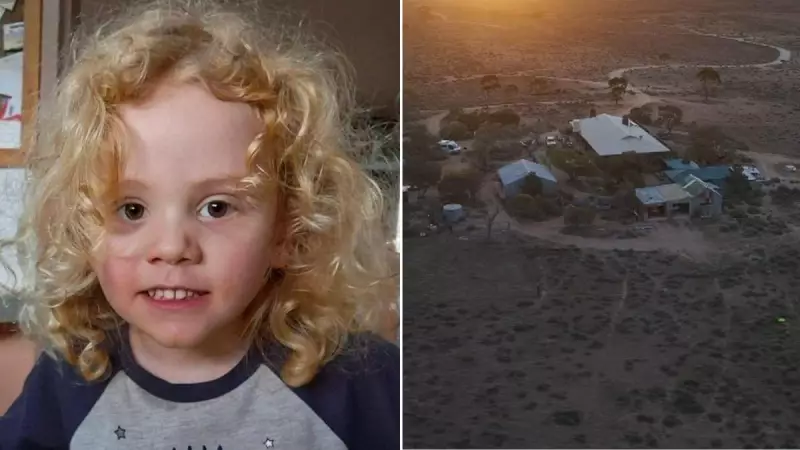
For the family of August "Gus" Lamont, this Christmas season is marked not by joy, but by profound sorrow and an empty chair at the table. The four-year-old boy vanished on September 27 while playing outside his family's remote homestead in Oak Park near Yunta, in the South Australian outback.
A Relentless Search with Few Clues
More than two months later, despite one of the largest and most extensive search operations in the state's recent history, authorities have not found Gus. The massive effort has seen search crews comb over 470 square kilometres of rugged terrain in scorching heat. Resources deployed include helicopters, drones, Aboriginal trackers, and State Emergency Service crews.
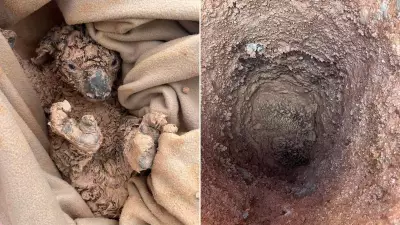
In a dramatic move, authorities drained 3.2 million litres of water from a dam on the property. The most recent phase of the search uncovered six previously undocumented mine shafts from the state's gold rush era near the homestead, but none yielded answers. The only physical clue found since his disappearance is a single footprint, located 500 metres from the family home.

Police Commissioner Grant Stevens acknowledged the extreme difficulty of the search, noting there are "lots of places a small child might find themselves which are hard to identify." While there is no evidence of foul play, police have not ruled it out.
The Agony of Ambiguous Loss
Instead of preparing for Christmas celebrations, Gus's family is left grappling with his painful absence. "We miss him more than words can express," family friend Bill Harbison said. Loren O'Keeffe, founder and CEO of The Missed Foundation, explained that holiday periods are particularly excruciating for families of missing persons.
"Every day of the not knowing is excruciating but there are especially difficult times of the year for families of missing persons," O'Keeffe told 7NEWS.com.au. "Their birthday tends to be most difficult but any time families are 'supposed' to be together — such as during the holiday season — exacerbates their absence."
O'Keeffe speaks from devastating personal experience. Her brother, Dan, disappeared on July 15, 2011. After a five-year search that gained national attention, his remains were tragically found in a crawl space under the family home; he had taken his own life. This loss led her to establish The Missed Foundation to support others enduring the unique trauma of a missing loved one.
She describes the experience as "ambiguous loss" — a complex, uncertain grief that complicates and delays the healing process. "Psychologists around the world consider it to be the most traumatic type of loss and the most unmanageable," O'Keeffe said. "The continual nature of it is agonising because human beings do not cope well with uncertainty."
A National Crisis of the Missing
The scale of the issue in Australia is significant. Since O'Keeffe's foundation began nearly 13 years ago, the number of Australians reported missing has almost doubled. Approximately 38,000 missing persons reports are made nationally each year, with about 10 percent of those individuals remaining missing for longer than three months.
"This is a national crisis that deserves more attention than fleeting headlines," O'Keeffe emphasised. Her foundation supports families with tools like Hope Narratives, reinforcing that hope, though it may change over time, is always present. "The first step towards healing is knowing you’re not alone," she said.
For the tight-knit community of Yunta, Gus's absence has been crushing. Families who once rallied to scour the scrubland now face the festive season with a child still missing and critical questions unanswered. The Lamont family has indicated they will not give up hope, even as the Christmas celebrations deepen the ache of his absence. Their only wish is for Gus to come home.
Anyone with information is urged to contact South Australia Police.