Three men from the Sunshine Coast have been hit with fines exceeding $5,000 after a seemingly small, illegal campfire rapidly grew into a significant bushfire, threatening a popular coastal camping area.
A Campfire Quickly Spirals Out of Control
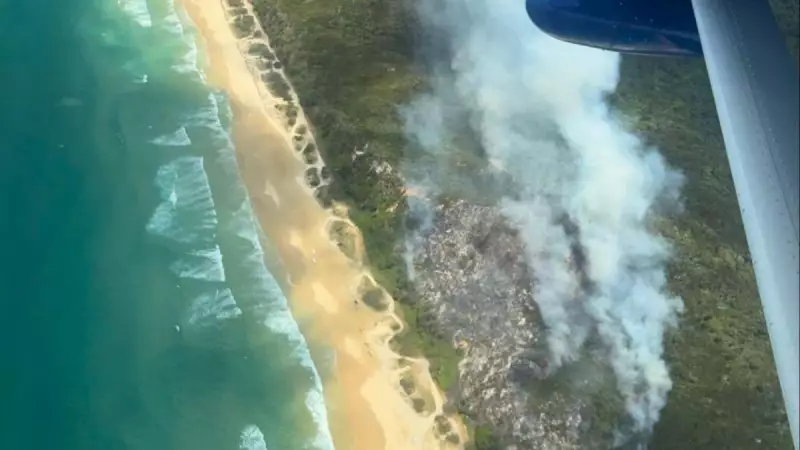
The incident began on Sunday, 26 October, near Teewah Beach within the Cooloola section of the Great Sandy National Park. The group lit a campfire despite a permanent fire prohibition that has been in effect for the area since 2020. Conditions were hot, dry, and windy, creating a perfect storm for disaster.
Nearby campers initially spotted the flames and attempted to douse the fire themselves using fire extinguishers. However, their efforts were futile as the blaze quickly took hold, spreading up the dunes and into the surrounding bushland. The campers soon ran out of extinguishing agents, and with no mobile phone reception in the remote area, they were forced to use their iPhone's satellite feature to call for emergency help.

Major Emergency Response Required
Emergency services were alerted and a unit was dispatched within five minutes. The situation, however, had already escalated beyond a simple containment job. The Teewah Rural Fire Brigade attended the fast-moving grass fire, which ultimately burned across more than seven hectares.
The response required a coordinated emergency management effort. Rangers from the Queensland Parks and Wildlife Service (QPWS) worked alongside crews from the Rural Fire Service Queensland. To protect the nearby dunes and camping areas, water-bombing aircraft and helicopters were deployed from the air, while ground crews battled the flames below. Campers in the vicinity were safely evacuated.
"We were grateful for air support and the evening storm that brought the rain we desperately needed," a statement from the Teewah Rural Fire Brigade later said.
Hefty Fines Serve as a Stark Warning
In the aftermath, authorities issued a total of eight penalty infringement notices to the three individuals involved. The fines covered multiple offences including lighting fires unlawfully, leaving a fire unattended, and using plants from the recreation area as fuel.
While the standard on-the-spot fine for breaching a fire ban is approximately $806, the trio's actions led to a combined penalty more than five times that amount, totalling over $5,000 according to the Department of Environment, Tourism, Science and Innovation (DETSI).
Principal Ranger Danielle Mansfield emphasised the inherent danger of campfires in that environment. "Campfires are not compatible with Teewah’s coastal environment because they can quickly escape into the dunes and bushland," she stated. "Our priority is the safety of rangers and visitors and protecting the natural and cultural values of the area."
This incident serves as a powerful reminder to all visitors to respect permanent fire bans in national parks. The potential for a small, illegal flame to trigger a large-scale, dangerous, and costly bushfire is ever-present, particularly in Australia's unique and often tinder-dry landscapes.