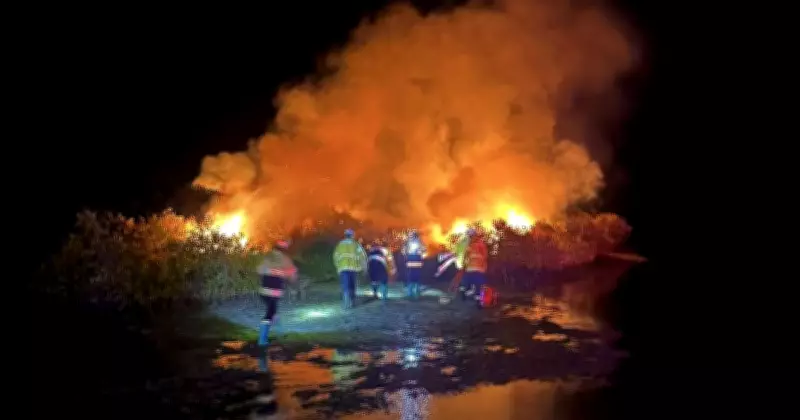
Firefighters in New South Wales executed a unique water-based operation to tackle a blaze on a secluded island in Lake Macquarie. The incident occurred in the early hours of Thursday, January 29, 2026, prompting an urgent response from emergency crews.
Swift Response to Island Fire
Authorities were alerted to the fire just after 1:30 am, with flames reported on an island situated near the Swansea fish co-op. Teams from both the Swansea Fire and Rescue NSW station and the Wallarah NSW Rural Fire Service swiftly mobilised to the scene. Upon arrival, they assessed the situation and devised a plan to reach the isolated location.
Low Tide Provides Access Route
Taking advantage of the low tide conditions, firefighters made the decision to wade through a section of Lake Macquarie to gain direct access to the island. This unconventional approach allowed them to bypass potential logistical hurdles and address the fire promptly. The crews carried essential firefighting gear, including a portable water pump, across the water to the affected area.

A spokesperson for Fire and Rescue NSW highlighted the utility of the portable pump in such scenarios, noting its effectiveness in hard-to-reach locations where natural water sources, like the lake, are available for fire suppression. The equipment enabled firefighters to draw water directly from Lake Macquarie, enhancing their ability to control and extinguish the flames efficiently.
Fire Contained with Minimal Damage
The fire was contained to a small area of bushland on the island, resulting in no injuries to personnel or the public. Firefighting operations concluded successfully by approximately 3:20 am, with crews ensuring the blaze was fully extinguished before departing. The quick action and resourcefulness of the responders prevented the fire from spreading further, minimising environmental impact.
This incident underscores the adaptability and preparedness of emergency services in New South Wales when faced with challenging access conditions. The combination of strategic timing with the low tide and the use of specialised portable equipment proved crucial in managing the situation effectively.