Firefighters Injured in Midnight Blaze at Helensburgh Industrial Estate
Two firefighters sustained minor injuries while combating a significant midnight blaze in Helensburgh's industrial area. The incident occurred early Wednesday morning, prompting a large-scale emergency response from Fire and Rescue NSW.
Emergency Response and Injuries
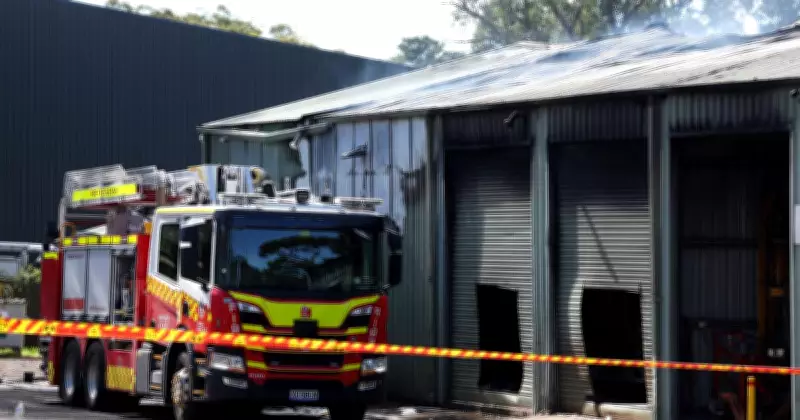
After receiving multiple triple zero calls, fire crews were dispatched to an industrial estate on the Princes Highway at 12:15 a.m. on Wednesday. A total of eight fire trucks and 37 firefighters arrived at the scene, where they encountered a building emitting large volumes of black smoke and flames.
Acting Fire and Rescue NSW Superintendent Kevin Smith reported that upon arrival, crews found a large industrial structure with multiple occupancies, including what appeared to be an engineering workshop engulfed in smoke and fire. During the operations, two firefighters were injured: one experienced mild heat stress, while the other twisted his knee. Both were treated by ambulance paramedics at the scene and were cleared to return to duty.

Evacuations and Safety Measures
Buildings in the vicinity were evacuated as a precaution, with three individuals located and safely removed from the area. To prevent potential explosions, firefighters also removed several large gas cylinders from the scene. The blaze required approximately four hours to bring under control, with crews working diligently through the night.
Air Quality Monitoring and Aftermath
Following the fire, specialist hazmat teams from Fire and Rescue NSW conducted atmospheric monitoring of adjacent premises to ensure safe conditions for evacuated occupants to return. Remote air quality monitoring was also performed during the firefighting efforts to track the large smoke plumes and mitigate health risks.
This incident highlights the dangers faced by emergency responders in industrial settings and underscores the importance of swift and coordinated action in such emergencies.