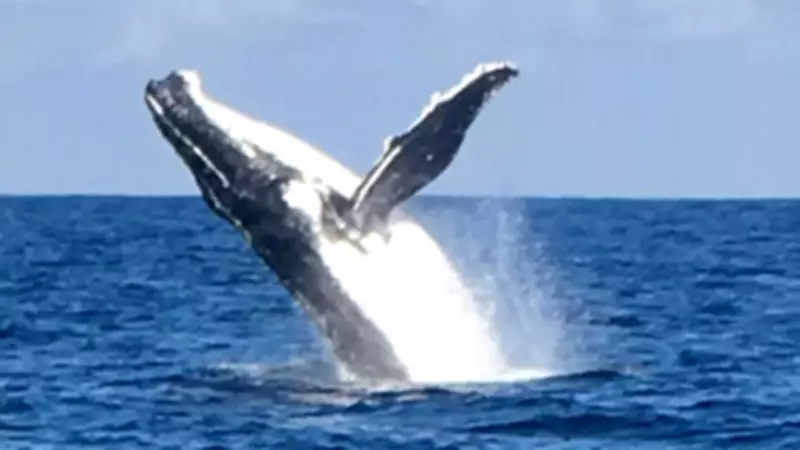
Nothing quite prepares you for the moment when perfectly still ocean water erupts and a whale rises into the air beside your boat. It is a spectacular sight, but it arrives so suddenly that there is little time to absorb what you are seeing, let alone work out what to do next.
Whale Season Underway Along Victoria's Coast
With whale season now underway along Victoria's coast, encounters like this are a real possibility in Corio Bay and waters off the Bellarine Peninsula and Surf Coast. Each year, southern right whales make their way to Victoria's coast to give birth, raise their calves and rest, while humpback whales pass through on their migration along Australia's coast.
Many boaters might assume a whale encounter in our part of the world is a remote chance – something you hear about, but not something you plan for. Last year's whale season tells a different story, with reported whale sightings off Torquay, Ocean Grove and Fairhaven among 119 sightings along Victoria's coast between May and October.

The conditions that draw people onto the water – calm, sheltered seas – are also the conditions whales are known to seek out.
Increasing Boating Activity Raises Risks
As boating activity on our coastal waters continues to increase, people and whales are sharing the same spaces more often. This raises the risk of vessels colliding with whales – a risk that carries greater consequences for southern right whales, as a threatened species with only around 300 individuals remaining in the south-eastern Australia population.
The Conservation Regulator's message to vessel operators at this time of year is to be alert and watch out for whales – and if you see them, keep your distance.
The risk becomes clear when you consider the scale. A southern right whale can be up to 18 metres in length. For anyone who has been in the stands at Kardinia Park, that is twice the length of the goal square. Now imagine something that size surfacing in what looked, moments earlier, like empty water.
Whale movement adds another layer of risk. Whales regularly dive beneath the surface and can reappear without warning, sometimes surfacing far closer than people expect.
Minimum Approach Distances Enforced
That unpredictability is why there are minimum approach distances for whales in Victoria. Boats must not approach within 200 metres of a whale, while jet skis are subject to a stricter limit of 300 metres.
The Conservation Regulator conducts patrols around Geelong and the Surf Coast that monitor compliance with the rules, while highlighting the responsibility of vessel operators to give whales the space they need.
As the Conservation Regulator's Regulatory Operations Manager for the Barwon South West region – and as a boater myself – I have spoken with many people over the years who have had close encounters with whales. The story tends to follow a familiar pattern – a whale surfaces unexpectedly, the moment takes people by surprise, and the initial instinct is to follow the whale to see what it would do next.
Most Boaters Do the Right Thing
Most boaters in our region do the right thing when they come across whales. They keep their distance, reduce their speed and manoeuvre away from the whale, or turn off their engine if they become too close unexpectedly. But every whale season we still receive reports of boats breaching the minimum approach distances for whales – moving closer for a better look or actively pursuing them across large areas of ocean.
In recent seasons, this illegal activity has involved a range of vessels – predominantly powerboats – in waters around Corio Bay, off the Bellarine Peninsula and the Surf Coast.
When whales are chased or put under pressure, they can react defensively – changing direction abruptly, slapping their tails, or moving suddenly closer to vessels. That is where things can go wrong very quickly. At close range, boats have little time or room to respond, and a collision puts both a whale and people on board at serious risk of harm.

Safe Whale Sightings for Everyone
Seeing whales along our coastline is a privilege of living and boating in this part of Victoria, and we cannot take it for granted. Giving whales the space they need on the water will help ensure whale sightings are safe experiences for both people and these iconic coastal visitors.
Glenn Sharp is the Barwon South West Manager of Regulatory Operations. The Conservation Regulator investigates reports of vessels breaching minimum approach distances for whales. To make a report, contact Crime Stoppers on 1800 333 000 or submit an online report at crimestoppersvic.com.au.