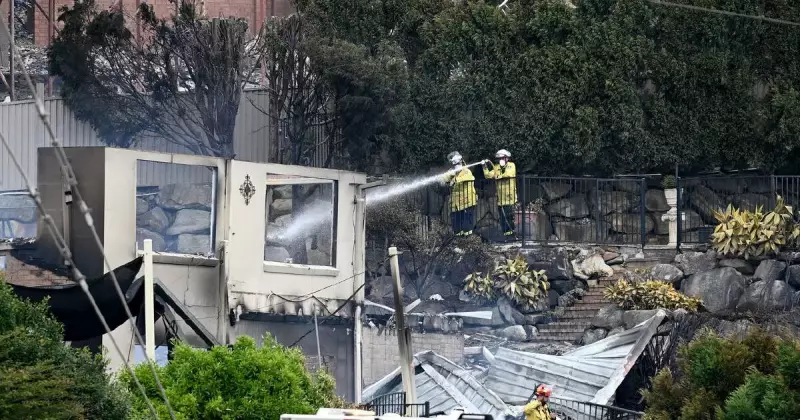
A devastating bushfire has ripped through a residential pocket of the NSW Central Coast, with authorities believing at least 12 homes have been destroyed in the Koolewong area near Woy Woy. The fast-moving blaze erupted on Saturday afternoon amid extreme heatwave conditions, likened to a tinderbox, and threatened to spread towards the larger population hub of Woy Woy.
Statewide Emergency as Heat Soars
Fires burned at multiple locations across the state on Saturday, from the Central Coast to the Upper Hunter and the Mid North Coast near Bulahdelah. Temperatures soared into the high-30s and low-40s, with Gosford peaking at 40.8 degrees Celsius at 3pm. The Bureau of Meteorology reported temperatures just over 41 degrees at Tocal, exacerbating the fire danger.
In the Upper Hunter, a massive fire that had already blackened more than 10,000 hectares at Milsons Gully was pushed south by gusty winds towards Bylong Valley Way. Residents near Baerami, Baerami Creek, Widden, Yarrawa and Kerrabee were told it was too late to leave just before 3.30pm. Rural Fire Service spokesman Greg Allan confirmed there were homes in the fire's path, but volatile conditions prevented detailed assessments.

Community Devastation and Response
NSW RFS assistant commissioner Leigh Pilkington told the ABC that while firefighters responded quickly to the Koolewong blaze, several homes were already alight when they arrived. Their efforts are credited with saving dozens of other properties. Federal MP for the region, Gordon Reid, expressed devastation for those who lost their homes. "That's people's lives, that's people's livelihoods," he said.
Evacuation centres were established at the Merriwa and Denman RSL clubs, as well as the Merriwa showground and Denman Pony Club. Residents who remained in threatened areas were advised to seek shelter, fill containers with water, and be ready to defend their properties if fire approached.
Transport Disruption and Broader Impacts
The fire crisis caused significant disruption. Train services between Gosford and Hornsby were suspended, with only a very limited bus replacement service operating and avoiding stops at Koolewong, Tascot, and Point Clare due to road closures. Transport for NSW urged travellers to delay trips if possible.
The extreme heat also forced the last-minute cancellation of the Newcastle Jets' women's A-League football game against the Central Coast Mariners in Gosford. Meanwhile, smoke from fires north of Newcastle blanketed suburbs across the Lower Hunter, creating a noticeable haze.
On the Mid North Coast, several more properties were thought to be affected at Bulahdelah, with fire assessors yet to survey the full damage. The Pacific Highway was partially reopened after closures, but numerous local roads remained shut. A severe thunderstorm warning was also issued for western parts of the state late Saturday, with dry lightning posing a risk of igniting more fires.
Authorities continue to urge all residents in affected regions to monitor official updates, enact their bushfire survival plans, and follow directions from emergency services. While a southerly change was expected to bring cooler conditions and storms, the heat is forecast to build again across northern Australia and Western Australia early in the coming week.