Bin Truck Fires Continue to Threaten Perth Communities Amid Battery Disposal Crisis
The alarming sight of burning waste collection vehicles has become increasingly frequent across Perth metropolitan areas, with local authorities issuing stark warnings about the severe dangers posed by improper battery disposal in household bins.
South Perth Incident Highlights Growing Problem
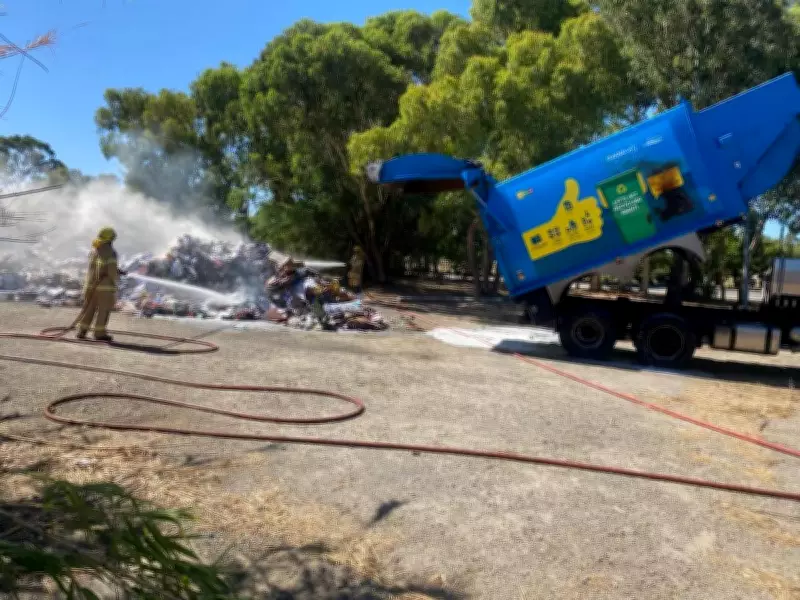
On Wednesday, February 4, a Cleanaway truck contracted by the City of South Perth caught fire after a battery was incorrectly placed in a recycling bin. The driver was forced to urgently dump the hot load while in transit to the materials recycling facility, creating a hazardous situation on public roads.
The City of South Perth emphasized this incident serves as a critical reminder that batteries and other hazardous items must never be placed in general waste or recycling bins. When crushed or damaged during collection processes, these items can ignite spontaneously, creating immediate danger for drivers, waste workers, and nearby residents.

"Residents are urged to dispose of these items responsibly to help keep the community safe," stated city officials, who directed people to the B-cycle website to locate their nearest battery recycling drop-off point. The city's Recycling Centre in Como also accepts household hazardous waste through proper channels.
Victoria Park Reports Similar Incident
The Town of Victoria Park experienced an identical bin truck fire on the same day, with Mayor Karen Vernon noting that while such incidents remain uncommon within her municipality, they have become increasingly frequent across Australia in recent times.
"Although there are implications such as service disruptions, inconvenience to the community and obviously an environmental impact," Mayor Vernon explained, adding that the town does not bear the financial burden of these fires directly.
The municipality remains committed to community education initiatives aimed at reducing fire risks and improving waste management practices throughout the region. "While our waste management partners maintain strong fire risk management procedures, the Town and the community share responsibility for ensuring waste materials are disposed of correctly," Vernon emphasized.
Cleanaway Reveals Alarming Statistics
A Cleanaway spokesperson disclosed troubling data, revealing that the Perth Metro team alone has recorded 46 hot loads since 2021, with these dangerous events becoming increasingly common across the metropolitan area.
Most fires originate from household batteries or items containing rechargeable batteries such as:
- Electronic vapes and vaping devices
- Power tool batteries and charging systems
- Vacuum cleaners and small household electronics
- Various portable electronic devices
"Driver and community safety is always the No.1 priority," the spokesperson stressed, noting that Cleanaway works closely with the Department of Fire and Emergency Services (DFES) to secure scenes before addressing cleanup operations.
These incidents frequently take collection trucks out of service, potentially causing delays in scheduled waste collections across affected suburbs. The financial and environmental burdens extend throughout communities, involving vehicle repairs or replacements, extensive cleanup operations, and service disruptions that impact all residents.
Lithium-Ion Battery Dangers Escalate
Department of Fire and Emergency Services Deputy Commissioner Craig Waters AFSM provided concerning statistics, revealing that since January 1, 2025, firefighters have responded to 198 lithium-ion battery fires in Western Australia alone. Remarkably, 81 of these fires occurred while batteries were not charging—they were in storage, sitting idle, or improperly disposed of in rubbish.
"Lithium-ion batteries can ignite if they are damaged, crushed, overcharged or overheated," Waters explained. This can trigger a dangerous chain reaction called thermal runaway that releases flammable gases and intense heat, leading to rapid ignition.

The conditions inside waste collection trucks create particularly hazardous environments for battery ignition, as items are routinely compacted and crushed during normal collection processes. Combined with heat and flammable waste materials, these conditions allow fires to start and spread with alarming speed.
"Lithium-ion battery fires are extremely dangerous and difficult to extinguish," Waters warned. "Some batteries may also contain toxic chemicals, heavy metals, and pollutants that can contaminate water supplies and ecosystems when incorrectly disposed of."
Community Education and Prevention Efforts
Both municipal authorities and waste management companies emphasize that prevention remains the most effective strategy for addressing this growing safety concern. Community awareness campaigns, improved disposal information through waste calendars, websites, and social media channels, and accessible recycling facilities form crucial components of the solution.
Cleanaway has established clear procedures for drivers who notice any smoke or fire coming from their vehicles, including immediately contacting emergency services. The company follows DFES directions regarding whether loads need to be tipped out for safety reasons during such incidents.
As lithium-powered products continue proliferating in households, authorities stress that responsible disposal practices have never been more critical for community safety. Residents are strongly advised to visit the Recycle Right website to identify appropriate disposal locations for hazardous household items, ensuring Perth suburbs remain protected from preventable waste collection fires.