Expedition cruising is undergoing a transformative shift, with travellers increasingly seeking purpose and deeper meaning from their journeys. Michelle Black, Viking Cruises managing director for Australia-New Zealand, notes that people no longer want just a nice holiday; they want to return home feeling that their trip meant something. This perspective resonates with a growing cohort of expedition cruisers who prioritise connection to people, cultures, and places.
The Rise of Expedition Cruising
Expedition voyages are fundamentally about connection. A wide array of luxury ships, with varying ice capabilities, now provide access to spectacular polar destinations and remote, exotic locations worldwide. Think of Greenland, Svalbard with its rare polar bear sightings, Western Australia's Kimberley region, the sub-Antarctic islands, and the Antarctic peninsula, teeming with wildlife such as nesting gentoo and Adelie penguins or humpback whales in February and March. After a day of exploration, passengers return to luxurious comfort, enjoying chef-prepared treats and warm hospitality. Expedition cruising is no longer a niche; it is a natural extension of luxury travel.
Michelle Black emphasises that expedition cruising differs from river or ocean cruising because the destination itself is the primary focus. While comfort and quality remain essential, guests now seek genuinely rewarding experiences. The sector continues to evolve rapidly, driven by technological advances, a focus on sustainability and conservation, and citizen science initiatives integrated into enrichment programs.

Purpose-designed polar expedition ships only emerged in the 2010s. Before that, travellers to polar regions had limited options, often relying on Russian research ships or repurposed ferries. According to Black, luxury now lies in accessing remote places with comfortable support and an added layer of understanding, whether through onboard experts, science labs, or citizen science activities.
Innovations in Expedition Cruising
Citizen Science on Board
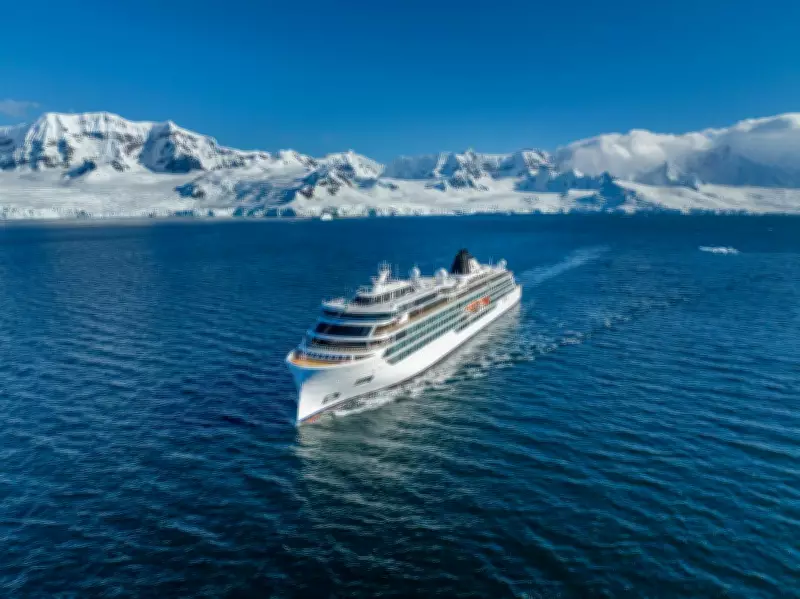
One innovation exemplifying authentic travel is citizen science. While science is a focal point of expedition voyages, relatively few ships double as mobile research platforms, such as Ponant's Le Commandant Charcot and Viking Octantis. These and other expedition cruise ships are fully equipped for real field research by guest scientists. Many projects allow passengers to collect and upload data for citizen science programs, contributing to real-time research that would otherwise be too costly and logistically prohibitive in remote areas.
This conservation work is conducted in partnership with leading institutions like the Scott Polar Research Institute and the University of Tasmania. Findings, such as mapping marine mammal movements and climate change impacts on oceans, are made openly accessible to the international scientific community. Fieldwork extends to custom-designed science labs onboard, where analysis and deeper learning about explored ecosystems occur, complemented by science centres and lecture theatres.
Antony Jinman, Expedition Leaders Manager at Swan Hellenic, states that having scientists of such calibre onboard allows guests not just to observe but to actively participate in research with real-world impact. Citizen science programs are also available on Aurora, HX, Lindblad, and Swan Hellenic ships.
Artificial Intelligence in Navigation
AI is rapidly transforming cruising operations, particularly in keeping ships running efficiently to save fuel and limit emissions. Aurora Expeditions is collaborating with Australian climate-tech company CounterCurrent to integrate its AI-powered navigation system aboard the new ship Douglas Mawson. Developed over a decade by a team led by Dr Shane Keating at the University of New South Wales, the system routes ships to ride ocean currents rather than resist them, burning less fuel even over longer distances.

By integrating AI, onboard sensors, and satellite data, CounterCurrent generates hyper-local, vessel-specific route predictions. The system continuously analyses ocean conditions such as wind, waves, and currents in real time to model the most fuel-efficient routes. According to Aurora's sustainability manager Sasha Buch, benefits include reduced emissions and operational costs, improved safety in challenging polar environments, and quicker, smoother travel. Sasha describes it as trying to create the Google Maps of the ocean to reduce fuel consumption and emissions. The Douglas Mawson trial, in collaboration with the Polar Citizen Science Collective, helps fill critical data gaps in the Southern Ocean. Data from the ship's inaugural Antarctic season will be analysed soon, and the technology has potential to support the broader maritime industry.
The polar regions are among the most fragile environments on Earth and also among the most in-demand travel destinations. Innovations like HX Expeditions' silent science boats limit disturbance to marine fauna and have potential for scaling up. The Norwegian line recently launched fully electric MK 5 Zodiacs using the RAD 40 drive system, which HX claims are the most advanced electric drives on the market. These boats will be used by scientists conducting research and by HX expedition teams aboard MS Fram in the Arctic and MS Fridtjof Nansen in Antarctica for passenger excursions. Scientists consider the new boats a game changer for studying polar wildlife underwater, where noise can mean the difference between thriving and struggling for whales, according to HX chief scientist Dr Verena Meraldi. HX views this as a major step towards phasing out all traditional combustion engine Zodiacs with clean electric alternatives.
Electric Propulsion Developments
In electric propulsion, a very exciting development was announced by Germany-based shipbuilder Meyer Werft in partnership with leading maritime battery maker Corvus Energy. A 100 per cent battery-electric cruise ship of over 80,000 gross tonnes is now at concept stage. This is a large ship to be powered by battery, much bigger than the average expedition vessel. The technology could slash greenhouse gas emissions by up to 95 per cent. Corvus CEO Fredrik Witte describes the project as a milestone for the cruise industry, showing that the technology is safe, mature, and ready to set new standards.
Current battery technology in expedition cruising is via hybrid ships, which use two power sources—usually a conventional combustion engine and a rechargeable battery—and can lower emissions by up to 25 per cent. The world's first hybrid expedition ship, Hurtigruten Expeditions' MS Roald Amundsen, was launched in 2019.
What's Old Is New Again
Amid the parade of new ships, older vessels are given fresh starts in expedition cruising. Two notable examples are part of small, independent cruise operations with fascinating backstories. Heritage Adventurer, operated by Heritage Expeditions (owned by the Russ family of New Zealand since 1984), is described as a true pioneering expedition vessel with a solid ice-class rating of 1A Super, capable of sailing through first-year ice up to one metre thick, and a renowned history of polar exploration. The ship once held records for the most Arctic and Antarctic navigations and for traversing the Northwest and Northeast Passages. The 1991 Finnish-built Heritage Adventurer formerly sailed for Hapag-Lloyd Cruises as MS Hanseatic. Progressive refurbishments have been completed on this ship, which carries just 140 passengers (designed for 184), ensuring a personalised experience and plenty of space. It has 14 Zodiacs for exploration and excellent spots for viewing landscapes and wildlife. The ship sails to Antarctica (including the Ross Sea), the sub-Antarctic islands of New Zealand and Australia, Japan, Southeast Asia, the South Pacific, coastal New Zealand, and Western Australia's Kimberley coast.
St Helena is the flagship of Australian-based startup Terra Nova Expeditions, founded and run by veteran expedition travel entrepreneur Greg Carter. The ship is a 1989 UK-built passenger-cargo vessel that first operated as RMS St Helena, the Royal Mail Ship, serving as a link between Cape Town and the remote South Atlantic island of St Helena. Throughout its lifetime, St Helena has shifted roles from mail ship to vessel-based armoury supporting maritime security in the Gulf of Oman, and for a period transported electric racing vehicles for the Extreme E championship. A major refurbishment in 2022 upgraded cabins and public spaces, and the ship is now ready for expedition cruising. Antarctic voyages launch December 9, 2025, for Terra Nova. The ship's capacity is 150 but will carry just 98 in an all ocean-view configuration. It is built for Antarctic expeditions with an ice-strengthened hull and includes a dedicated science laboratory for resident scientists and citizen science projects on every voyage.
Available on select voyages is the option to day-sail aboard the 61-foot purpose-built polar expedition yacht Icebird for departures in January and February. Icebird will accompany the main ship and is the only extra cost of Terra Nova's itineraries. Passengers transfer to and from the yacht, which carries six to eight passengers and three crew. Under sail, guests venture into bays, channels, and anchorages regular expedition ships cannot access, with expedition equipment like kayaks, skis, and diving gear provided. Greg Carter says no one else offers a small Antarctic sailboat experience on expedition cruises. The idea is to take six to eight people off at once and explore for a whole day away from the ship, providing a unique, intimate experience unavailable on other vessels.
Choices Galore
Expedition cruising is the fastest-growing segment of the cruise industry, growing at over 20 per cent year on year, according to latest industry data. Demand is met with more capacity, offering copious choices of ship, style, and destination. Costs are generally higher than for regular ocean cruises due to smaller ships, which increase the cost per person.
Here are top itinerary picks to start planning:
Viking: Great Lakes
Availability exists on Viking's new Niagara and Great Lakes Treasures itinerary for 2027 and 2028. The cruise runs between Toronto, Ontario, Canada, and Milwaukee, Wisconsin, USA (or vice versa), through the world's largest freshwater system of the Great Lakes. Highlights include traversing the Welland Canal and its eight locks, which lift or lower ships between Lake Ontario and Lake Erie, and an excursion to the thundering Niagara Falls, straddling the Canada-US border. Stops include Detroit, Michigan (home to the Henry Ford Museum), Milwaukee, Georgian Bay, Killarney Provincial Park in Ontario with its vast lake system, forest, and hiking trails, and cultural hub Chicago. Viking includes a shore excursion or landing in every port of call. The 17-day itinerary is priced from $19,845 per person, double occupancy. Savings of up to 35 per cent on 2026-2028 itineraries are available for bookings made before June 30, 2026. Viking has also released new departure dates for 2028-2029 on its popular expedition itineraries in the Arctic, Antarctica, and the Great Lakes. Visit vikingcruises.com.au.
Ponant: Kimberley
Ponant's 11-day (10 nights onboard) Australia's Iconic Kimberley itinerary next season sails between Darwin and Broome (or reverse). It visits King George River and twin falls, Vansittart Bay, Careening Bay, Swift Bay with its rock shelters and Aboriginal rock art, Hunter River, Collier Bay/Talbot Bay and Horizontal Falls (conditions permitting), and sails through the Lacepede Islands. This offers a mix of French chic, remote wilderness discovery, and learning with a knowledgeable expedition team leading Zodiac excursions. Sailings in 2027 are on Explorer yacht Le Jacques Cartier (max 184 passengers) with comforts like exquisite dining, bars, and observation lounges including the below-water Blue Eye, or the slightly larger Le Soleal (max 264). Various departure dates from May to August 2027 are priced from $16,650 per person, including a shore excursion or activity in each port of call. Departures in 2028 are also on sale. Last cabins are available on the 11-day/10-night Solar Eclipse Over Western Australia: Sailing the Kimberley Coast with Smithsonian Journeys, departing July 19, 2028. The itinerary is themed around the July 22, 2028 solar eclipse, for which the Kimberley will have the longest duration of totality on Earth (over five minutes). The voyage features onboard lectures and discussions with Brent Garry, geologist at NASA's Goddard Space Flight Center, and meteorologist Joe Rao. Visit au.ponant.com.
Terra Nova: Antarctica
The 20-day Ultimate Antarctic Adventure combines a traditional voyage on a small expedition ship with an exclusive five-night adventure aboard polar sailing yacht Icebird (max six guests) for rare wilderness access and a flexible itinerary, dependent on weather and ice conditions. Options include five nights aboard Icebird from US$25,380 per person (approx. A$35,472) in a double private cabin, from US$21,080 per person (approx. A$29,463) quad share, or a full day sailing and exploring on the yacht returning to St Helena in the evening for US$1,295 per person (approx. A$1,810). Expedition guide-led activities like snowshoeing and kayaking (often charged extra by other lines) are included in the fare. Departures start December 28, 2026. There are six other Terra Nova itineraries to the Antarctic peninsula, starting at US$7,990 (approx. A$11,168) for the 10-day Classic Antarctica journey. Visit terranova-expeditions.com.
Silversea: Antarctica
Crossing the Drake Passage for a day and a half each way does not suit everyone, but it is the traditional challenge of reaching Antarctica. From the start of next season in October 2026, Silversea offers an option to skip the Drake entirely on a six-day Antarctica Fly Cruise package, or cruise one leg on a nine-day package. The six-day package includes an overnight stay in Santiago, Chile, a private flight to Puerto Williams and a night at Silversea's new 150-room hotel, The Cormorant at 55 South (claimed to be the southernmost hotel on Earth). The next day, a charter flight takes passengers to King George Island in the South Shetland Islands, bypassing the Drake, to join a Silversea ship such as Silver Endeavour or Silver Wind already in Antarctica. The flights and hotel stay are repeated in reverse on the return. Silversea president Bert Hernandez says The Cormorant offers guests the same hallmark comfort and personalised service expected onboard, immersing them in the region's rich culture and natural beauty, with cosy lounges, curated gathering areas, and panoramic views. Visit silversea.com.
Aurora Expeditions: Arctic
Aurora's 11-day Iceland and East Greenland: Through the Lens itinerary combines exploring Arctic landscapes with photography learning alongside seasoned professionals. Whether using professional gear or a smartphone, photographers Scott Portelli, Peter Eastway, David Vargas, and Wayne Sorensen guide participants in the field during extended time off-ship and share expertise in onboard workshops. The itinerary explores East Greenland's Scoresbysund (the world's largest fjord system with glaciers and gigantic icebergs), Iceland's remote Westfjords with rugged coastlines, waterfalls, and volcanic terrain, and cultural sites. The Reykjavik return voyage departs July 31, 2027, aboard custom-designed expedition ship Sylvia Earle. Savings of up to 15 per cent on fares are available, from $22,776 per person twin share, or from $34,164 solo (a saving of over $6,000 for a single). All activities except sea kayaking (optional extra at $1,220 per person) are included. Aurora also offers Arctic itineraries to Svalbard, coastal Norway, the Northwest Passage/Canadian High Arctic, and Northern Lights cruises, as well as Antarctica. Visit aurora-expeditions.com.
Booking through an expert travel advisor is recommended for the best price and cruise options, as well as support during unforeseen events.
Coming Up
After a couple of Arctic expeditions in and around Svalbard, the author will venture to Antarctica in November aboard Aurora's Sylvia Earle, named for renowned oceanographer and explorer Dr Sylvia Earle. The voyage will venture below the Antarctic Circle to explore the western peninsula and South Shetland Islands. As Dr Earle says, our goal is to inspire a network of hope—one place, one community, one vision at a time—together around the world.
Expedition Cruise Lines
Aqua Expeditions, Aurora Expeditions, Chimu Adventures, Heritage Expeditions, HX (Hurtigruten Expeditions), Kimberley Quest, Pearl Expeditions, Ponant, Quark, Scenic, Seabourn, Silversea, Swan Hellenic, Terra Nova, Viking.