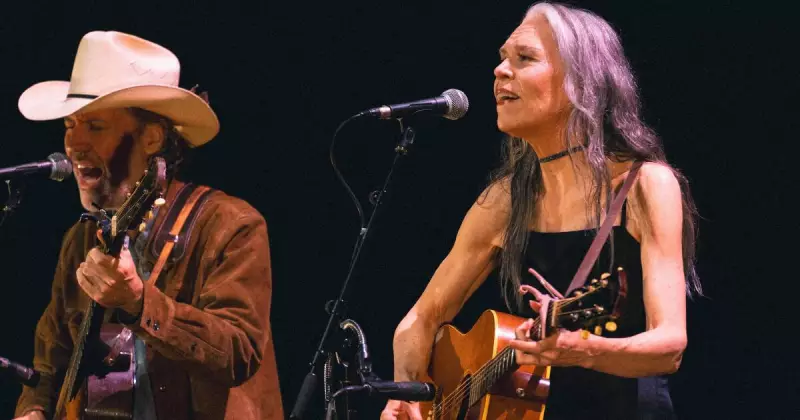
Folk Music Icons Gillian Welch and David Rawlings Return to Australia
Acclaimed songwriters Gillian Welch and David Rawlings have always preferred the open road to the skies. The musical partners, known for their deeply resonant roots music, choose to drive between towns when touring, immersing themselves in the landscapes and cultures that inspire their work. This approach reflects their artistic philosophy: a commitment to authenticity and connection that has defined their decades-long collaboration.
A Journey Across Australia
When the Grammy-winning artists first visited Australia in 2016, they flew into Perth and embarked on an epic drive across the Nullarbor Plain. Rawlings still treasures a memento from that trip: the sun-mummified remains of a blue-tongue lizard, a common Australian skink he discovered in the remote desert. "I found that in the middle of Australia, as far away from anything as you could ever be," he recalls, noting he later identified the species at an aquarium in his hometown of Chattanooga.
Next month marks their second Australian tour leg promoting their album Woodland, following such overwhelming demand from their capital city shows last January that additional regional dates were added—including a stop in Newcastle. "We had a great time on the first leg," Rawlings explains. "We wanted to spend more time in regional areas initially, but it made sense to test demand with city residencies first. The positive response allowed us to return and do what we originally hoped: drive more, see more of the country, and play for audiences who might not travel to Sydney or Melbourne."

A Creative Partnership Forged in Boston
Welch and Rawlings first met at Boston's Berklee College of Music in the early 1990s, sparking a rare creative kinship that has flourished both personally and professionally. Their catalog, primarily released under Welch's name until Woodland, has earned widespread critical acclaim, including an Academy Award nomination for Best Original Song for When a Cowboy Trades His Spurs for Wings from the Coen brothers' film The Ballad of Buster Scruggs, along with multiple Grammy Awards.
Their songwriting process reveals complementary approaches. "I tend to be more meditative and slower, and he tends to be faster and more of a problem solver," Welch notes. Rawlings adds, "Throughout our catalog, Gillian has started more songs and I've finished more. We work to make each piece feel inevitable, as powerful as it can be." This dynamic extends to their conversations, where they trade thoughts as seamlessly as they exchange harmonies on stage.
Shared Vision and Uncompromising Standards
From their earliest days, Welch and Rawlings discovered an uncanny alignment in taste that has endured. "Our bar hasn't really changed," Welch observes. "We're still shooting for the same thing—what excites us, what we think is cool, and what we think has no business in our art." This shared vision is underpinned by rigorous self-criticism. Rawlings admits they discard "99.5 per cent of everything that comes along," while Welch describes them both as "perfectionists and very easily embarrassed."
Rawlings hesitates to label it perfectionism, framing it instead as a relentless pursuit of quality. "The only way we can play a song years later and still have it resonate is by working as hard as we possibly could," he says. Welch gently counters, "That strong demarcation where we won't accept something unless it clears our bar—I think that's what others mean by perfectionism."
Woodland: An Album Born from Resilience
The album Woodland draws its name from the historic East Nashville studio the pair acquired in 2001. Its creation was shaped not only by the COVID-19 pandemic but also by the rebuilding process after a devastating tornado ripped the roof off the studio in 2020. The resulting work is a document of resilience, hope, longing, and impermanence.

When asked how current social and political turmoil might influence future work, Rawlings emphasizes their deliberate pace. "Things need to process for a while," he says, comparing Welch's creative process to an aquifer that filters experiences over time. "We aim to write songs that could be played a hundred years from now and still make sense. That requires drawing from human experiences rather than just reacting to events."
Welch notes that their songs are rarely reactionary, though she cites Everything Is Free—a 2001 lament on music piracy—as an exception. "That came from a quick emotional reaction to Napster, feeling our career was in jeopardy," she recalls. "Our songs might be sad, but they're not confused. We both have to understand what we're writing."
Bringing Their Music to Newcastle
Welch and Rawlings are set to transform Newcastle's Civic Theatre into what promises to be a cathedral of song on Thursday, February 19. Their performance continues a tradition of intimate, powerful live shows that have captivated audiences worldwide. Tickets are now available for what will undoubtedly be a memorable evening of folk music excellence.