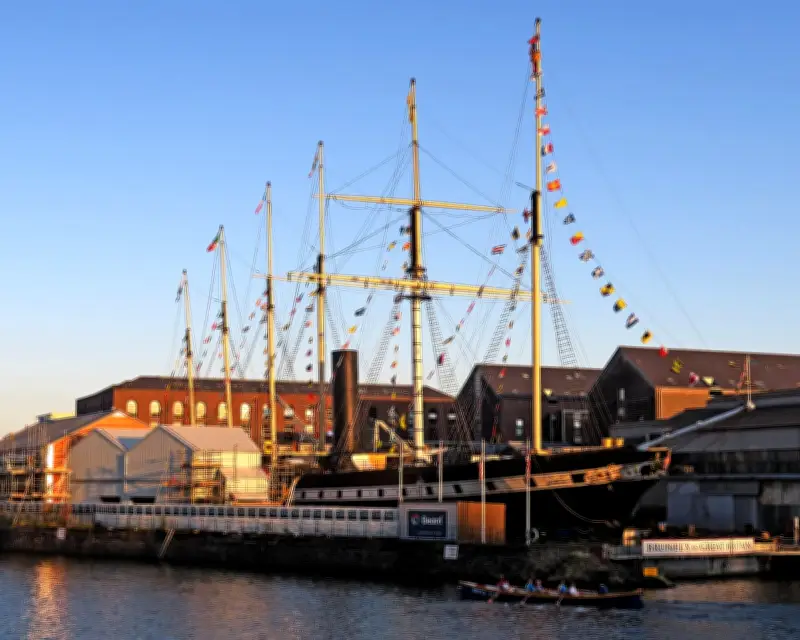
One of the UK's most famous maritime landmarks is undergoing a transformation. The dockland site in Bristol that houses the historic ocean liner SS Great Britain, designed by Victorian engineer Isambard Kingdom Brunel, has been renamed Bristol Dockyards. The change is part of a broader effort to make the attraction feel 'cooler' and more inclusive.
For the past decade, the site has been marketed as Brunel's SS Great Britain, but both the ship's name and the engineer's association are being downplayed in favor of a name that better reflects its location and community roots. The site's expanded and revamped museum is set to open in July, focusing less on engineering marvels and more on the human stories connected to the vessel.
Andrew Edwards, chief executive of the SS Great Britain Trust, acknowledged that some might view the changes as 'woke'. 'Change is never easy,' he said. 'You'll always get those that are resistant, but when we were shaping the vision, I tried to take stock of where the city was and what the city was all about.' Edwards noted that Bristol is often named the UK's coolest city, and he wants the site to reflect that. 'We've consciously tried to avoid falling into those stereotypical ideas of what a maritime museum should look like and tried to present something that feels a little bit more rooted in Bristol.'

The renaming comes amid sensitivity around historical names in Bristol. The city's largest concert hall was renamed Bristol Beacon after dropping the name of slave trader Edward Colston, whose statue was thrown into the harbour in 2020. Edwards clarified that the 'SS' in the ship's name stands for 'steamship', not 'slave ship', as some assume, and that the vessel was built after the British abolition of the slave trade.
The museum revamp will include research from community groups exploring untold personal histories of passengers and the ship's impact on Australia, India, the Caribbean, and the United States. Highlights include stories of the Johnson family—five brothers from the Wye Valley who worked as shipwrights—and the ship's role in carrying British soldiers to Mumbai during the Indian Rebellion of 1857. The museum will also feature figures like George Moses, a Jamaican ship's cook, and Barbadian musician James W Jones.
Edwards emphasized the importance of diversity: 'We live in a very diverse world and a very diverse city. I believe the role of organisations like us is to represent that diversity as best we can and to provide something that appeals to everybody. Heritage only works when it has ownership within the community.'
The renaming and museum reopening are the first phase of a broader transformation to turn the site into a 'cultural campus' addressing heritage, sustainability, and diversity ahead of the ship's 60th anniversary of returning to Bristol in 2030. Edwards assured that the site will still be described as 'home to the SS Great Britain', so the ship's name is not entirely erased.