More than eight decades after the conclusion of World War II, filmmakers continue to unearth compelling new narratives from the global conflict. The latest to delve into this history is 'Nuremberg,' a powerful courtroom drama from writer-director James Vanderbilt, known for his work on 'Zodiac.'
A Chilling Capture and a Moral Quandary
The film opens on the final day of the war in Europe, with American soldiers stumbling upon a Nazi vehicle. Inside is none other than Hermann Goering, Adolf Hitler's second-in-command and a chief architect of the Nazi regime. Portrayed by Russell Crowe, Goering's capture presents an immediate dilemma for the Allies.
With Hitler, Himmler, and Goebbels dead by suicide, Goering stands as the highest-ranking Nazi official left alive. The urgent question becomes how, and under what legal framework, he and other senior Nazis should be held accountable for their crimes. This leads to the appointment of American Supreme Court Justice Robert Jackson, played with predictable gravitas by Michael Shannon, to prosecute them in an unprecedented international tribunal.

The Psychological Battlefield
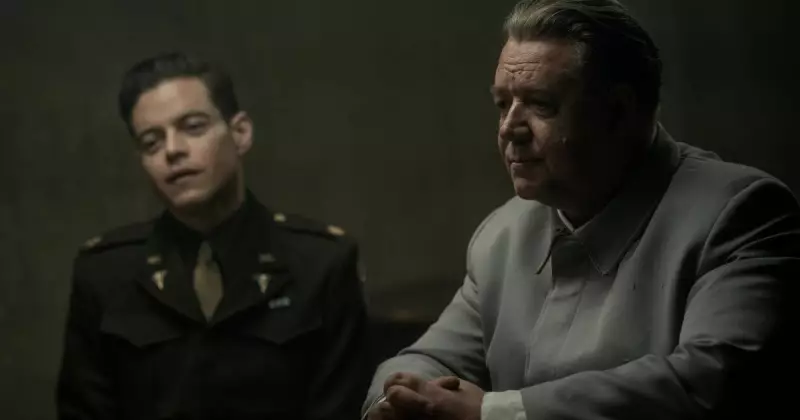
To prevent further suicides among the accused, American psychiatrist Douglas Kelley is brought in. Played by Rami Malek in a notably restrained performance, Kelley sees a career-defining opportunity to understand the Nazi psyche, focusing intently on Goering. Assisted by German-speaking soldier Howie Triest (Leo Woodall), Kelley engages in a tense game of psychological warfare with the cunning Reichsmarschall.
While the film initially follows a familiar 'American saviour' trajectory, it quickly deepens into a riveting duel of wits between Kelley and Goering. Crowe is profoundly chilling in the role, particularly in moments where he portrays Goering as charming and polite. He delivers much of his dialogue in German, and when speaking English, maintains a consistent accent that never undermines the performance's intensity.
A Harrowing History Lesson with Modern Echoes
The film's procedural focus on dialogue and legal process maintains interest across its substantial 148-minute runtime. The trial scenes are punctuated by extended, harrowing real footage from concentration camps, serving a crucial narrative purpose in confronting the scale of the atrocities.
Beyond its historical account of the landmark trials, the film resonates powerfully with contemporary audiences. It clearly illustrates how the Nazi officials were seduced by a charismatic leader who, as Goering notes, "made [them] feel German again." The parallel to modern political rhetoric, particularly that of Donald Trump in recent years, is stark and intentionally drawn. The film highlights Kelley's failed attempts to warn of similar movements arising in the United States, leaving viewers to ponder if such warnings would be heeded today.
Featuring strong performances across the board, 'Nuremberg' is more than a history lesson; it is a tense, psychologically astute drama that forces reflection on justice, ideology, and the unsettling echoes of the past in our present political climate.