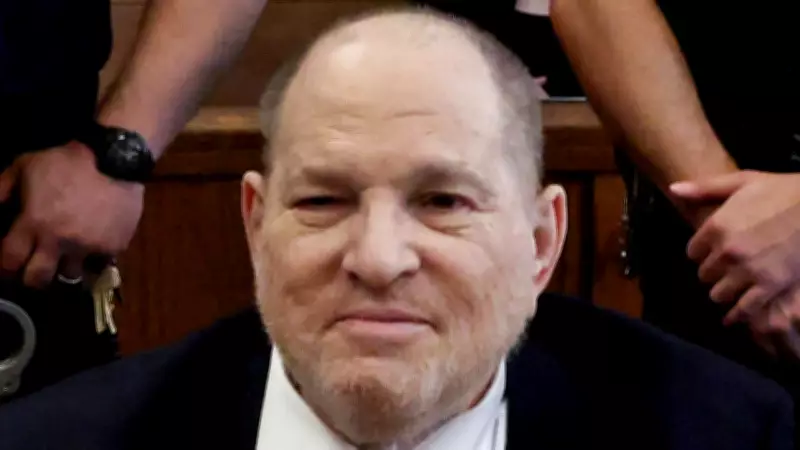
Harvey Weinstein's third Manhattan sex crimes trial has ended in a mistrial after the jury declared it was deadlocked and unable to unanimously reach a verdict.
The Hollywood mogul's trial concluded on Friday (US time) when Manhattan Supreme Court Judge Curtis Farber declared a mistrial, marking the second time a panel failed to reach a verdict on allegations by former actor Jessica Mann. The 74-year-old Weinstein faced his third trial over accusations he raped Mann inside the DoubleTree hotel in New York's Midtown district on March 18, 2013. Mann recounted the alleged attack for five days on the witness stand during the four-week trial.
On Thursday morning, the jury sent a note indicating they could not reach a unanimous decision, prompting the judge to issue an "Allen charge" instructing them to continue deliberations. However, after lunch, the jury sent another note stating, "We feel no one is going to change where they stand." Weinstein's lawyer Marc Agnifilo then moved for a mistrial, which was granted.

Mann, now 40, broke down several times during her testimony as she faced Weinstein for the third time. A retrial last year also failed to convict the former producer. "I said, 'No' over and over and I tried to leave," Mann testified through sobs, demonstrating how Weinstein allegedly pinned her wrists above her head during the attack.
Mann testified that she had a consensual relationship with Weinstein at one point, hoping it could lead to a "loving relationship," while acknowledging his power in Hollywood influenced her decisions. She described Weinstein as an erratic "brat" who could switch from caring to tantrum-throwing. "Essentially, his friends go very far and his enemies don't step foot in this town," Mann said.
Mann also testified that Weinstein told her he was in an "open relationship" with then-wife Georgina Chapman when they began hooking up. She alleged Weinstein raped her at a Los Angeles hotel later in 2013, though he was not charged for that attack.
During cross-examination, Weinstein's lawyer Teny Geragos pressed Mann about a love note she wrote two days after the alleged New York attack, which was introduced for the first time at any trial. The note read, "Do I love him or the idea of him? With him — easy. The idea of expanding that — fulfilling." Mann testified she became "emotionally attached" and wanted a loving romance, but the note made no mention of rape.
In closing arguments, Manhattan Assistant District Attorney Nicole Blumberg urged jurors to understand how Weinstein's power enabled manipulation. "She missed the red flags, she missed the manipulation, the power, the control. She rationalised in her own mind the unwanted sex in the beginning," Blumberg said.
Weinstein's lawyer Agnifilo attacked Mann's character, highlighting her mental instability at the time and claiming she lied on the stand. Weinstein awaits sentencing for his 2025 conviction on a first-degree criminal sex act for assaulting former TV production assistant Miriam "Mimi" Haley.
This article originally appeared in The New York Post and was reproduced with permission.