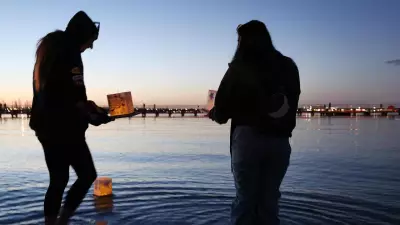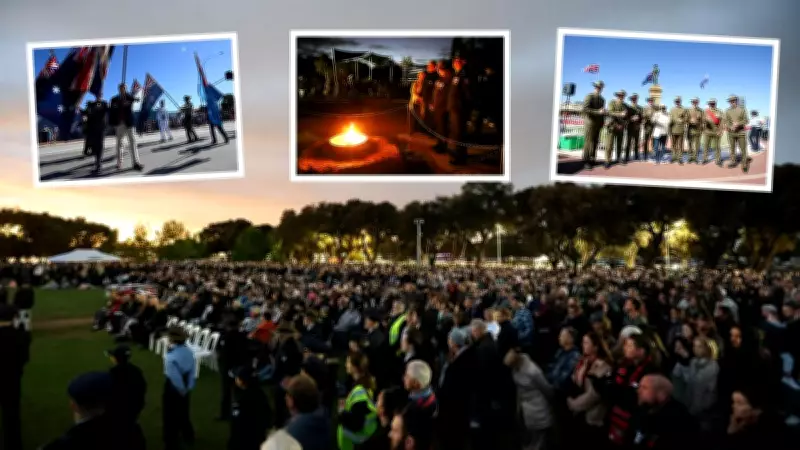
From Albany to Broome, small and large communities across Western Australia came together in quiet contemplation, appreciation, and prayer for Australia’s sons and daughters who have died in wars.
Albany: Birthplace of the Anzac Legend
In Albany, the birthplace of the Anzac legend, a sea of silhouettes stood quietly against the first light of dawn. About 5,000 locals and visitors surrounded the Desert Mounted Corps Memorial on Mt Clarence, overlooking King George Sound, where 41,000 of the original Anzacs departed for the Gallipoli campaign and World War I battlefields beyond. Some 112 years later, the living united in reflection as the sun rose over the natural harbour.
WA Police Commissioner Col Blanch, Albany Mayor Greg Stocks, and Albany MLA Scott Leary were among the dignitaries who laid wreaths at the service, which is part of the city’s bicentenary commemorations. Albany RSL Services Director Captain Michael Tugwell ably guided the proceedings.

A prayer of remembrance was delivered by Reverend Canon Karen Cave, followed by the Anzac Day dawn service address from guest speaker Lieutenant Colonel Nathan Mutu of the New Zealand Defence Force. The Desert Mounted Corps Memorial is considered the second most recognised Anzac memorial site in the world. For those unable to attend the service at Mt Clarence, the ceremony was live-streamed to Anzac Peace Park, where hundreds more watched on big screens.
Narrogin: A Special Dawn Service
It was an extra special Anzac Day in Narrogin. The Narrogin RSL invited HMAS Stirling, the Royal Australian Navy’s primary base on the west coast, drawing crowds from across the district to the town’s Memorial Park. It was a serene and emotional scene as those assembled placed their hands on their hearts and bugler Emily Ballantyne delivered The Last Post, followed by a minute’s silence.
Veteran George Ruzicka, who served in a medical unit in Vietnam and later joined the Air Force for six years, travelled from Wagin to attend the Narrogin service. “It’s the first time I’ve been here for the dawn service in Narrogin and I think I’ll be coming again,” he said.
HMAS Stirling electronics technician and 5-inch gun instructor Liam Spencer said he was impressed to see so many people. “Big turn out definitely, it was nice to see everyone getting up early, kids out here as well — it’s important for them to see firsthand what Anzac is all about,” Mr Spencer said. “It’s very important to keep the tradition going and show the younger generation something special, a bit out of their comfort zone, to come and make a small sacrifice recognising a bigger sacrifice.”
He said it was particularly important to have a presence in small towns and not just the bigger cities. Seaman Ethan Ketelhohn said he felt privileged and honoured to be part of Narrogin’s dawn service — his first Anzac Day in the defence forces. Not coming from a military family, Mr Ketelhohn said he has reflected on the meaning of Anzac since joining the Navy and the value of commemorating the occasion. “I’m proud of everyone who served and what they do for their country, I’m proud to be in the military,” he said. Attendees enjoyed the gunfire cooked breakfast put on by the Lions Club of Narrogin.
Geraldton: Remembering Every Generation
At Geraldton, a call went out to “remember, not just the Anzacs of Gallipoli, but every generation that followed.” Lieutenant Commander David J Edgell, from the Royal Australian Navy, urged the assembly of about 4,000 to “remind ourselves that the Anzac spirit is not confined to history.” “It lives on wherever Australians are called,” he said. A mixture of young and old could be seen among the crowd, with young people wearing war service medals passed down from their relatives.
Mandurah: Honouring Service
A similar-sized gathering braved the chill at Mandurah’s waterside war memorial to honour those who have served their country in military uniform. Deputy leader of the Opposition and local federal MP Andrew Hastie marched in Mandurah’s Anzac Day parade. When asked about hecklers at the Kings Park dawn service, the former SAS soldier said he condemned any action that distracts from Anzac Day.

During the daytime event, Naval officer Nick Carter spoke about defending the Strait of Hormuz during the Iraq war. “It was a place where every moment carried real risk,” he said. “I was just 20 years old … I discovered profound courage is not found in isolation, it is found in the people around you and I drew strength from those around me. Shipmates who watched over me, who reassured me and who I knew with unwavering certainty would have done whatever possible to keep us all safe.”
Busselton: Large Turnout
An estimated 8,000 people gathered in the dark at the Rotary Park of Remembrance in Busselton for the city’s dawn service. Busselton RSL Vice President Grant Henley described the turnout as “amazing.” “It’s heart-warming as a veteran who’s getting on to see so many young people and children here who will continue this Anzac tradition and the legacy for years to come,” he said. The service was briefly disrupted when a lone heckler shouted during the acknowledgement to country.
Wanneroo: Remembering the Fallen
At Wanneroo in Perth’s north, reservists from the 16th Battalion Royal Western Australia Regiment stood guard while local school students and politicians laid wreaths at the memorial, which is adorned with the names of nine young men from the Wanneroo region – then a farming stronghold – who were killed in action during World War I. Many watched the formalities through two giant screens erected at either side of Memorial Park, such is the growing popularity of local services across Perth.
Brunswick and Bridgetown: Record Numbers
In Brunswick, Judy Talbot OAM said more than 40 wreaths were laid at the memorial, a record number for the town. Bridgetown’s dawn ceremony exceeded last year’s attendance. “The town here is steeped in military history,” RSL Bridgetown Sub-Branch President Peter Sarles said.
Donnybrook: Legacy of the Anzacs
At Donnybrook, RSL President Dan Armstrong summed up the Anzacs as ordinary people who faced extraordinary circumstances and shaped the course of history. “Their legacy is not only written in the past, but lives on in the freedoms we enjoy today,” he said. “Let us remember their bravery, their suffering and their unwavering commitment to something greater than themselves.”