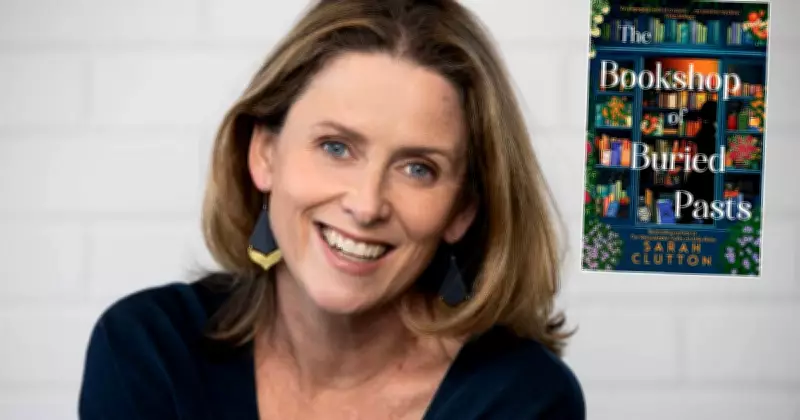
Something terrifying happens when you have a book contract and zero ideas for the book. It's just you, a laptop and a blindingly blank page. I'd been considering and discarding ideas for my new novel for months, but the only one that kept returning was death. Not in a morbid way, but I was 51 and the only certainty was that I'd entered my 'second half'. The end point was closer than the beginning. Death, for the first time, felt like a possibility.
This realisation was not a sudden epiphany but a slow, creeping awareness. It came during quiet moments: while washing dishes, walking the dog, or staring at the ceiling at 3 a.m. The thought of mortality, once abstract, became a tangible presence in my daily life. I began to wonder if this was the theme I needed to explore, not as a morbid obsession but as a way to understand the human condition.
I started researching how other writers have tackled death. From Tolstoy to Didion, the subject has been a rich vein of literary exploration. But I didn't want to write about death in a philosophical or clinical way. I wanted to capture the visceral, everyday experience of living with the knowledge that time is finite. I wanted to write about the small moments that take on new meaning when seen through the lens of mortality.

As I delved deeper, I realised that death is not just an ending but a beginning. It forces us to confront what truly matters. For my protagonist, this meant re-evaluating relationships, career choices, and the legacy she would leave behind. The story began to take shape around a woman who, after a health scare, decides to make radical changes in her life. She moves to a coastal town, reconnects with estranged family, and confronts the secrets she has kept for decades.
The process of writing this novel has been cathartic. It has forced me to examine my own fears and assumptions about life and death. But more than that, it has given me a sense of purpose. The blank page is no longer terrifying; it is an invitation to explore the depths of human experience. And while I may not have all the answers, I am grateful for the question that started it all: What would you do if you knew your time was limited?