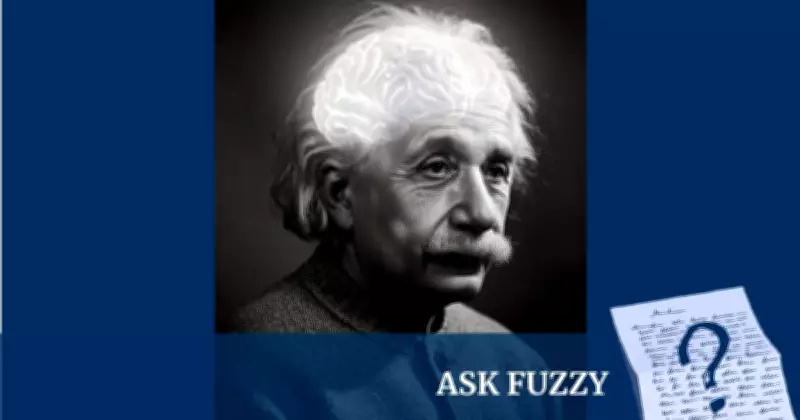
When Albert Einstein died in 1955, his brain was removed without permission by pathologist Thomas Stoltz Harvey, sparking a bizarre and controversial tale. Harvey, who performed the autopsy at Princeton Hospital, took the brain home and kept it in jars for decades, hoping to unlock the secrets of Einstein's genius.
The Theft of Einstein's Brain
Harvey claimed he had permission from Einstein's family, but later evidence suggests otherwise. He was fired from his job for refusing to relinquish the brain. For over 40 years, Harvey stored the brain in his home, moving with it across the United States.
Scientific Studies and Findings
In the 1980s, Harvey began sending small samples to researchers. Studies revealed that Einstein's brain had an unusually high number of glial cells, a larger parietal lobe, and a unique Sylvian fissure. These features were linked to his mathematical and spatial reasoning abilities.

However, many scientists criticized the studies for small sample sizes and lack of proper controls. The brain's journey also raised ethical questions about consent and the ownership of human remains.
The Return of the Brain
In 1998, Harvey returned the remaining brain to Princeton Hospital. It was later given to the National Museum of Health and Medicine in Maryland. Today, parts of Einstein's brain are preserved and occasionally displayed, continuing to fascinate and provoke debate.
The story of Einstein's brain remains a cautionary tale about the intersection of science, ethics, and the quest to understand genius.