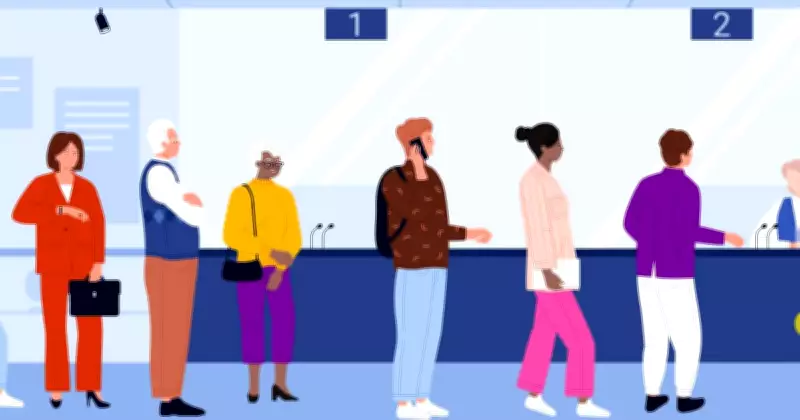
The Science of Queues: Why We Hate Waiting (Except the British)
When we hear the word "queue," it often conjures feelings of frustration and impatience. There's even a dystopian science fiction tale depicting a world where people spend their entire lives trapped in an endless line. Yet, despite our collective disdain, queues are an inescapable part of daily life, occurring in unexpected places and serving crucial functions.
Queues in Nature and Technology
This very column is a prime example of a queue. Unless you skim-read, letters and words arrive in a sequential stream, from front to back, much like a line. Meanwhile, your breakfast waits to be digested in a more chaotic queue within your gut. Nature is full of such queues, from eggs lined up in an ovipositor to fluids trickling through capillaries.
In technology, queues are equally pervasive. When you browse the web, data streams into your phone, often getting jumbled during transmission only to be reassembled into a tidy queue for processing. These necessary queues ensure systems function smoothly, but it's the ones we encounter in daily life—like waiting on hold or lining up at a counter—that we truly loathe.

The Business of Queuing
From a customer's perspective, queues are about speed and fairness. We want to be served quickly and value equal opportunity, which is why queue-jumpers are universally disliked. For businesses, queues represent a delicate balance between cost management and customer satisfaction. Companies employ various strategies, such as priority lanes or special-needs queues, to mitigate dissatisfaction.
In manufacturing, queues are taken to the next level. Factories manage multiple supply chains and internal queues to keep products churning out at maximum efficiency. They must juggle costs against quality and reliability, ensuring production lines keep rolling even when pauses occur. Japanese companies learned this lesson the hard way during the 1995 Kobe earthquake. Using the Kanban method of just-in-time manufacturing, they had trimmed stock to a minimum, leaving them vulnerable when supply lines were disrupted.
The Mathematics of Waiting
Understanding how queues behave and optimizing them requires a sophisticated branch of mathematics known as queuing theory. This field helps model and manage waiting lines, from call centers to traffic flow. To delve deeper into how queuing theory works, you might need to get in line for the advanced edition of Ask Fuzzy, as demand is reportedly hot.
Interestingly, there may be an Ig Nobel award for a method that identifies British people based on their queuing behavior. According to a humorous hypothesis, a group of Brits will spontaneously form an orderly queue, showcasing a cultural affinity for lines that contrasts with global impatience.
The Fuzzy Logic Science Show airs at 11am Sundays on 2xx 98.3FM. Listeners can send questions to AskFuzzy@Zoho.com or tune into the podcast at FuzzyLogicOn2xx.Podbean.com.