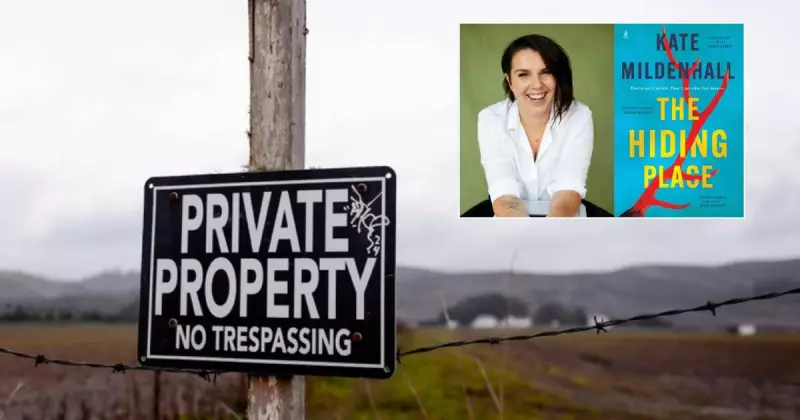
What begins as a shared dream of escape rapidly descends into a nightmare of hidden truths and moral compromise in Kate Mildenhall's gripping new novel. 'The Hiding Place', released in January 2026, marks the author's first foray into the literary thriller genre, delivering a sharp and unsettling critique of the modern Australian middle-class ideal.
A Shared Dream Built on Shaky Ground
The premise is deceptively simple: eight old friends, along with their children, pool their resources to purchase an abandoned mining town called Willow Creek. Their ambition is to create a private sanctuary, an Eden away from the pressures of urban life. Led by the persuasive Lou, the group envisions themselves as stewards of the land, building a legacy for their families.
However, Mildenhall masterfully reveals the cracks in this utopian vision from the outset. Lou's arguments are performative, tailored to each friend's vulnerabilities—appealing to one's desire for environmental stewardship and another's wish for a family legacy. The purchase is rationalised as an investment in 'the good life', a reward for being 'good people'. This unspoken corollary, that those who cannot afford such a retreat are somehow less deserving, hangs heavily over the narrative, particularly in contrast to the locals who were priced out of buying the land themselves.

The Threat Comes From Within
In a clever inversion of the Australian Gothic tradition, where the landscape itself often embodies menace, the true threat in 'The Hiding Place' is human. The friends bring their city tensions and personal secrets to Willow Creek. Their commitment to community is shallow, extending no further than their own fence line. They fail to engage with local townspeople or support the small economy, instead importing everything they need.
Their professed values of 'respect', 'integrity', and 'kindness' are immediately tested and found wanting. Disputes erupt over fence lines, a camping family is hastily evicted, and the group's financial strains become acute. Josie is secretly using the property for controversial research to fund her share, while Lou has misappropriated her wife Marnie's political campaign funds. The fragility of their collective dream is palpable long before a crime shatters the weekend retreat.
Ethics, Shame, and the Illusion of Protection
Central to the novel's tension is the group's hollow ethics. A telling symbol is the 'Acknowledgement of Country' sign placed at the property entrance, which states the land is Aboriginal and that sovereignty was never ceded. When a child pointedly asks, 'If we're not actually going to give the land back?', the question underscores the hypocrisy. The land is treated as private property to be controlled and defended, not stewarded.
The adults claim their mission is to protect their children's innocence, yet they consistently fail them. The kids are left in the care of a reluctant teenager while the parents drink and argue, oblivious even to the haunting local history of a missing girl. As an epigraph from Maurice Sendak warns, 'Grown-ups always say they protect their children, but they're really protecting themselves.'
The novel's climax hinges on the group's willingness to cross moral boundaries to protect their ideal. Ultimately, their greatest fear is not the unethical act itself, but the exposure and shame that follows—the revelation that they are not, in fact, the 'good people' they believe themselves to be.
Jessica Gildersleeve, a professor of English literature at the University of Southern Queensland, praises 'The Hiding Place' as 'fast-paced and shocking', noting that it 'pierces to the heart of the modern middle-class Australian dream.' For readers seeking a thought-provoking and suspenseful novel that dissects contemporary anxieties about property, community, and self-delusion, Kate Mildenhall's 'The Hiding Place' is set to be one of the standout literary releases of 2026.