The family of renowned Australian artist Harold Freedman is locked in a battle for transparency, demanding to know why a significant, heritage-listed mural created by their late father has been completely concealed behind a wall in central Geelong.
A Heritage Treasure Sealed Away
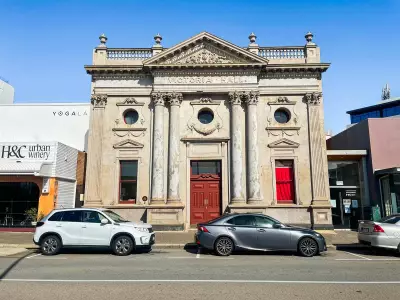
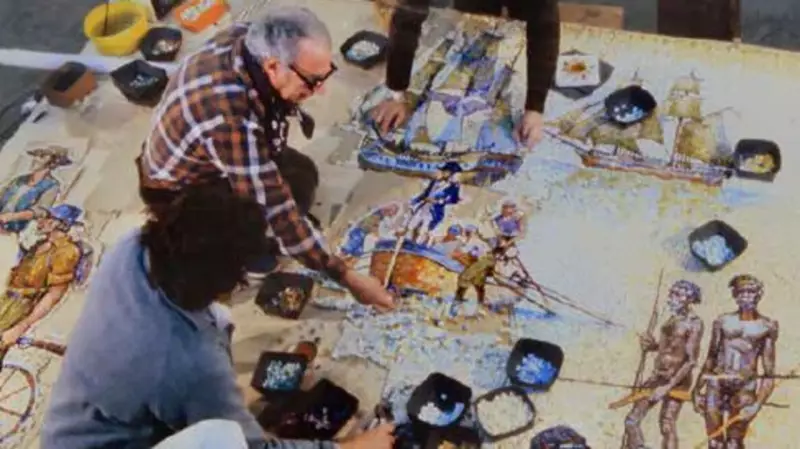
For over four decades, Harold Freedman's ambitious 50-metre long mural, titled "The Manufacture of Wool", adorned the interior of the former Wool Board building on Moorabool Street. The artwork, a detailed and vibrant narrative celebrating the Australian wool industry, was painstakingly created between 1979 and 1981. It was officially added to the Victorian Heritage Register in 1999, recognising its immense cultural and historical value.
However, the building's recent transformation into a Quest Apartment Hotel has led to the mural's controversial fate. During the redevelopment, a new internal wall was constructed directly in front of the entire artwork, sealing it from public view. The Freedman family only discovered this drastic measure well after the fact, leaving them shocked and seeking answers from both the building's owners and heritage authorities.

Family's Fight for Transparency and Access
Harold Freedman's children, Prudence and David Freedman, have expressed profound disappointment and frustration. They argue there was a lack of proper consultation and that alternative solutions to preserve visual or physical access to the mural were not adequately explored. "It's been hidden away as if it's something to be ashamed of," Prudence Freedman stated, emphasising the mural's importance as a part of Geelong's industrial and artistic heritage.
The family's core demand is not necessarily for the wall to be removed immediately, but for a clear, enforceable plan that guarantees future access for the public, researchers, and of course, the family itself. They question whether the conditions of the heritage permit, issued by the City of Greater Geelong, were sufficiently robust to protect the spirit of the heritage listing—which is meant to conserve significance, not just the physical fabric.
Official Responses and Ongoing Uncertainty
Heritage Victoria, the state's key authority, has stated that the permit allowed for the mural's concealment as part of the building's adaptation, asserting the method used causes no damage and allows for future retrieval. A spokesperson noted the permit included a condition for the owner to provide a report on the mural's condition. However, the family and local heritage advocates find this response inadequate, arguing that "out of sight, out of mind" poses a long-term risk to the artwork's preservation and public memory.
The City of Greater Geelong has directed inquiries to Heritage Victoria, highlighting the state-level jurisdiction over the registered heritage place. The current building owners have indicated the wall was part of the approved plans. This has created a bureaucratic impasse, leaving the Freedman family feeling that no single entity is taking responsibility for the mural's legacy or its accessibility to future generations.
The case raises broader questions about the protection of movable or interior heritage within developing buildings. It underscores a potential gap between technical compliance with permits and the ethical stewardship of culturally important works. The Freedman family's campaign continues, hoping to secure a formal agreement that ensures this piece of Geelong's and Australia's artistic history is not forgotten behind a wall of plasterboard and silence.