Devil's Violin: A Fiendish Challenge with Ilya Gringolts and Australian Chamber Orchestra
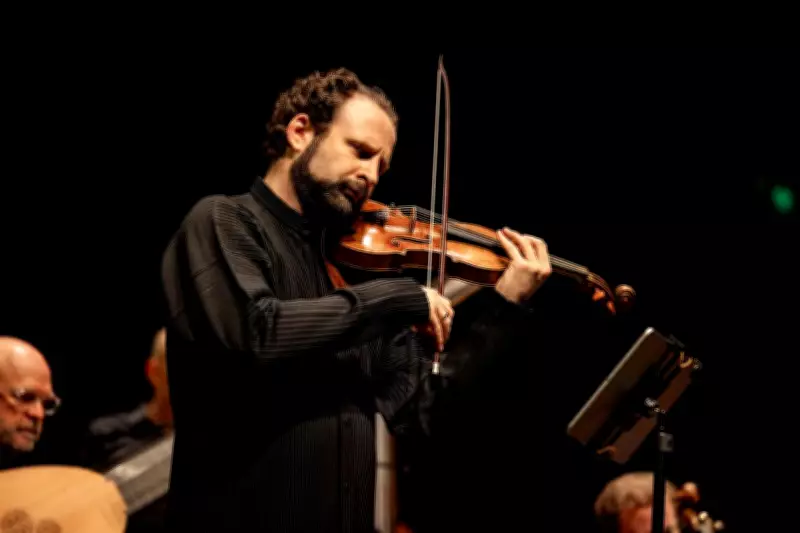
The Australian Chamber Orchestra embarked on a captivating national tour in 2026, titled "Devil's Violin," with guest director-violinist Ilya Gringolts at the helm. This tour, which kicked off at Winthrop Hall, paid homage to Tartini's legendary "Devil's Trill" while exploring a diverse repertoire from Baroque to contemporary compositions.
A Sonic Journey Through Time
Gringolts' decision to use gut strings for this tour highlighted the ACO's robust focus across musical eras. The performance opened with Tartini's Violin Sonata in G minor, where the second movement, Tempo Giusto, offered sonic delight and whimsy. The barely-there theorbo by Simon Martyn-Ellis and harpsichord by Masumi Yamamoto added a spring to the step, as bowed instruments vied for mastery. Principal violin Satu Vanska danced attendance, with sparks flying from Gringolts' bow in a lavish build-up to the diabolic finale, which closed the first half with fiendish inspiration and technical challenge.
Eclectic Mix and Dynamic Performances
The evening began with Westhoff's Imitazione delle Campane, featuring sparse support from Timo-Veikko Valve's cello and theorbo, creating a listless soundscape. Without pause, the ensemble burst into Vivaldi's Violin Concerto in D minor, with Gringolts igniting an explosion of counterpoint in the Allegro opening movement. The Adagio second movement saw Gringolts soaring sweetly over bustling strings, while the Allegro finale returned to vim and vigour with a plangent violin-cello duet.

Fast-forwarding three centuries, Sofia Gubaidulina's String Quartet No.2 reset the mood with sonorous cello echo effects, weaving complex polyphonic webs punctuated by pizzicato. This piece transitioned from harmonious to dystopian tension, fading to high harmonics towards an infinitesimal cadence.
Post-Interlude Highlights
After the break, Mieczyslaw Weinberg's Aria Op.9 set a folkloric ambience with mandolin-style pizzicato and softly ambulant theorbo support. Gringolts and Vanska then faced off in Vivaldi's Concerto for Two Violins in C major, showcasing shared brilliance that lit the dark-beamed upper reaches of the hall. Stark intervals lent strength, with an exquisite balance held in the Largo second stanza, timeless in appeal and treacly in the cadence.
The Allegro finale brought fresh air with burgeoning phrases ebbing and flowing with rhythmic discipline, pausing for an intimate double cadenza before breaking back to full ensemble in rumbustious style.
Contemporary and Baroque Fusion
Paul Stanhope's Giving Ground, commissioned as a companion piece to Geminiani's "Follia" Concerto Grosso No.12 in D minor, featured unruly flourishes that were frenzied yet constrained. Glimpses of the Baroque gleamed through a dense sound structure, like a gilded songbird behind bars, with Stanhope finding resolution in a death rattle to close.
In contrast, Geminiani's "Follia" leitmotif offered a robust dance, with Gringolts and Vanska embracing the mood delightfully through dynamic changes and tempo switches. Stately riffs in Baroque guitar calmed the farm before repeated virtuosic breakouts, leading to a powerful conclusion.
The Australian Chamber Orchestra continues its tour until March 28, delivering a fiendish challenge that blends historical depth with modern innovation.