Tessa MacKay's Social Realism Exhibition Transforms Digital Imperfections into Art
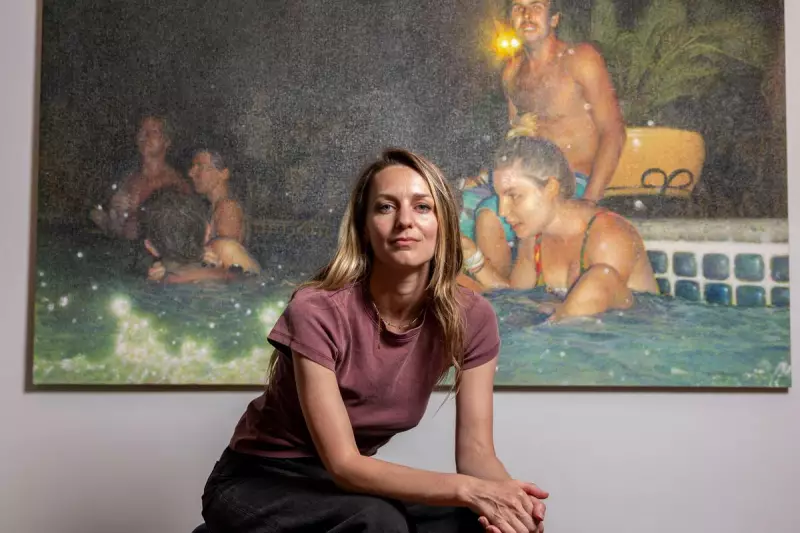
Acclaimed Western Australian artist Tessa MacKay has taken a dramatic artistic departure with her latest exhibition, Social Realism. Moving far from the polished photorealism that earned her the prestigious Archibald packing room prize in 2019 for her portrait of actor David Wenham, MacKay now deliberately celebrates what she calls "objectively crappy images" from the early days of social media.
From Perfect Portraits to Digital Archaeology
"I was reflecting on how photoreal painters typically choose these perfect source images to justify the thousands of hours it takes to paint in this super technical style," MacKay explains. "So I decided to invert this metric of labour and paint some objectively crappy images, which led me to the phenomenon that was 2000s Facebook photo dumping."
The artist spent months trawling through Facebook archives, curating thousands of what she describes as "low-value" digital images from that era when users would upload galleries with little concern for focus, lighting or composition. These forgotten digital artifacts form the foundation of her new exhibition.

Capturing a Lost Moment of Digital Honesty
MacKay sees this period as representing a unique moment in digital history. "We're all so digitally isolated now and our online avatars are curated within an inch of their life in service of the reputational economy of 'likes' and follows," she observes. "But there was this finite moment in human history when we all participated in this far more honest and convivial form of online social interaction, uploading our images with no real intent beyond a kind of absent-minded fun."
Visitors to her exhibition reportedly recognize this not-so-distant time when social media promised to create genuine digital community spaces before more superficial and narcissistic tendencies emerged.
Technical Challenges of Painting Digital Imperfections
Translating these low-quality digital images into paintings presented unique technical challenges. "In figuring out how to best transpose the low-fi digital aesthetic of these images into paintings, I've had to understand how digital camera sensors work and, more specifically, the technology's limitations in this 2000s era," MacKay explains.
The artist developed innovative techniques to recreate specific digital aberrations:
- Low-light noise patterns
- Pixel bleed effects
- Highlight clipping artifacts
Her latest work employs unconventional materials, including chunky loomstate linen sized with finely chopped pet fur to mimic the randomized texture of digital noise in shadow areas.
Personal Evolution and Artistic Liberation
This exhibition represents more than just an artistic experiment for MacKay. For years, she found refuge in large-scale photorealism, which helped her manage dyslexia and inattentive ADHD through its meticulous, detail-oriented process. However, she eventually questioned whether this refuge had become a creative limitation.
"For years, I had found refuge in painting these enormous and time-consuming photoreal works that shielded me from really interrogating why I paint," she admits.
To address this, MacKay embarked on a two-year cognitive training program that allowed her to return to Curtin University to complete her fine arts degree. There, she expanded her artistic vocabulary, incorporating elements from classical realism, 17th-century Dutch golden age painters, and 18th-century neo-impressionists into her evolving practice.
The Human Touch in an Age of AI Perfection
In an era where generative AI can create perfect images with a simple prompt, MacKay believes imperfection represents humanity's last artistic bastion. "Photorealism is birthed from and reliant on photography and typically avoids a painterly aesthetic, with little to no obvious brush marks," she says. "But it's very much my intent that these works look specifically like paintings of digital photographs from this era."

She emphasizes the importance of apparent human labour and raw materiality in her works, grounding otherwise easily dismissed digital images within a historic painting tradition. "In an increasingly synthetic world, the human touch becomes more valuable than ever," MacKay concludes.
Social Realism opens on February 5 and runs until March 11 at Lawson Flats in Perth, offering visitors a nostalgic journey through digital history and a thoughtful commentary on social media's evolution.